

Abdominal Separation
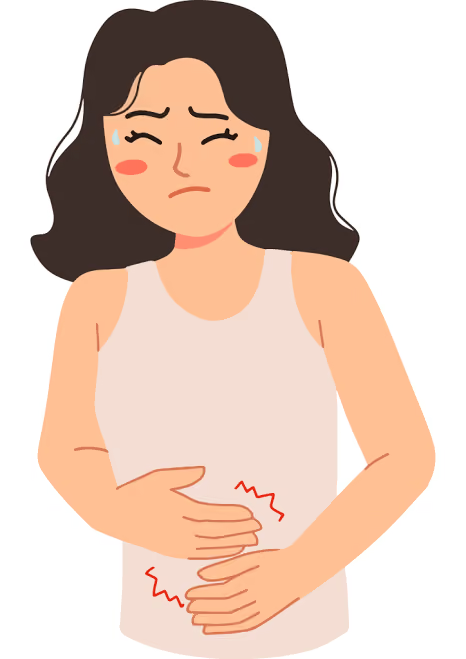
Restore core function, rebuild abdominal wall tension, and move with confidence through women's health physiotherapy.
Understanding DRAM (Abdominal Separation)
Diastasis Recti Abdominis Muscle (DRAM)—commonly referred to as abdominal separation—is the stretching and widening of the linea alba, the connective tissue midline joining the left and right sides of your "six-pack" muscles.
DRAM is a normal, natural adaptation during pregnancy. As your baby grows, the connective tissue line down the centre of your stomach (the linea alba) stretches and widens to make room for your growing bump. It is very common to notice a soft bulge, "doming," or a "tent-like" ridge along your midline when sitting up, getting out of bed, or lifting. You might also feel a general sense of core weakness, lower back aching, or a feeling that your tummy just isn't supporting you like it used to.
Modern evidence shows that closing the physical gap completely is not required for a fully functional, pain-free core. Virtually 100% of women have some degree of DRAM by their third trimester, and many carry it into early motherhood. Please be reassured: DRAM is not a "tear" or a broken belly—it is simply stretched tissue that can be lovingly retrained and strengthened back to full function.
Modern research brings wonderful news: you do not need to "close the gap" completely to have a strong, pain-free, and fully functional body! Recovery is all about rebuilding dynamic tension through the connective tissue so your core can absorb load and support you seamlessly.
While supportive belly bands can feel comforting in the early postpartum days, they don't teach your muscles how to work again. Active, tailored exercise is the true key to rebuilding deep strength, encouraging tissue healing, and helping you feel confident in your body again.
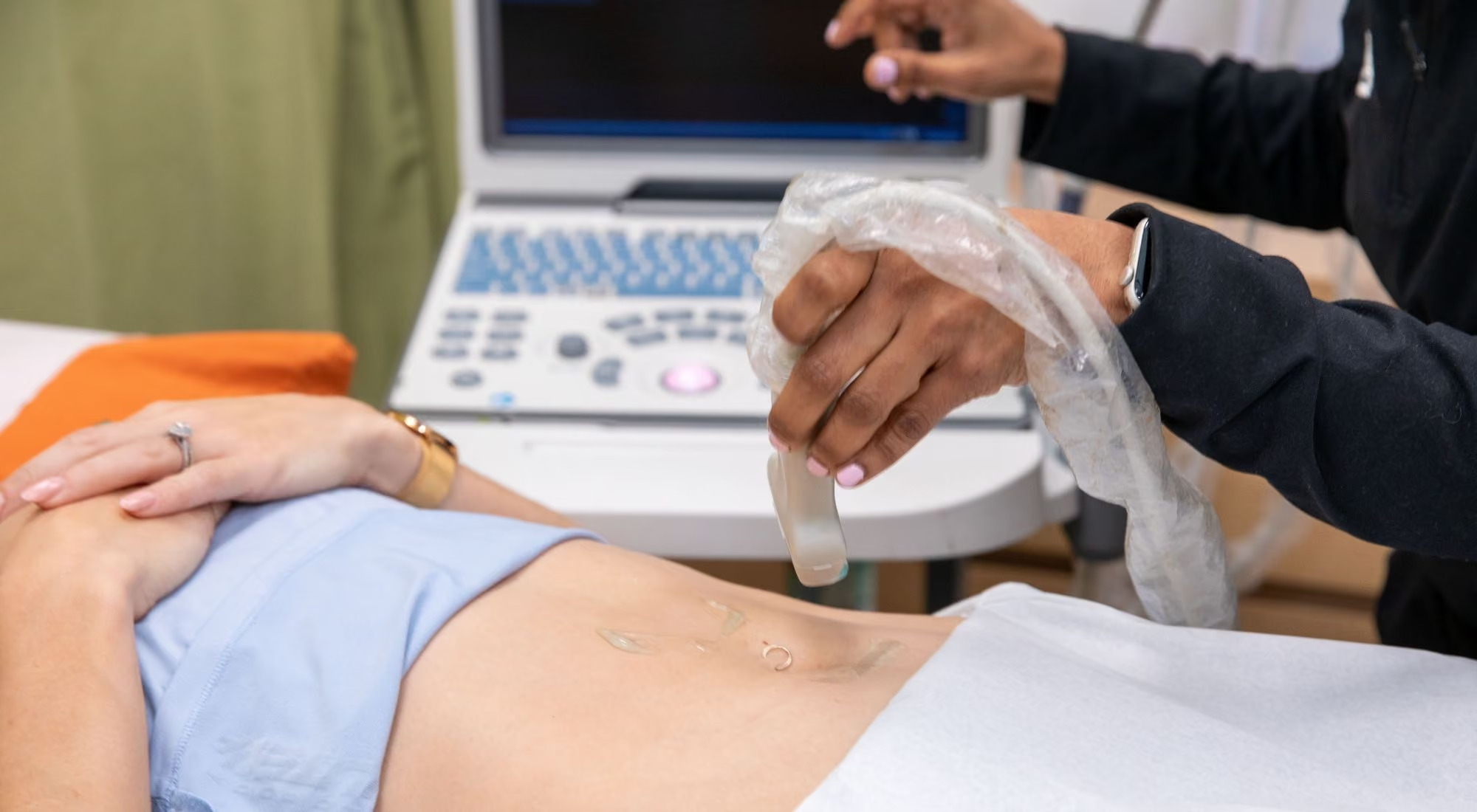
Our Women’s Health Physiotherapists use gentle assessments and real-time ultrasound imaging to guide your recovery. We help you reconnect with your deep transverse abdominis and pelvic floor muscles, ensuring you can lift, run, and play with your little ones without worry.
.avif)
Our core philosophy centres on empowering you to return to the activities you love safely.
At our Active Female Hub in Ultimo, we provide a warm, supportive space tailored entirely to female health. Our philosophy is rooted in validating your journey, easing any postpartum anxiety, and empowering you with practical, compassionate care.
We evaluate your midline tension, gap depth, pelvic floor synergy, and breathing patterns using real-time ultrasound. Seeing your deep core contract on screen gives you immediate reassurance and absolute clarity on how to engage your muscles correctly.
Your recovery is fully supported under one roof. Our Women's Health Physiotherapists collaborate directly with Clinical Dietitians and Exercise Physiologists to support your postnatal energy, tissue repair, strength goals, and safe return to the workouts you love.
Our phased pathway systematically rebuilds your core from foundational activation to high-load performance.
We gently guide you in reconnecting with your deep core and pelvic floor using breath mechanics and soft co-contractions. We identify daily movement tweaks—like rolling to your side to get out of bed—to stop unwanted doming and let the tissue rest.
As your core foundation strengthens, we introduce fun, progressive resistance exercises like squats, carries, and elevated planks. We carefully monitor midline tension, ensuring your linea alba handles increasing load with complete ease and stability.
In the final phase, we reintroduce high-impact sports, running, or heavy gym lifting. Many mums transition into our welcoming Strong Bodies classes—small-group, expert-supervised sessions designed to keep your whole body strong, resilient, and ready for everyday life.
Who treats this?
Our experienced team members are ready to help. See their bios below and book online when ready.
.avif)
All major health funds accepted
Private health claiming via Tyro Health EFTPOS terminal










FAQ

No. Research shows that restoring tension across the linea alba and building deep core muscle strength is far more important than the physical width of the gap. A functional, tensioned core will support your spine and pelvis even if a small separation remains.
You can begin gentle deep breathing, pelvic floor contractions, and basic transverse abdominis activations within the first few days postpartum. Formal progressive rehabilitation with a Women's Health Physiotherapist typically begins following your 6-week postnatal check.
Traditional crunches and sit-ups can increase intra-abdominal pressure and cause midline doming if your core cannot handle the load. We modify these exercises initially, teaching you how to generate tension correctly before reintroducing full flexion movements.
Real-time ultrasound allows both you and your physiotherapist to see your deep abdominal muscles and linea alba working on a screen in real time. This provides immediate visual feedback to ensure you are contracting your deep core correctly without pushing outward.
Please wear comfortable, loose-fitting athletic clothing that allows easy access to evaluate your abdomen. If you have any hospital discharge notes, previous pelvic floor reports, or a postnatal exercise plan, please bring those along as well.