

Pelvic Floor Dysfunction
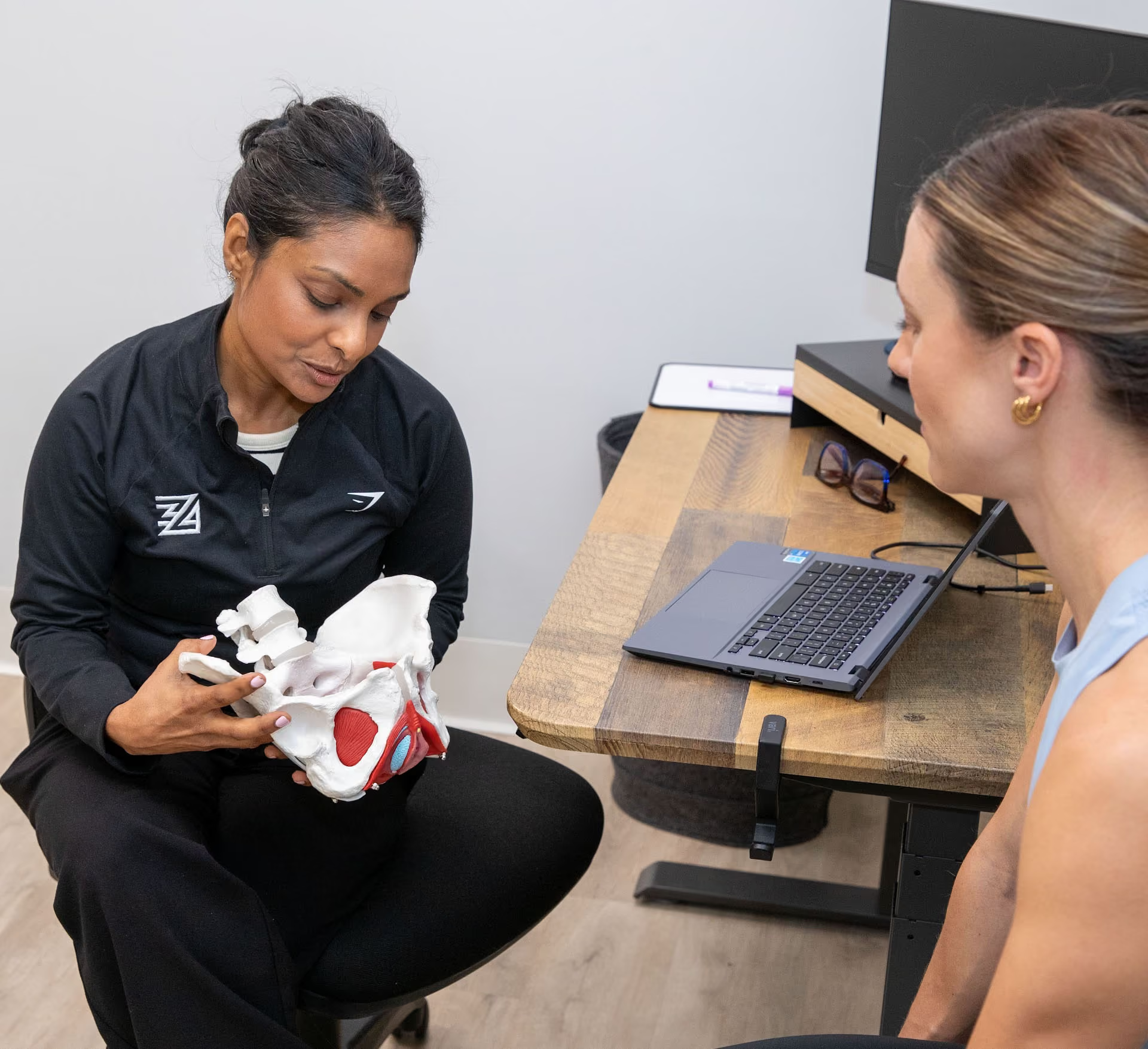
Reclaim your confidence, escape chronic pain, and return to the exercise you love with a whole-body approach to pelvic health at our Ultimo Active Female Hub.
Understanding Pelvic Floor Dysfunction
Pelvic floor dysfunction occurs when your pelvic floor muscles are not moving well, often holding too much tension or having poor coordination. Signs include accidental leaking during exercise, running, sneezing, or coughing, alongside a feeling of heaviness, dragging, or a bulge in the pelvis. It can also present as bowel issues or stubborn lower back and hip pain that will not resolve.
The pelvic floor works alongside your diaphragm, abdominal, and back muscles to manage intra-abdominal pressure during exercise. Poor function here causes other muscles to compensate, placing extra strain on your hips, lower back, upper back, and even your neck and feet. Generic exercises like Kegels are not always the answer, and if your muscles are already too tight, random squeezes can actually make your pain and symptoms worse. Specialised pelvic health assessment pinpoints your exact needs, allowing you to stop guessing and start effective treatment.
Seeking treatment early helps manage symptoms across all life stages, preventing muscle compensation and chronic pain. You should seek care if you experience ongoing pelvic pain, urinary leaking, or if hypermobility is making exercise difficult.
We provide safe pathways to navigate pregnancy-related symptoms like pelvic girdle pain (PGP) and urinary leaking. This ensures you can rebuild your strength and return to fitness confidently after giving birth.
Hormonal changes can weaken tissue strength and quality, leading to symptoms like urinary incontinence, urgency, and bowel control issues. Treatment also addresses pelvic organ prolapse and pain with intercourse, known as vaginismus.
For conditions like Endometriosis, Adenomyosis, or Ehlers-Danlos Syndrome (hEDS), the pelvic floor often goes into protective guarding or must work harder to provide stability. We help down-regulate this constant tension to ease persistent lower back, hip, and pelvic pain.
.avif)
The pelvic floor is deeply connected to how your hips, back, thorax, and feet move, particularly in chronic cases. By looking at the whole body, we solve complex layers of stubborn pain rather than just treating isolated symptoms.
Our pelvic health specialists analyse how your pelvic floor functions during daily tasks and exercise. We utilise real-time ultrasound biofeedback to retrain your pelvic floor, helping you improve muscle coordination both at rest and during activity.
Our model thrives on collaboration, combining pelvic health assessment with advanced musculoskeletal and sports physiotherapy. Exercise Physiologists and Sports Dietitians work directly with your clinical team to provide targeted nutritional strategies that support tissue recovery and fuel safe movement loading.
Our premium gym space is essential for safely bridging the gap between initial clinical pain relief and return to sport. We help you progress seamlessly from mat-based exercises back to weight training, lifting, running, or the gym classes you want to get back to.
A successful recovery plan must systematically alleviate pain, restore pain-free movement, and safely build back your exercise tolerance. We guide you through progressive phases designed to automate your pelvic floor coordination during activity.
We identify if your muscles are weak, tight, or uncoordinated, and use manual therapy, relaxation, and breathing control to release tension. This phase a
We train your pelvic floor to move dynamically again through structured, functional strength programming. This safely restores coordination to your glutes, hips, and deep core under progressive loads.
We transition you fully back to your favourite sports, running, or high-intensity gym routines. We ensure your pelvic floor automatically coordinates with your body so you can exercise pain-free and leak-free long-term.
Who treats this?
Our experienced team members are ready to help. See their bios below and book online when ready.
.avif)
All major health funds accepted
Private health claiming via Tyro Health EFTPOS terminal











FAQ

Recovery timelines depend heavily on whether your muscles are weak, tight, or uncoordinated, but progressing through structured phases of symptom management, gradual loading, and return to exercise ensures long-term results.
Leaking occurs when the pelvic floor muscles cannot properly manage the intra-abdominal pressure created during exercise or sudden movements.
No, simply doing generic Kegel exercises is not the answer, and if your muscles are already too tight, random squeezes can actually worsen your pain and symptoms.
The pelvic floor works alongside your abdominal and back muscles; when it dysfunctions, other muscles compensate, which can place extra strain on your hips and lower back.
For conditions like Endometriosis, the pelvic floor often goes into protective guarding, so our Pelvic Health Physiotherapists and Dietitians work together to down-regulate tension, ease pain, and support gut health.