

Running Post Partum

Safely return to running after childbirth. We help active women rebuild pelvic strength and cardiovascular capacity under expert, data-driven clinical guidance at the Active Female Hub.
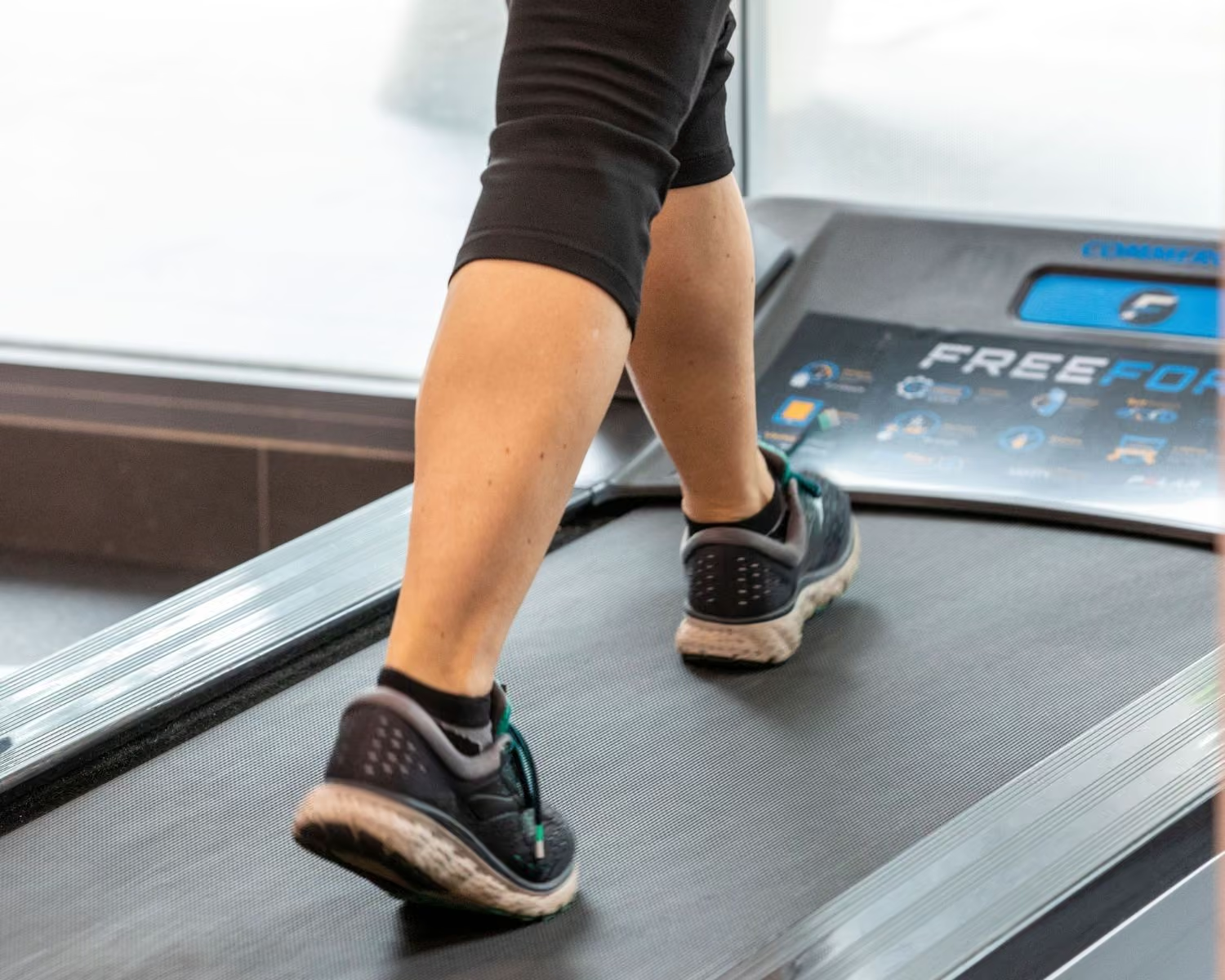
Understanding the Postpartum Return to Running
Running is a high-impact activity that subjects the pelvic floor to forces up to 2.5 times your body weight. Before you lace up your shoes, first ensure your physical "foundation" is fully prepared to absorb this repeated shock without compromising your long-term pelvic health.
For active women, a premature return to high-impact exercise can trigger pelvic floor symptoms, abdominal weakness, and hip, lower back, or pelvic pain. Also consider that your body continues to process hormonal changes (like relaxin) and sleep disruption postpartum, which heavily influences how your ligaments and muscles tolerate exercise.
The classic six-week clearance is a starting line for rehabilitation, not a finish line. Pregnancy and birth naturally result in a loss of cardiovascular conditioning, power, and lower limb strength, significantly increasing the risk of tendon overload injuries upon returning to the pavement. We use evidence-based timelines to ensure your tissues have the necessary tensile strength to manage high-impact loading without injury.
Clinical research suggests that pelvic floor tissues require a minimum of 12 weeks (3 to 4 months) postpartum to regain enough strength to safely tolerate the impact of running.
Before running, you should be completely free of pelvic pressure or leaking during daily tasks, and any C-section or perineal scars must be well-healed and moving pain-free.
If you experience any "red flags"—such as urinary leakage, pain, or heaviness—during or the day after a run, the load is too high and requires clinical review.
Postpartum recovery is a physiological process that requires a systematic "inside-out" approach. A multidisciplinary team specialising in postpartum recovery is critical to help women rebuild safely and prevent long-term complications.
Internal assessments by a Women's Health Physiotherapist ensure your pelvic floor is truly ready for increased load, actively preventing long-term issues like prolapse or incontinence.
Seeking expert guidance early allows us to intelligently manage your load progression.
Our Exercise Physiologists design fatigue-aware exercise programs that safely accommodate the intense physical demands and sleep disruption associated with caring for a newborn.
We systematically progress you from baseline strength testing to a safe, symptom-free return to the pavement using specific, objective load-impact criteria.
Before running, you must demonstrate baseline stability with simple screening tests that could include completing at least 20 single-leg calf raises, 20 single-leg glute bridges,10 single leg squats with good control.
Our clinicians clear you for impact by testing your ability to jog in place for one minute and perform 10 single-leg "hop-and-holds" per side without losing balance or leaking.
Once cleared, we prescribe a phased progression, starting with power walking and 1-minute slow jogs in Weeks 1-2, advancing to structured intervals while including recovery days.
Who treats this?
Our experienced team members are ready to help. See their bios below and book online when ready.
.avif)
.avif)
.avif)
.avif)

.avif)
.avif)
All major health funds accepted
Private health claiming via Tyro Health EFTPOS terminal











FAQ

Research indicates that your pelvic floor tissues take a minimum of 3 to 4 months to regain enough tensile strength to manage the high-impact loading forces required for running.
We use targeted pelvic health physiotherapy to improve pelvic floor strength, coordination, and pressure management during impact activities like lifting and running.
Any urinary leakage, pelvic pressure, or "heaviness" is a clear red flag indicating the load is currently too high for your pelvic floor to manage. You should pause running and book a follow-up assessment.
Yes, our clinicians provide highly personalised support for core rehabilitation and Diastasis Recti Abdominis (DRA) to help you confidently return to higher-level activity and running.
High-impact training requires a significant increase in protein and hydration. Our Dietitians provide a personalised nutrition plan to ensure you are hitting your increased caloric needs for recovery while sustaining breastfeeding.
References
Goom, T., Donnelly, G., & Brockwell, E. (2019). Returning to running postnatal – guidelines for medical, health and fitness professionals managing this population.
Blyholder, L., et al. (2017). Exercise behaviors and health conditions of runners after childbirth. Sports Health, 9(1), 45-51.