

ACL Rehab
Don't just recover—return stronger. Our evidence-based ACL pathway combines elite sports physiotherapy with objective strength testing to get you back to the sports you love.
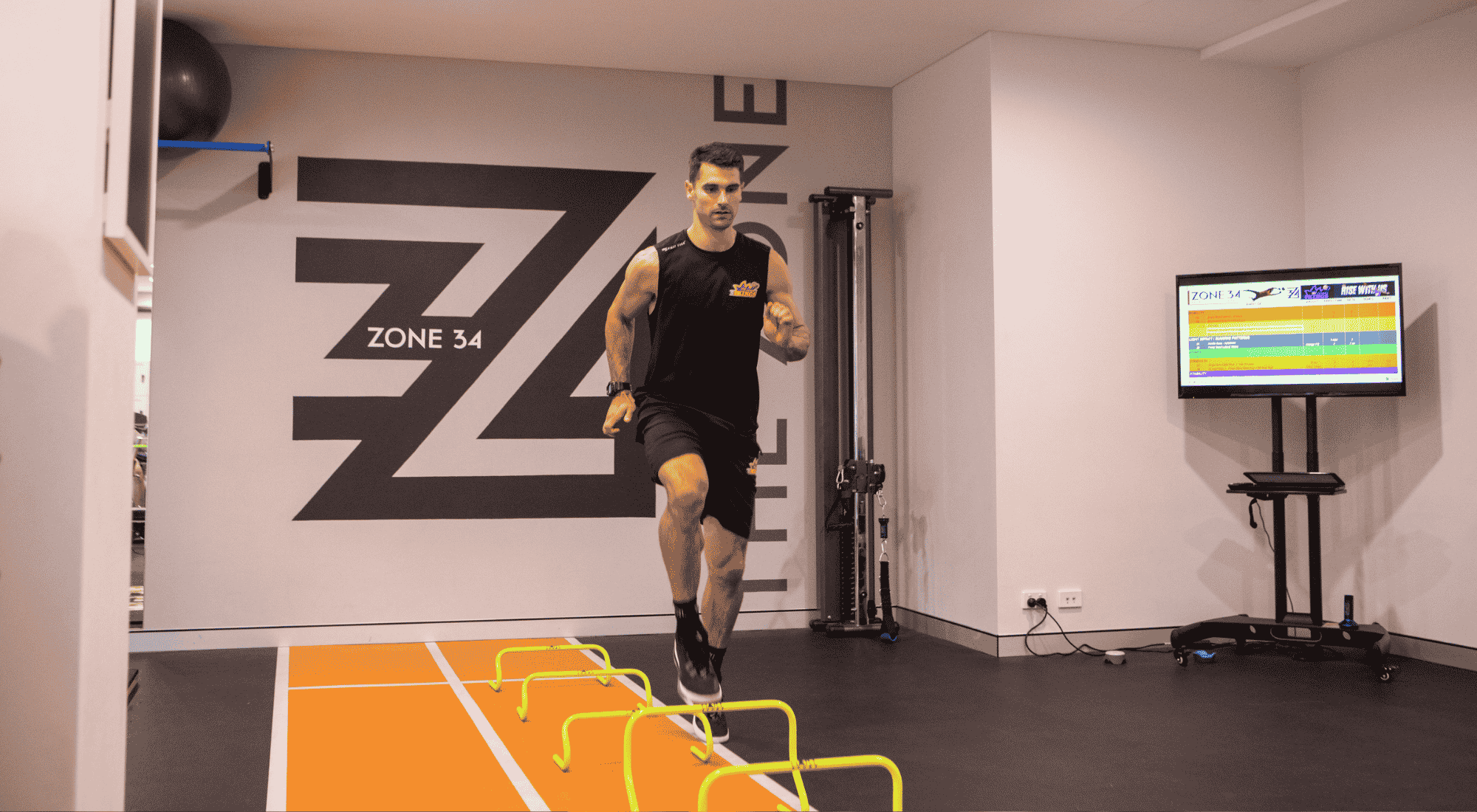
Understanding ACL Injuries
An Anterior Cruciate Ligament (ACL) tear impacts your joint stability during high-speed twisting, landing and pivoting movements.. We help you navigate this complex journey with a structured pathway that takes you from the initial injury all the way back to peak athletic performance.
Female athletes face a significantly higher risk of ACL injuries than males, with injury rates in high-impact, pivoting sports like basketball, netball, and AFL generally reported to be between two to six times higher than those of their male counterparts. ACL tears rarely happen in isolation; combined injuries can involve meniscus tears and MCL sprains.
Surgical vs. Non-Surgical Management
While many athletes require surgical reconstruction to return to pivoting sports, some individuals, known as copers, can successfully recover without surgery. Clinical evidence, notably the KANON trial, indicates that many ligament ruptures undergo natural healing visible on MRI, frequently achieving excellent functional results through non-operative management.
At Zone 34, ACL rehabilitation follows a progressive pathway from acute injury to peak performance. Care begins with initial manual treatment to reduce pain and restore joint mobility. As symptoms improve, you move to supervised exercise in our rehab facility, progressing toward an independent exercise program. To bridge the gap back to sport, our Exercise Physiologists deliver tailored re-conditioning and return-to-run programming.
- Hypertrophy: Restores muscle volume and symmetry after injury or surgery.
- Maximal Strength: Loads tendons, ligaments, and muscles to restore force production.
- Resilience: Prepares tissues to handle higher training demands safely.
- Rate of Force Development (RFD): Improves fast force absorption and production.
- Reactive Strength & Plyometrics: Restores tendon elasticity through structured jumping and hopping.
- Deceleration: Teaches safe landing mechanics before explosive movements.
- Return-to-Run: Structured progressions managing speed and volume with an Exercise Physiologist.
- Change of Direction: Refines cutting, deceleration, and multi-directional footwork.
- Agility: Uses open-loop, reactive drills to ensure full return-to-play confidence.
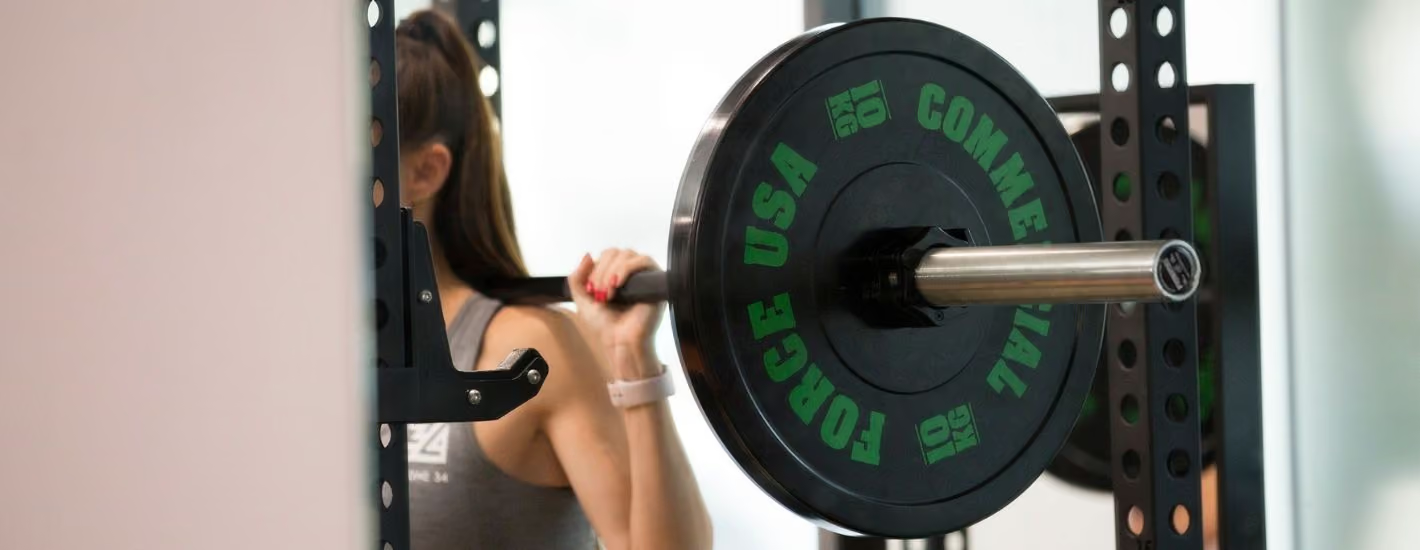
Successfully returning to sport requires precise, objective data to ensure your knee is ready for the demands of competition. We do not guess if you are ready; we measure it using the same elite testing protocols as professional basketball, AFL and NRL teams
We use Force Plate Testing and Hand-held Dynamometry to ensure your operated leg is at least 90 percent strength of your healthy leg before clearing you for progression. Typically we aim for closer to 100%, and it is important to consider that the injured leg may have been the strong limb pre injury
Our clinics are designed to allow you to transition smoothly from the treatment table to high-level athletic loading and agility work.
This is the most critical step in your recovery, verifying that you have the robust physical capacity to prevent re-injury. This will not only involve horizontal and vertical hop testing, and strength and power measures. An Outcome Measure like the ACL-RSI helps understand your confidence in the knee, and we are also interested in your performance under fatigue and chaos.
A successful ACL recovery plan must be progressive, highly individualised, and adaptable to the specific demands of your chosen sport. We provide a structured journey that rebuilds your leg strength and neuromuscular control step-by-step.
We utilise targeted, gym-based loading to rebuild the engine of the leg, ensuring your muscles can absorb high impact.
When ready, we safely transition you from straight-line running to dynamic cutting, pivoting, and sport-specific drills.
We do not use cookie-cutter sheets; instead, your rehabilitation is delivered via a dedicated app featuring video tutorials for every exercise.
Who treats this?
Our experienced team members are ready to help. See their bios below and book online when ready.
.avif)
.avif)
.avif)
.avif)

All major health funds accepted
Private health claiming via Tyro Health EFTPOS terminal











FAQ

An evidence-based timeline typically requires 9 to 12 months of structured rehabilitation to ensure the graft is secure and you are ready for sport.
Not every ACL injury requires surgery. Recent evidence, including the KANON trial, suggests that surgery is not always necessary and that many athletes successfully return to sport through structured rehabilitation alone. The trial shows that approximately 50-76% of participants managed with rehabilitation alone showed signs of ACL healing on MRI at follow-up. These individuals reported better functional outcomes compared to those who did not show healing or those who underwent early surgery. While ACL injury incidence is high in court sports, conservative management strategies focus on preventing the need for reconstruction by optimising knee stability and neuromuscular control.
Running usually commences between 12 and 16 weeks post-operation, strictly pending the achievement of specific strength milestones.
Pre-hab is a secret weapon that focuses on reducing swelling and regaining range of motion, which significantly improves post-operative outcomes.
Return to play testing is our most critical step, utilising force plates and VALD isometric strength testing to ensure your operated leg is demonstrating symmetry with your non-operated leg before clearance.