

Posterior Ankle Impingement
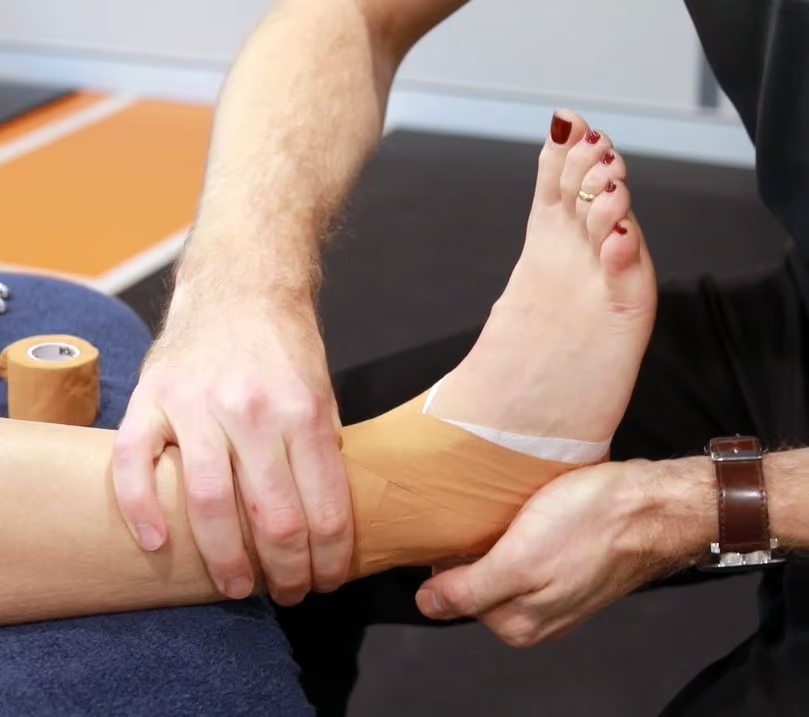
Eliminate ankle pain, restore full plantarflexion, and return to pointe work, jumping, and peak athletic performance.
.avif)
Specialist Ankle Care for Dancers & Athletes
Posterior ankle impingement requires specialised biomechanical management to restore extreme ankle ranges without pain. Achieving full pointe, crisp relevés, and explosive jumps demands exceptional joint mobility, alignment, and strength.
Operating from our Active Female Hub in Ultimo, our specialist Dance Physiotherapists deliver expert clinical care tailored to dancers, performing artists, and field athletes. We combine sports medicine principles with dance-specific loading to safely resolve symptoms and prevent recurrence.
Posterior Ankle Impingement Syndrome (PAIS) occurs when soft tissue or bone becomes pinched at the back of the ankle during maximal plantarflexion (pointing the foot).
Repeatedly pointing the foot compresses structures behind the ankle joint—such as an os trigonum (an accessory bone) or surrounding ligaments—causing deep, localised pain.
PAIS is exceptionally common in ballet, contemporary, and jazz dancers, where movements like pointe work, relevé, arabesque, and grand allegro place the joint into end-range compression.
Beyond dance, posterior impingement frequently develops following a severe ankle sprain, where joint stiffness or capsule thickening triggers pain during rapid deceleration, jumping, and kicking.
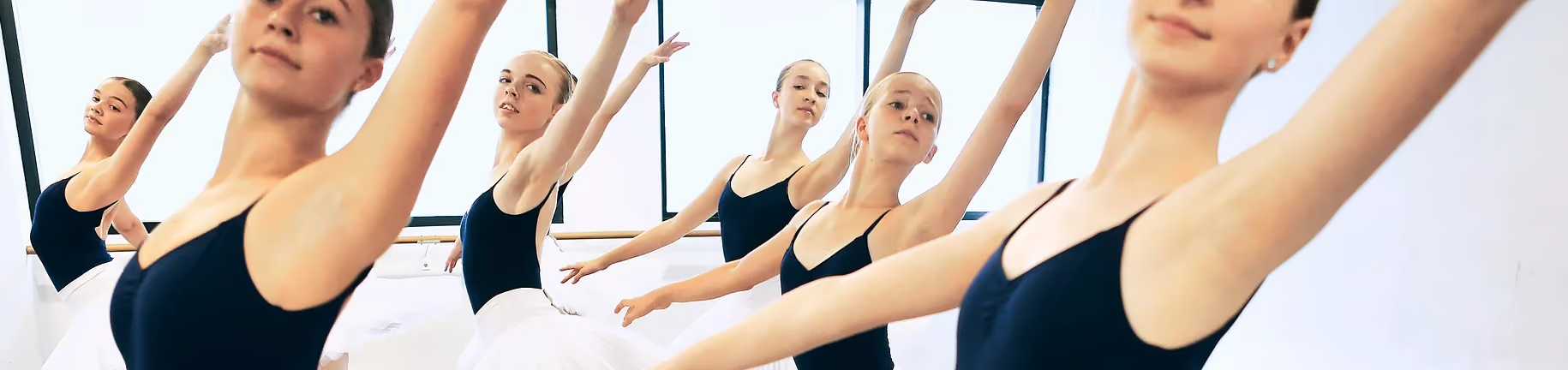
Evidence-based rehabilitation focuses on offloading inflamed posterior tissue while rebuilding dynamic joint stability and calf capacity.
Clinical studies show that the vast majority of PAIS cases—even those with an os trigonum—resolve with structured exercise therapy.
Successful treatment extends beyond the ankle, targeting calf complex capacity, intrinsic foot control, turnout alignment, and hip stability.
Progressive strengthening restores the ankle's structural ability to absorb high impact without relying on total rest that leads to muscle deconditioning.
Our clinical philosophy centres on objective functional testing and detailed biomechanical movement analysis.
We evaluate ankle mechanics during functional tasks, observing your plié depth, relevé height, turnout control, pointe alignment, and landing mechanics.
Our fully equipped facility allows us to bridge the gap between initial clinical pain relief and high-force athletic demands.
Our team works seamlessly across sports physiotherapy, exercise physiology, and sports medicine to deliver unified care.
Who treats this?
Our experienced team members are ready to help. See their bios below and book online when ready.
.avif)
.avif)
.avif)
All major health funds accepted
Private health claiming via Tyro Health EFTPOS terminal











FAQ

Yes. PAIS is one of the most frequent conditions in ballet because repeated pointe work, relevé, and arabesque place the back of the ankle under extreme anatomical compression.
Yes. Following a lateral ankle sprain, residual joint stiffness, capsule thickening, or altered movement mechanics can cause soft tissues at the back of the ankle to get pinched during rapid deceleration, jumping, or kicking.
An os trigonum is an extra (accessory) bone located at the back of the ankle present in some people. While it can contribute to compression during full plantarflexion, most dancers and athletes recover successfully through targeted exercise therapy without needing surgical removal.
In many cases, yes. Your Dance Physiotherapist will work with you to modify specific high-compression movements (such as temporarily limiting full pointe or deep deceleration) so you can safely train while rebuilding capacity.
Please wear comfortable activewear or dance wear (like shorts and tights) that allow easy examination of your feet and knees. If you are a dancer, please bring your primary dance shoes (including pointe shoes), or your sports footwear if you play field sports.