

Foot Injuries
Targeted dance physiotherapy to restore foot capacity, resolve forefoot pain, and safely return to peak performance.
.avif)
Specialist Foot Care for Dancers & Athletes
Every jump, relevé, pointe transition, and turn requires the foot to absorb and generate massive ground reaction forces while maintaining absolute precision, balance, and stability. Foot pain is never a normal part of training.
At our Active Female Hub in Ultimo, our specialist Dance Physiotherapists provide expert clinical assessment and evidence-based rehabilitation, having worked with the Australian Ballet for years.
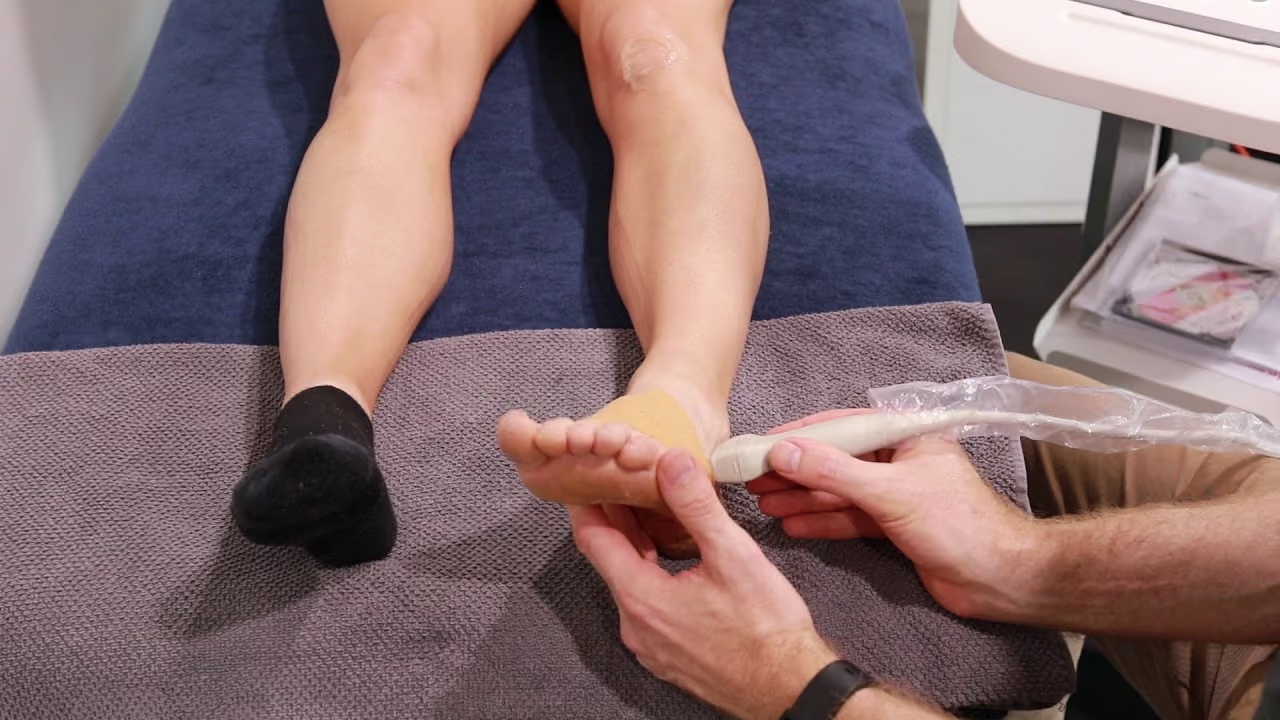
Sesamoiditis is an overuse injury affecting the two small sesamoid bones beneath the base of the big toe.
The sesamoid bones act as dynamic pulleys for the flexor hallucis brevis tendon to distribute load through the big toe joint during push-off. Symptoms present as sharp or aching pain beneath the ball of the foot, localised swelling, and pain when bending the big toe or pushing off.
It is driven by repetitive forefoot impact. In dancers, it is frequently triggered by high volumes of relevé, pointe work, grand allegro landings, or dancing on unyielding studio floors.
Management involves immediate offloading using specialised padding, taping, and shoe modifications. As acute pain settles, our Dance Physiotherapists guide you through intrinsic foot strengthening, big toe mobility, calf loading, and a structured return to jumping and pointe work.
A navicular bone stress injury (reaction or stress fracture) affects the tarsal navicular bone in the midfoot.
The navicular bone sits in a high-stress "keystone" arch position, receiving significant compressive forces. Patients report a vague, deep ache along the top of the foot or arch. Because of its unique, poor blood supply, it is a high-risk injury requiring prompt diagnostic imaging (such as an MRI).
It is caused by rapid increases in impact loading—such as sudden spikes in rehearsal volume, intensive jumping, or forcing turnout from the feet. Nutritional deficits or low energy availability (REDs) also lower bone load tolerance.
Management of a navicular stress fracture often requires initial non-weight-bearing immobilisation in a boot to allow safe bone healing. At our Active Female Hub in Ultimo, our Dance Physiotherapists collaborate with sports physicians and dietitians before executing a controlled return to dance.
Metatarsal bone stress injuries affect the long, slender midfoot bones (most commonly the 2nd, 3rd, or 5th metatarsals).
These injuries occur when repetitive loading causes micro-damage faster than bone can remodel. Symptoms include pinpoint tenderness over the metatarsal shaft, dorsal swelling, and pain worsening during walking, relevé, or jump landings.
In dancers, 2nd metatarsal stress reactions stem from forced pointe or demi-pointe work, transferring extreme load through the index toe. 5th metatarsal injuries often result from rolling onto the outer border of the foot, and increase in training loads.
Management focuses on temporary offloading using stiff-soled footwear or carbon-fiber shoe inserts to protect the bone. Our team addresses technique errors (like sickling or forced turnout) while building intrinsic foot endurance, calf strength, and landing mechanics before reintroducing choreography or running volume.
Who treats this?
Our experienced team members are ready to help. See their bios below and book online when ready.
.avif)
.avif)
.avif)



All major health funds accepted
Private health claiming via Tyro Health EFTPOS terminal











FAQ

In many cases, yes. Total rest is rarely necessary unless you are managing a high-risk bone stress fracture. Your Physiotherapist will work with you and your teachers to modify specific movements—such as temporarily reducing running volume or modifying pointe work—so you can safely maintain training while building capacity.
During growth spurts, bones elongate faster than surrounding muscles and tendons can adapt, creating temporary changes in flexibility, strength, and coordination. When combined with increased rehearsal hours and the transition to pointe work, the forefoot absorbs disproportionate forces, making early assessment essential.
The tarsal navicular bone has a central region with a relatively poor blood supply (a "watershed" zone). If a stress reaction in this area is ignored, it has a high risk of progressing to a non-union fracture that requires surgery. Immediate clinical offloading and structured rehabilitation are critical.
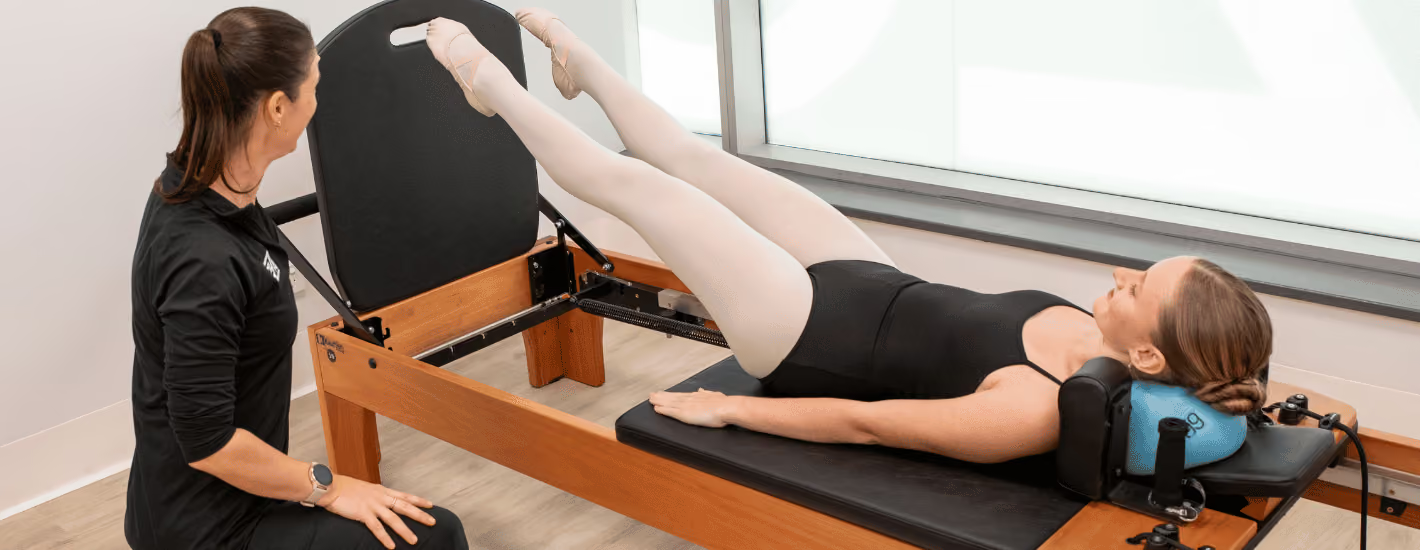
Rather than just examining your foot on a treatment table, our Dance Physiotherapists evaluate functional movement in dance-specific postures—including your plié depth, relevé height, turnout control, foot alignment en pointe, and landing mechanics—to identify the exact biomechanical drivers of your pain.