

Hypermobility Syndrome
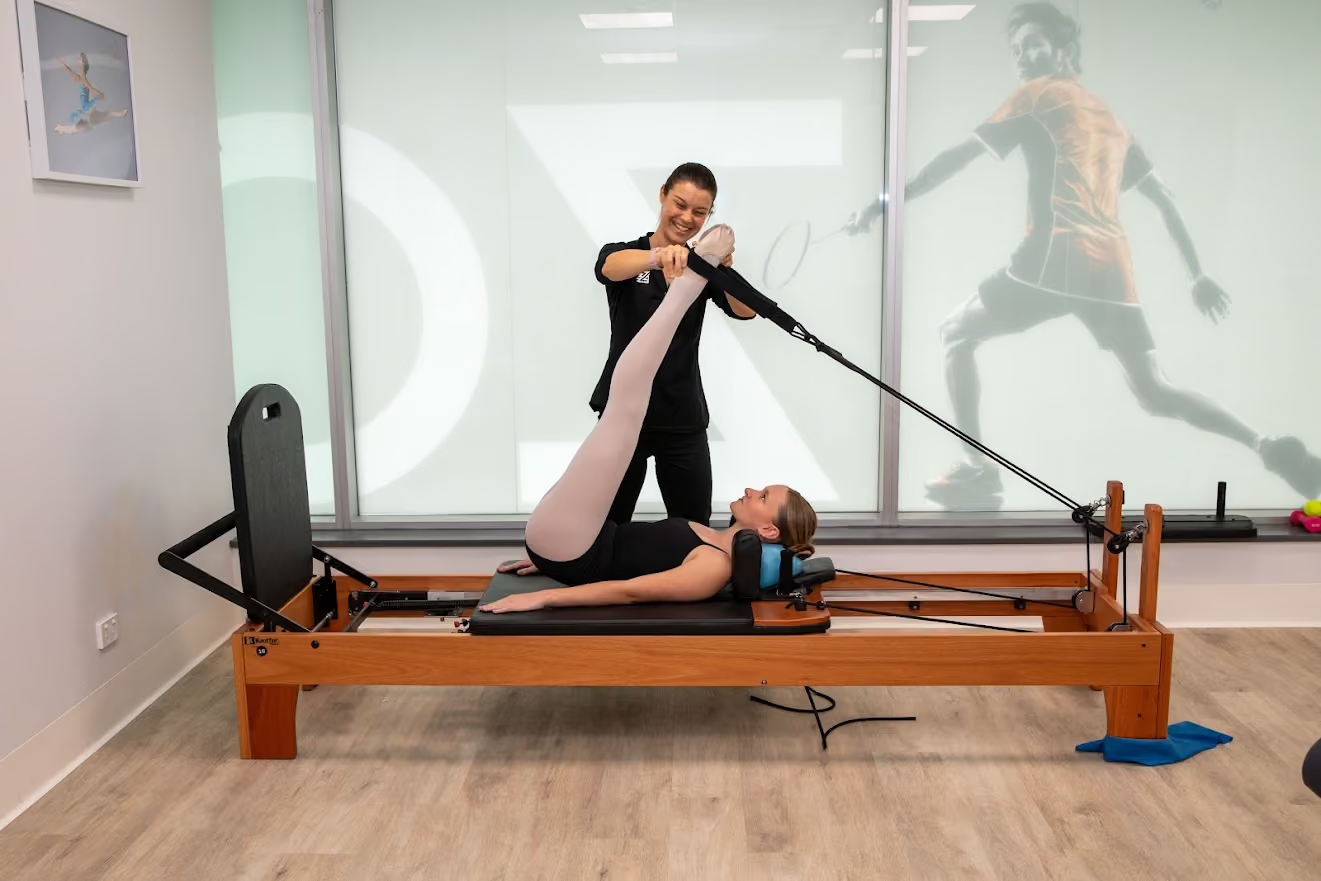
Harness your natural flexibility into athletic power, stability, and pain-free performance through expert combined care.
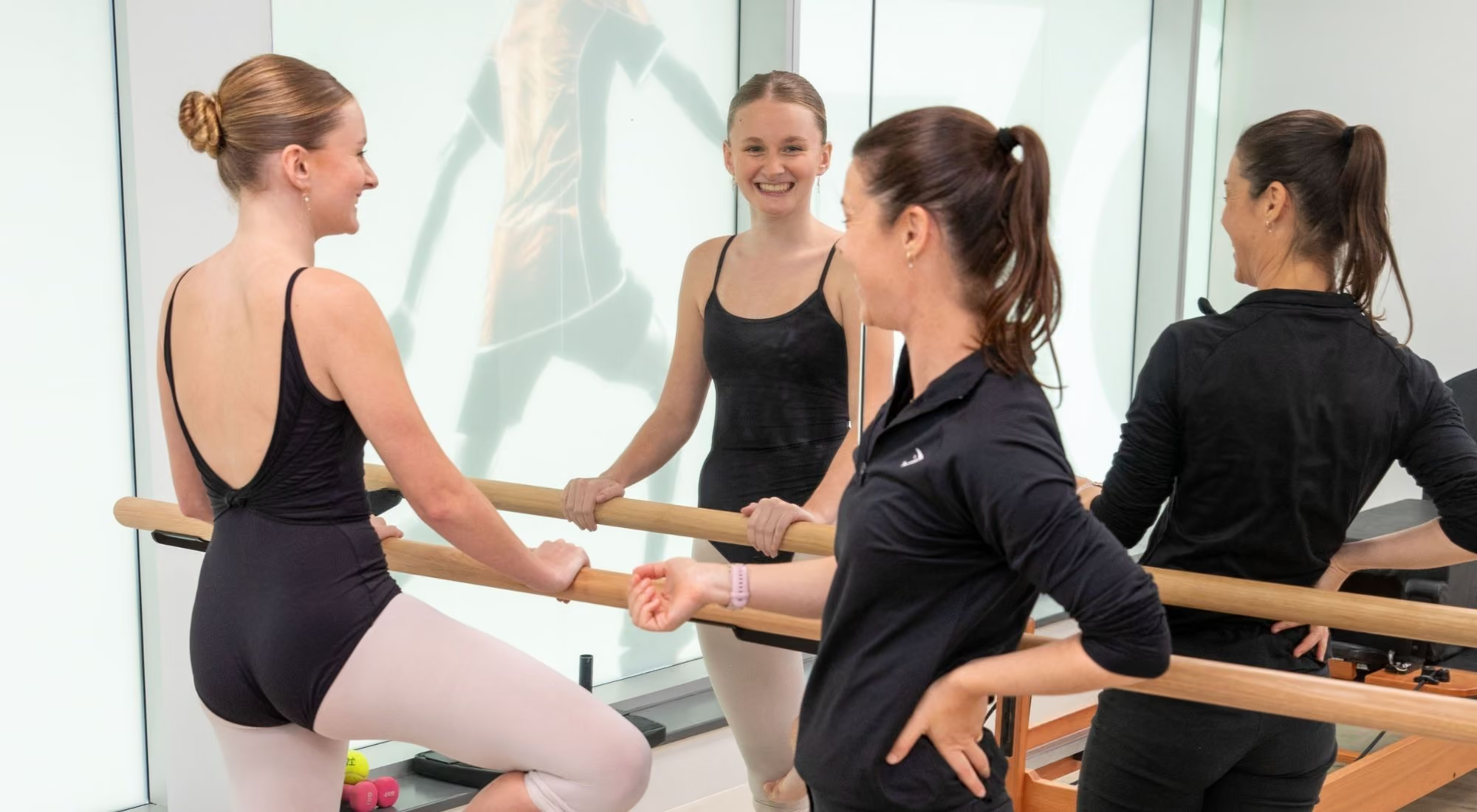
Understanding Hypermobility (HSD & hEDS)
Joint hypermobility exists on a spectrum ranging from asymptomatic flexibility to clinical Hypermobility Spectrum Disorder (HSD) and hypermobile Ehlers-Danlos Syndrome (hEDS). Because flexibility is frequently praised in dance, underlying instability may go unnoticed until recurrent injuries occur.
Increased ligament laxity means joint capsules provide less passive support, forcing surrounding muscles to work significantly harder to keep joints stable. Individuals frequently experience recurring ankle sprains, snapping hips, feeling joints "give way," persistent post-exercise aching, and generalised muscle fatigue.
Adolescent vulnerability during growth spurts
Rapid skeletal growth combined with high dance volumes can temporarily reduce coordination, leading young dancers to "hang" on passive joints. Managing joint hypermobility requires an advanced, objective approach that transforms passive flexibility into controlled, stable strength.
Our dedicated center brings together specialist Dance Physiotherapists and Exercise Physiologists under one roof for seamless, expert-led combined care.
In dance, flexibility is often celebrated and rewarded. However, research has shown that flexibility alone does not create better dancers—successful performance depends on the ability to control movement throughout that range.
We do not aim to "fix" or reduce your natural mobility, but rather build the muscle resilience needed to control it through extreme ranges.
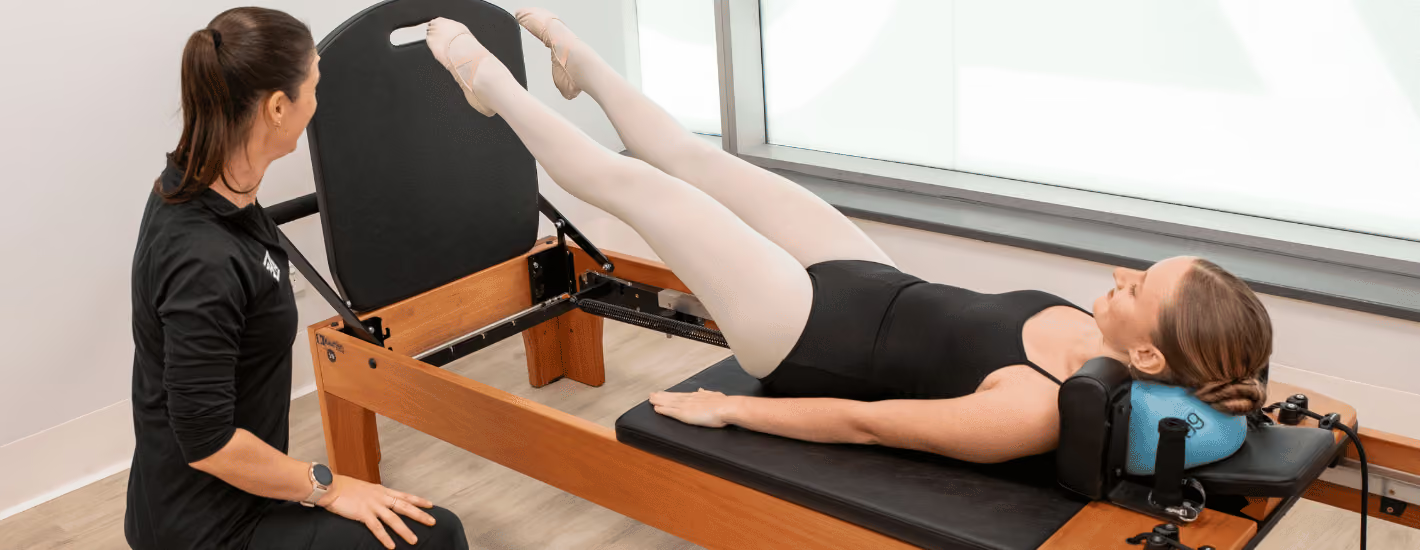
Many dancers assume being "very flexible" is always beneficial. However, if hypermobility is associated with pain, instability or repeated injuries, assessment by a clinician experienced in dance medicine is recommended.
Our Dance Physios assess turnout mechanics, joint proprioception, and technical alignment, providing a clear management plan and early motor control retraining. With years of experience working with the Australian Ballet and Muscial Theatre , they are ideally placed to guide your rehab journey.
Our clinicians understand that hypermobility exists on a spectrum. We have extensive experience managing recreational, pre-professional and elite dancers with generalised joint hypermobility, Hypermobility Spectrum Disorder and hypermobile Ehlers-Danlos Syndrome.
Evidence proves that hypermobile bodies thrive on muscular strength, joint position awareness, and motor control rather than further passive stretching.
Our systematic, phased pathway safely transforms joint laxity into dynamic movement precision, power, and endurance.
We perform initial VALD ForceFrame and dynamometer testing to identify exact strength imbalances, reduce acute joint irritation, improve joint position sense, and master deep core co-contraction.
We systematically build robust muscular "armour" around hypermobile joints through progressive resistance and heavy slow loading.
We reintroduce pointe work, explosive jumps, turns, partnering, and floor work, and can communicate with your dance teacher or health care team.
Who treats this?
Our experienced team members are ready to help. See their bios below and book online when ready.
.avif)
.avif)
.avif)
All major health funds accepted
Private health claiming via Tyro Health EFTPOS terminal











FAQ

Dance Physiotherapists understand the unique physical demands of ballet, contemporary, jazz and musical theatre. Rehabilitation is designed to optimise dance performance—not simply everyday function.
No. Hypermobile Ehlers-Danlos Syndrome (hEDS) is an inherited connective tissue disorder with additional clinical features beyond increased flexibility. Assessment by an appropriately qualified healthcare professional is required for diagnosis.
Data-guided exercise prescription uses exact strength measurements from VALD testing to tailor exercise intensity, volume, and progression. Rather than assigning generic sets and reps, we prescribe loads based on your muscle capacity to build stability safely without overloading hypermobile joints.
Not usually. The sensation of "tightness" in hypermobile individuals is often muscle guarding—muscles working overtime to stabilise a loose joint. Passive stretching can increase instability, whereas targeted strengthening guided by objective testing provides lasting relief.
Please wear comfortable athletic clothing or dancewear (such as tights and a fitted top) so we can easily conduct evaluate your movement mechanics. If you have any previous medical reports or dance videos, feel free to bring those as well.