

Running Assessment
Don't let injury sideline you. Our "Keep Running" philosophy combines high-speed video gait analysis with objective strength testing to eliminate pain, optimise your stride, and rebuild performance.
Why do running injuries happen?
Running is one of the most accessible and rewarding forms of exercise, offering incredible benefits for your cardiovascular health, mental clarity, and physical performance.
However, because running is a highly repetitive movement, it carries a natural risk of overuse injuries.
It is a common misconception that changing your technique makes impact forces disappear. In reality, force is redirected. For example, a change in gait might reduce pressure on a painful knee, but that load may move to the Achilles or calf. This is why professional guidance is essential; we ensure that by fixing one issue, we aren’t creating a new one like a calf strain or bone stress injury.
Many elite runners have “unconventional” styles but remain injury-free and incredibly fast. This is because the body often self-selects the most efficient movement pattern for its specific build.
We only recommend changing your mechanics if there is a clinical reason to do so—such as chronic “niggles” or recurrent injuries. Our goal is to find the balance between your natural efficiency and the structural demands of your sport.
A running assessment is a specialised biomechanical evaluation designed to identify force asymmetries, stride inefficiencies, and training load errors contributing to lower limb pain. Being forced to rest when an injury strikes can feel frustrating, but resting without addressing underlying movement mechanics often leads to recurring symptoms as soon as you hit the pavement.
We assess key joint angles, including ankle dorsiflexion and hip range of motion, alongside single-leg stability to evaluate foundational movement quality.
Through isometric and dynamic hop tests, we evaluate how effectively your neuromuscular system absorbs and releases energy during the gait cycle.
We review video capture footage together, pinpointing over-striding, low cadence, Hip or foot control, and trunk position while discussing immediate tactical cues to adjust your running mechanics.
Relying on generic rest or passive treatments often fails because running injuries are fundamentally structural capacity and workload management issues. Expert clinical management provides objective biomechanical diagnostics that target the precise root cause of tissue overload rather than temporarily masking your symptoms
An assessment is appropriate for injured runners as part of a comprehensive management plan, runners with niggles they can’t shake, or Performance Seekers who are looking to go faster.
Rather than mandating complete rest for every case, clinical expertise allows us to modify running volume safely within your structural capacity while tissues heal.
By addressing stride mechanics and strength deficits simultaneously, expert care prevents the vicious cycle of recurring injuries upon increasing mileage.
A successful running rehabilitation program must be progressive, individualised, and tailored to your specific biomechanical profile and training goals. Generic exercise sheets fail to build the precise tissue tolerance required for the high impact forces experienced during continuous distance running.
Rehabilitation exercises must match your current load tolerance, progressively increasing tendon stiffness and muscular force production for your specific sport. Home or gym based exercises can be prescribed via our Sports and Exercise Physiotherapist.
Your plan continuously adapts to your daily life and training metrics, with anything from structured walk-run intervals to safely ramp up volume without flare-ups.
Customised visual or auditory cueing helps alter stride frequency and foot placement, lowering peak joint contact forces without compromising running efficiency.
Who treats this?
Our experienced team members are ready to help. See their bios below and book online when ready.

.avif)
.avif)
All major health funds accepted
Private health claiming via Tyro Health EFTPOS terminal











FAQ

Rarely. Our clinical team utilises "relative loading" strategies to modify your training volume and intensity based on objective force plate data, allowing you to run safely while tissues heal.
Recovery timelines depend on tissue type; soft tissue strains or mild tendinopathies generally resolve within 6 to 12 weeks, whereas bone stress injuries or chronic tendinopathies can require 3 to 6 months of progressive rehabilitation.
Please wear comfortable running attire (shorts and an athletic top) and bring the primary running shoes you currently train in, along with any relevant scan results or medical history.
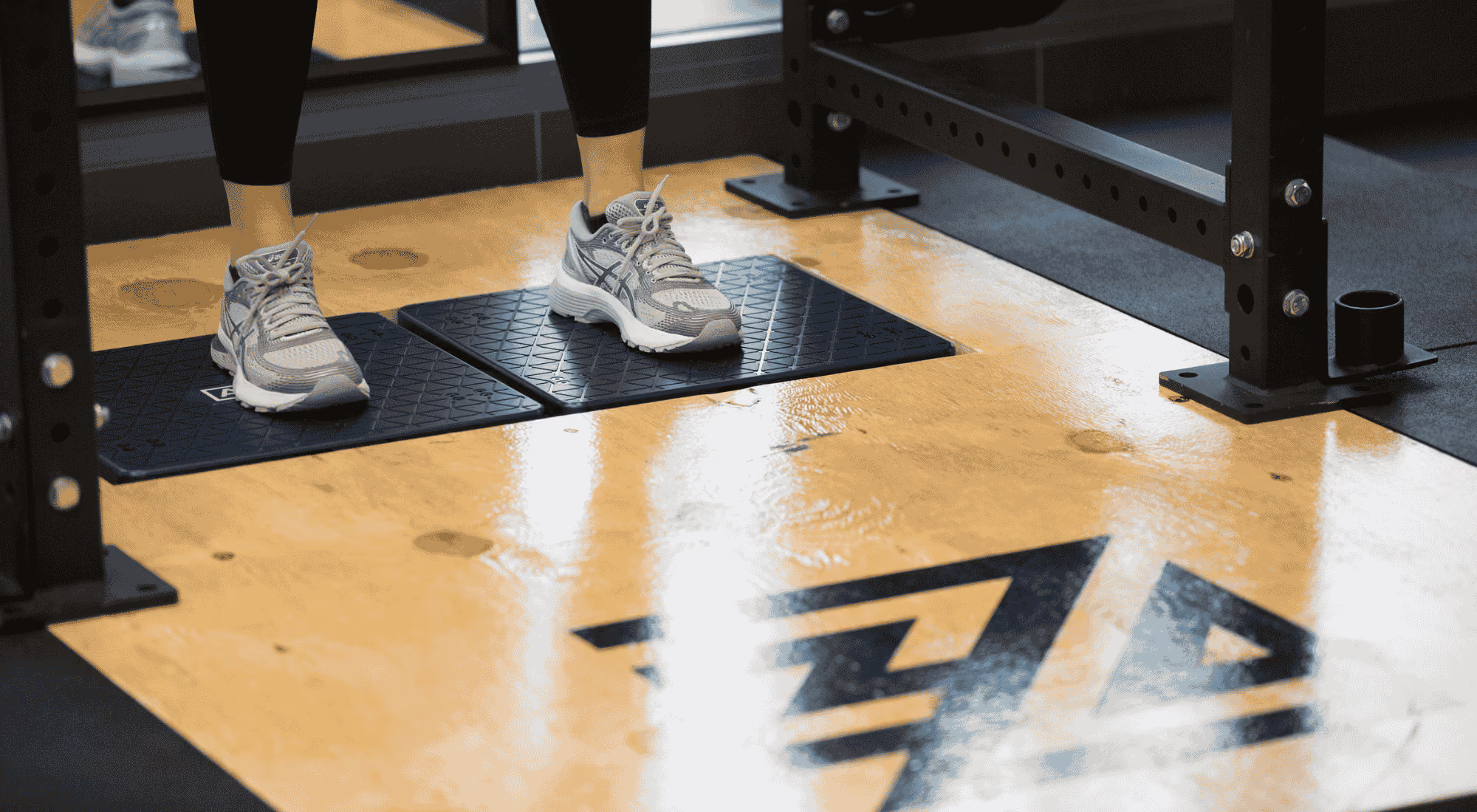
Standard manual strength tests cannot detect minor force deficits; advanced VALD force plates quantify strength, power output, and limb asymmetries down to single newtons to ensure true structural readiness.
Yes, running assessments identify movement inefficiencies, strength deficits, and mechanical performance-leaks, helping healthy runners optimise running economy and reduce future injury risk.