

Snapping Hip Syndrome
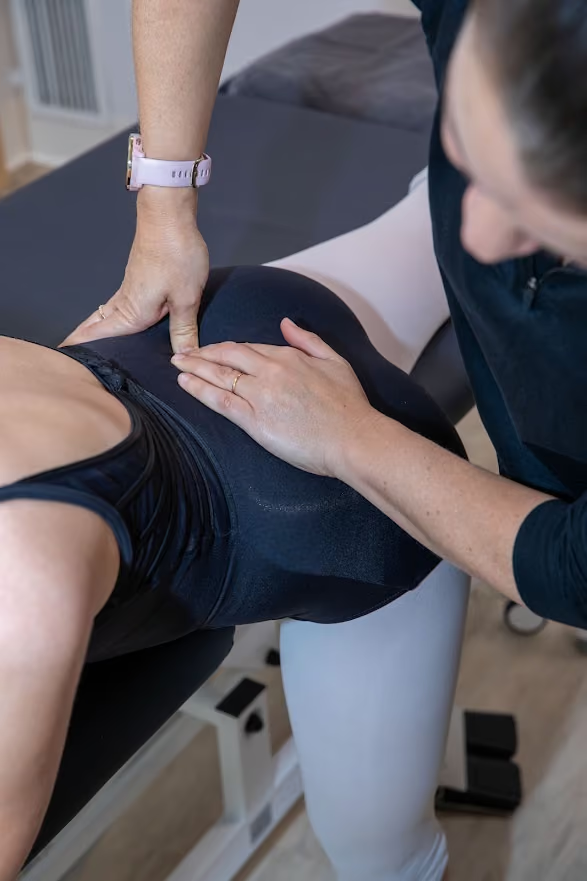
Stop the click, rebuild hip control, and return to pain-free dancing and athletic performance
.avif)
Understanding Snapping Hip Syndrome
Snapping Hip Syndrome (coxa saltans) occurs when a muscle or tendon audibly clicks or snaps over a bony prominence during movement. Internal snapping typically involves the iliopsoas tendon sliding over the pelvis during hip extension, while external snapping involves the IT band or gluteus maximus catching over the hip bone.
Dancers frequently feel or hear a popping sensation during développés, battements, or grand pliés, which can range from a mild annoyance to performance-limiting pain.
Young dancers undergoing rapid growth spurts are at particular risk as skeletal changes temporarily alter coordination, causing dancers to rely on passive structures rather than active muscle support.
Addressing hip snapping requires an understanding of dance biomechanics and dynamic joint control.
Operating from our Active Female Hub in Ultimo, our Dance Physiotherapists specialise in resolving coxa saltans in performing artists and active individuals.
Movements like grand battements, développés, and grand pliés place extreme mechanical loads on the hip joint.
We integrate sports medicine with dance-specific loading to eliminate snapping and protect performance longevity.
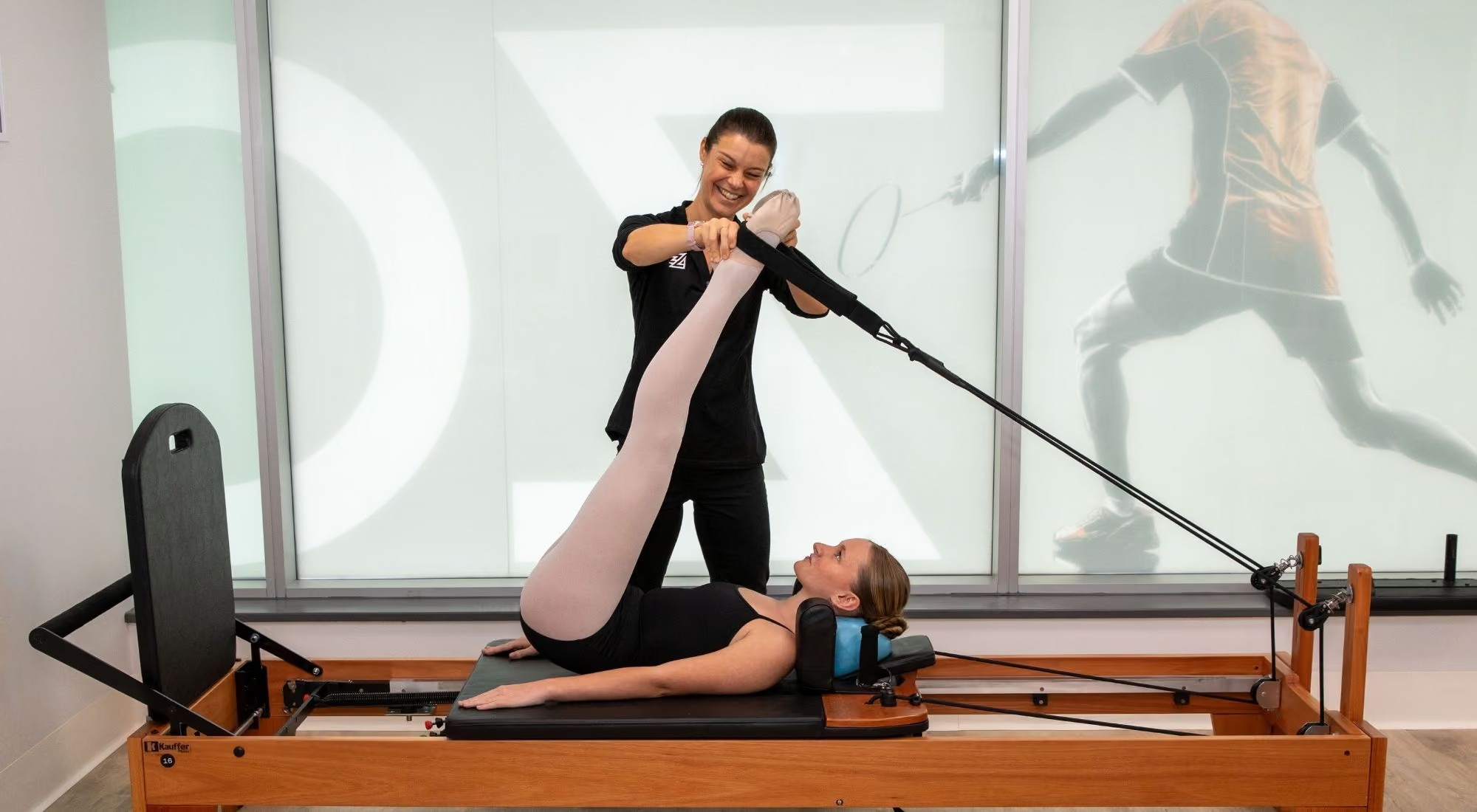
Modern clinical management prioritises active neuromuscular control and targeted strengthening over passive flexibility.
Contrary to popular belief, excessively stretching tight hip flexors often aggravates symptoms; building active strength and pelvic stability must come first.
Successful treatment analyses the entire chain—from foot mechanics and turnout control to trunk stability and pelvic alignment.
Progressive strengthening restores muscle resilience, allowing the hip to move smoothly through extreme ranges without snapping or joint irritation.
Our clinical philosophy focuses on precise movement analysis and objective functional testing.
We evaluate hip control during functional tasks—including turnout mechanics, pliés, battements, and single-leg balance.
Our Ultimo clinic utilises specialised strength equipment to bridge the gap between initial pain relief and full stage demands.
We work closely with dance teachers, parents, and doctors to deliver a unified recovery plan.
Who treats this?
Our experienced team members are ready to help. See their bios below and book online when ready.
.avif)
.avif)
.avif)
All major health funds accepted
Private health claiming via Tyro Health EFTPOS terminal











FAQ

While some mild cases may resolve as movement efficiency improves, persistent or painful snapping requires clinical assessment to prevent long-term irritation.
Generally, no. Excessive or passive stretching can often aggravate symptoms; building active strength and neuromuscular control must be the priority before stretching.
Yes. Modified training is usually recommended during rehabilitation, allowing you to maintain class participation while gradually rebuilding hip capacity.
During rapid growth spurts, bones lengthen faster than muscles adapt, temporarily reducing coordination and strength. Young dancers often compensate by relying on passive joint structures rather than active muscle support.
Please wear comfortable athletic clothing or dance wear (such as tights and a leotard or shorts) that allow easy movement evaluation. If you have a rehearsal schedule or video of your dance technique, feel free to bring those along as well.