

Tennis Elbow
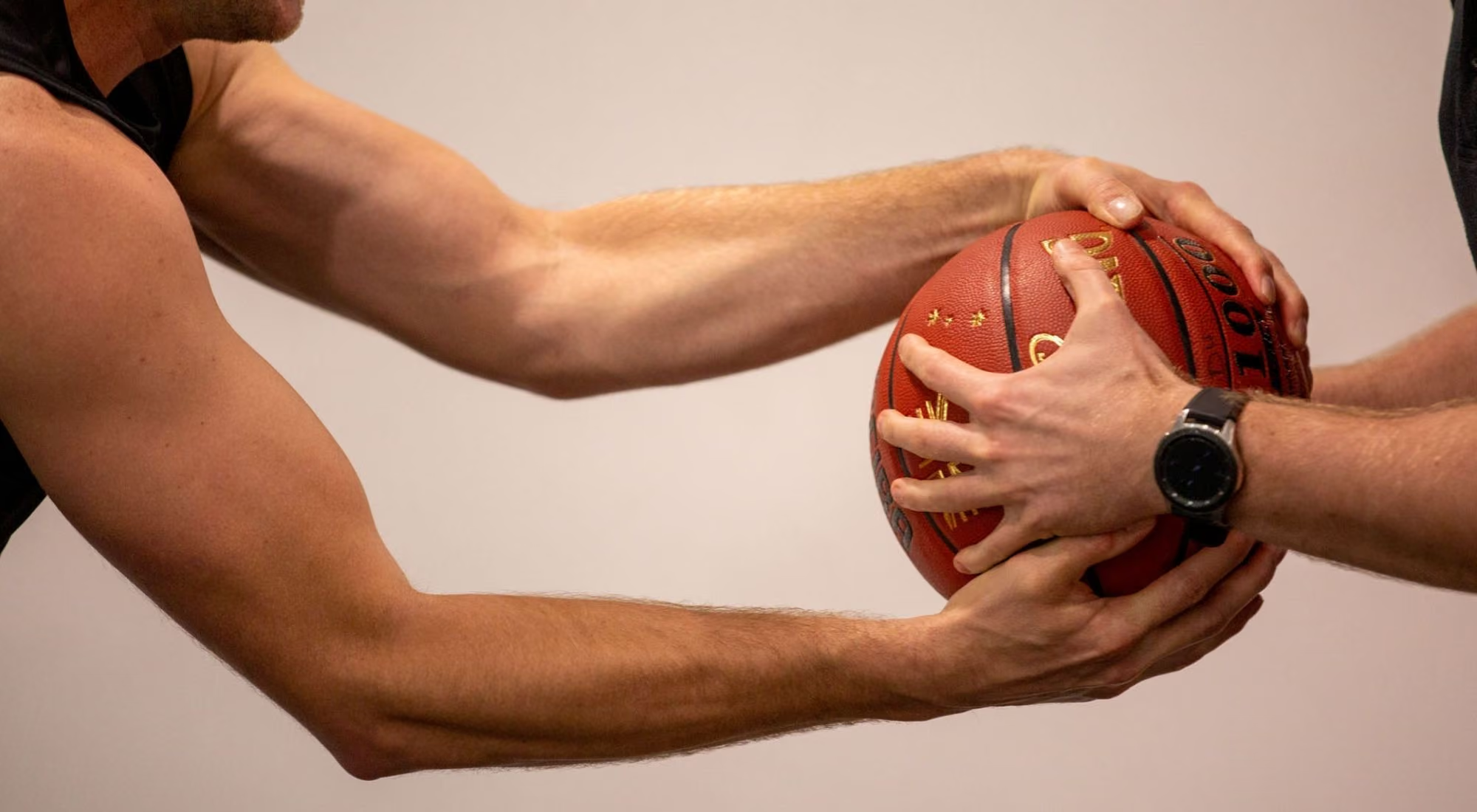
Relieve outer elbow pain and rebuild grip strength with evidence-based hand therapy. We provide tailored activity modification and progressive loading protocols for lasting relief.

Understanding Tennis Elbow
Tennis elbow occurs when the common extensor tendons, which attach to the lateral epicondyle (the bony bump on your outer elbow), become overloaded and irritated. This condition, often presenting as a tendinopathy, disrupts the structural integrity of the tendon, severely impacting your grip strength, forearm function, and daily comfort.
Primary indicators of tendon overload
The classic initial signs include a sharp, aching, or burning pain on the outside of the elbow, tenderness to the touch, and pain that radiates down the forearm toward the wrist.
Functional challenges
As the condition progresses, patients encounter significant weakness and sharp pain during routine tasks. This leads to frustrating challenges with basic fine motor and strength requirements, such as opening jars, turning doorknobs, pouring from a kettle, or even just lifting a coffee cup.
Occupational and repetitive work triggers
While traditionally associated with racquet sports, this injury is most frequently driven by extrinsic factors in the workplace. Prolonged typing, poor computer mouse ergonomics, heavy repetitive lifting, and the use of vibrating tools in manual trades are major contributors to tendon overload.
Early intervention is crucial to prevent the tendon from entering a chronic, degenerative phase. Addressing the mechanical overload early allows for successful conservative management without requiring months of frustrating lifestyle limitations.
Seek treatment when elbow pain begins interrupting your daily tasks or when you notice a sharp drop in your grip strength during repetitive activities at work or home.
The Royal Australian College of General Practitioners (RACGP) notes that while tennis elbow is often a self-limiting condition—meaning roughly 89% of patients will naturally recover within 12 to 24 months—a "wait and see" approach forces you to live with restricted function for a very long time. Early intervention through physiotherapy and hand therapy maximises your strength, provides early activity modification advice, and significantly speeds up your recovery timeline.
If your pain has persisted for several months, the tendon requires a specific, active rehabilitation approach. We need to introduce structured, safe loading to physically remodel the tissue and restore its capacity to handle everyday forces.
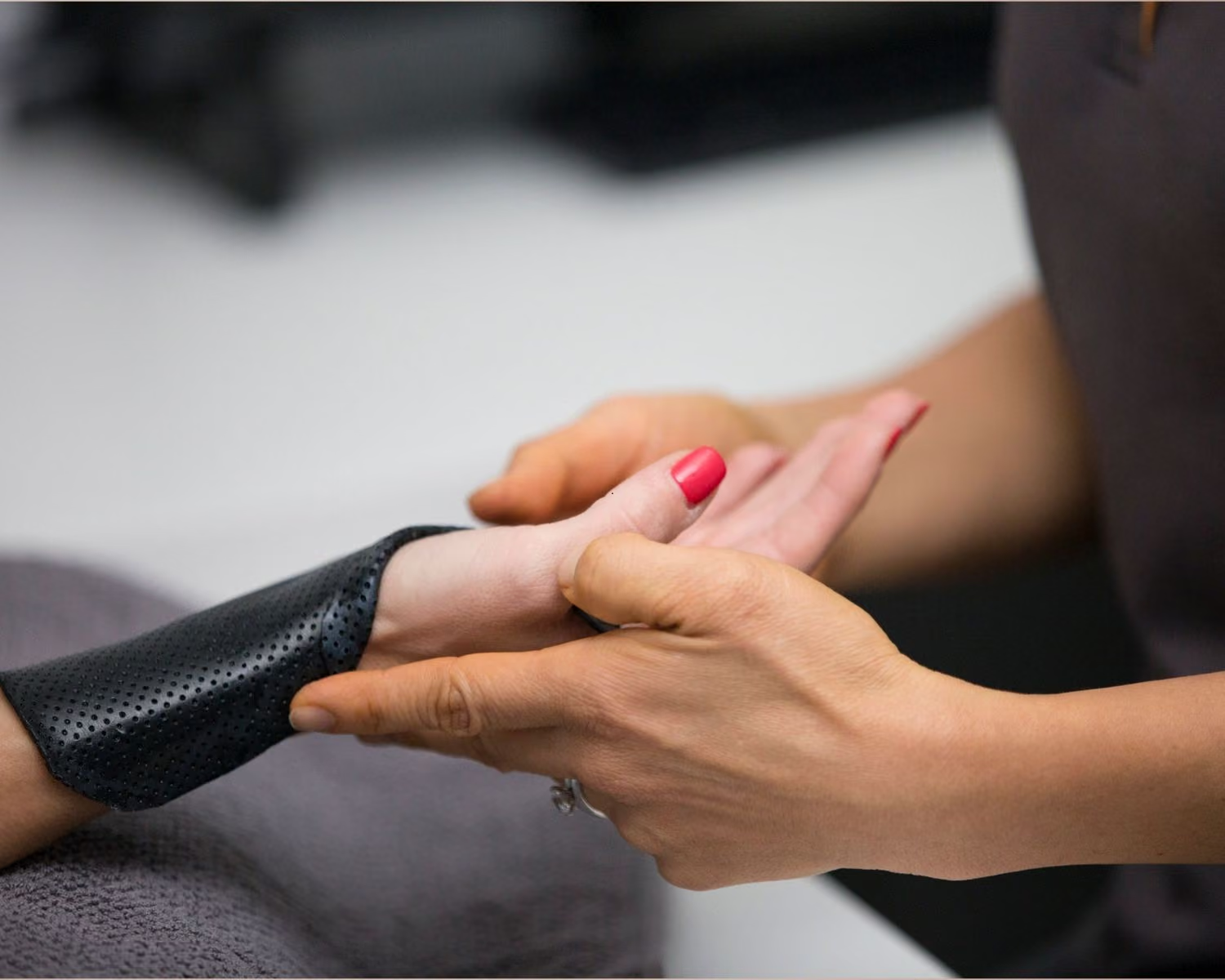
Clinical practice guidelines strongly emphasise that targeted, exercise-based rehabilitation should be the cornerstone of treatment. Accurate diagnosis and progressive hand therapy heavily outperform both passive rest and invasive interventions for long-term recovery.
Our highly experienced Hand Therapist, Gloria Spratt, consults at our Lewisham clinic, bringing a specialised, evidence-based focus to complex upper limb, elbow, and tendinopathy conditions.
We can provide and fit specific counterforce braces or elbow straps designed to physically offload the extensor tendons. Whilst it doesn't work for every case, braces can relieve the mechanical pressure on the tendon attachment site, allowing you to carry out unavoidable daily tasks with less pain.
We work alongside your GP or sports specialist to ensure all conservative avenues are optimised. We actively monitor your progress and ensure your occupational and lifestyle risks are managed holistically.
A successful recovery plan relies on strict load management and targeted exercises to rebuild the tendon's capacity. Continuing to aggressively push through the pain drastically increases tendon irritation, making structured reloading critical.
The primary first-line treatment involves immediate load management and activity modification. Under clinical guidance, you will begin isometric exercises—static muscle contractions that provide strong, short-term pain relief without straining the tendon while it is highly sensitive.
Under the guidance of our Hand Therapist, you will commence targeted eccentric and heavy slow resistance exercises. These are specifically designed to stimulate collagen repair, progressively increasing the amount of load your elbow and forearm can safely handle.
We integrate practical, ergonomic activity modifications—such as adjusting your keyboard height, modifying your lifting mechanics, and restoring total grip strength—to facilitate a safe, resilient return to repetitive work, heavy lifting, or sports.
Who treats this?
Our experienced team members are ready to help. See their bios below and book online when ready.
.avif)
All major health funds accepted
Private health claiming via Tyro Health EFTPOS terminal











FAQ

While a corticosteroid injection can provide a window of short-term pain relief (typically 4–6 weeks), the RACGP explicitly notes that long-term outcomes from cortisone are often worse than a "wait and see" approach or active physiotherapy. Cortisone can weaken the tendon tissue over time, leading to much higher rates of recurrence and delayed overall recovery. We focus on building your tendon's capacity naturally to prevent these exact setbacks.
While guidelines show that the vast majority of people will naturally recover within 12 to 24 months, choosing to "wait and see" means enduring restricted function and pain for a year or more. Engaging in early hand therapy maximises your strength, provides crucial activity modification advice, and drastically accelerates your timeline back to pain-free function.
Absolutely. Because tennis elbow is frequently caused by repetitive workplace tasks—such as manual labour or prolonged desk work—it is a very common Workers Compensation claim. We routinely work with GPs, Case Managers, and specialists under these schemes, as well as Medicare (EPC) referrals, to ensure your rehabilitation is fully supported and seamlessly integrated into your return-to-work plan.
Not at all. While the repetitive backhand swing in tennis is a well-known trigger, the vast majority of our patients develop this condition through daily occupational hazards. Anyone who performs repetitive gripping, twisting, or lifting—such as tradespeople, chefs, and office workers—is at risk of overloading these tendons.
Rehabilitation always begins with specific isometric holds to help relieve acute pain, before safely progressing into eccentric wrist extensions and heavy slow resistance exercises. Because every tendon responds differently to load, these exercises must be carefully tailored and progressed by a professional hand therapist to avoid a flare-up.