

Cervical Radiculopathy

Relieve nerve pain, restore arm strength, and avoid unnecessary surgery with targeted, evidence-based rehabilitation and manual therapy plans.

What is Cervical Radiculopathy?
Cervical radiculopathy, commonly known as a "pinched nerve" in the neck, occurs when a nerve root is compressed or irritated as it exits the spinal cord. It causes frustrating, radiating pain and neurological symptoms that impact your daily activities and work.
Beyond neck pain, symptoms typically radiate down the arm and include sharp pain, paraesthesia (pins and needles or numbness), or motor weakness that affects your arm strength. You may consider seeking care if you experience sharp, shooting pain down your arm that limits your ability to sleep, drive, or comfortably look at a computer screen.
Red flag signs requiring urgent clinical assessment include sudden muscle weakness, such as repeatedly dropping objects, or acute loss of sensation in your fingers.
The compression of a nerve root often happens in the region where the nerve root exits the spinal cord, at the intervertebral formanina. Causes can be acute and sudden, such as in a disc herniation. Osteoarthritis and degenerative changes can lead to slower structural changes that may also lead to nerve root irritation.
A frequent cause in younger or middle-aged adults is a herniated or bulging intervertebral disc that acutely presses against the exiting nerve root.
In older populations, degenerative changes such as foraminal stenosis (narrowing of the nerve pathways) and osteophytes (bone spurs) can gradually compress the nerve over time.
This condition commonly affects desk workers with sustained poor posture, heavy lifters, and athletes involved in contact sports or activities requiring repetitive overhead movements.
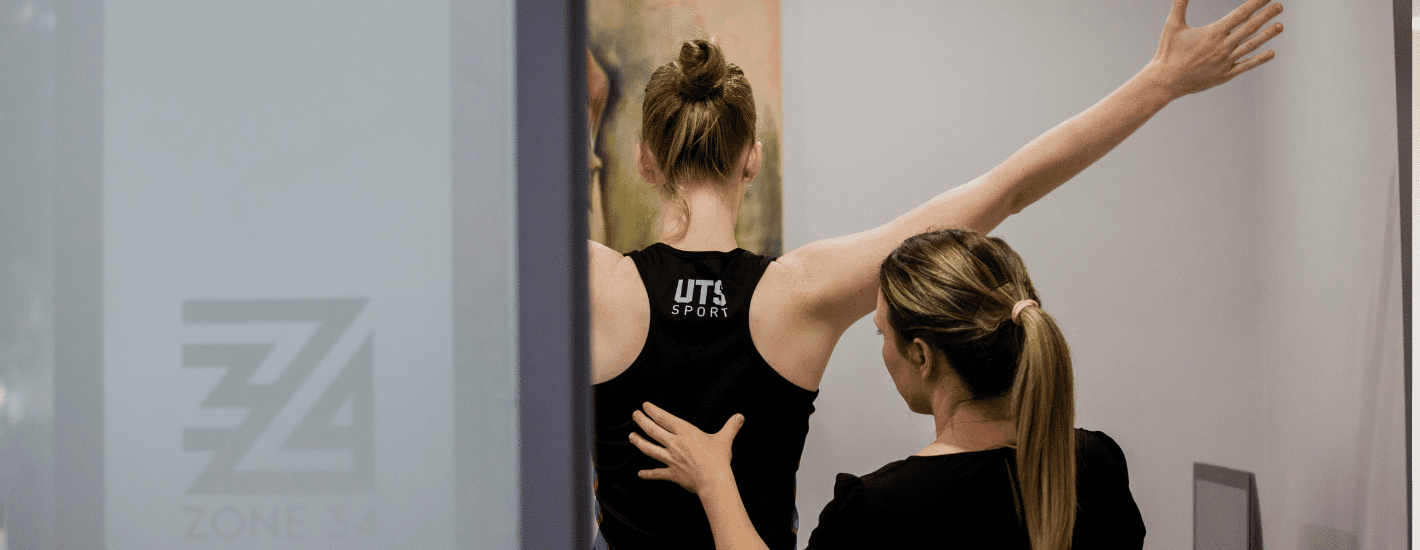
A wait-and-see approach is not recommended when nerves are involved. Expert, evidence-based care focuses on active mechanical offloading and movement restoration rather than simply masking the pain.
Conservative management, primarily led by physiotherapists, is highly effective for offloading the cervical spine, reducing neural tension, and providing advice about what activities to avoid.
As a highly effective adjunct, targeted massage therapy significantly reduces the secondary muscle spasm and severe guarding that inevitably develops in the neck and shoulders.
We collaborate with GPs to manage medical interventions, understanding when simple analgesia or NSAIDs are sufficient, and when neuropathic agents, cortisone injections, or surgical referrals are clinically indicated.
Successfully rehabilitating a nerve injury requires a phased, progressive approach that respects tissue healing timelines. A generic program will not address the specific directional preferences or functional strength deficits unique to your cervical spine.
We initially focus on calming the highly sensitive nerve using gentle nerve gliding techniques, manual therapy, and postural modifications to settle symptoms.
As pain subsides, we focus on targeted strengthening of the deep neck flexors, shoulder stabilisers, and upper back muscles to better support the spinal load.
To regain peak functional capacity and prevent recurrence, our Exercise Physiologists design higher-level resistance training programs to build long-term muscular armour around your spine.
Who treats this?
Our experienced team members are ready to help. See their bios below and book online when ready.



.avif)

.avif)

.avif)
All major health funds accepted
Private health claiming via Tyro Health EFTPOS terminal











FAQ

Most patients recover completely without surgery through structured physiotherapy. Surgery is generally only recommended as a last resort if all conservative care options have been explored or if there are progressive motor deficits.
Evidence-based guidelines suggest starting with NSAIDs and simple analgesia. For severe cases, your GP may prescribe low-dose anti-neuropathic agents or recommend a targeted cortisone spinal injection to reduce nerve root inflammation.
A disc herniation is when the soft inner core of a spinal disc bulges out and compresses the nerve, which is common in younger adults. Spinal stenosis is a degenerative narrowing of the nerve pathways, often caused by bone spurs in older individuals.
With appropriate physiotherapy management, most acute cases see substantial improvement within 8 to 12 weeks. However, nerve tissue heals slowly, and completely restoring motor strength and clearing all paraesthesia may take 6 to 12 months.
While massage cannot physically un-pinch the nerve root, it is a highly valuable adjunct to physiotherapy. It provides excellent symptom relief by releasing the severe, secondary muscle spasms that develop around the neck and shoulder as a protective response.