

Frozen Shoulder
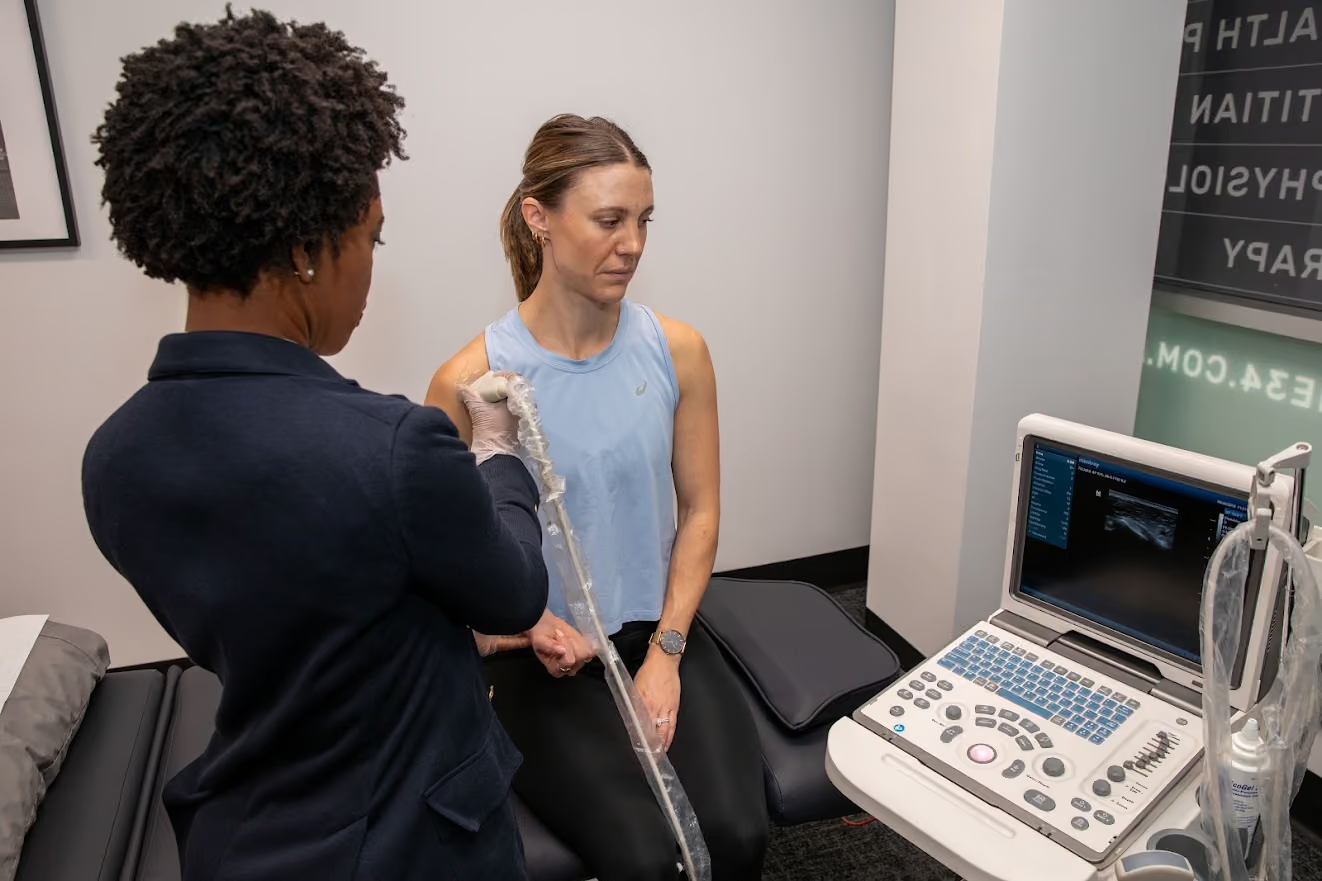
Regain your range of movement and move past the pain with our evidence-based, phased management plans.
Understanding Frozen Shoulder
Frozen shoulder, clinically known as adhesive capsulitis, is a condition where the shoulder capsule thickens and becomes inflamed, causing stiffness and pain. While the exact trigger is often unknown, current understanding points to a complex inflammatory process where autoimmune responses cause the capsule to thicken and scar.
Symptoms typically present as progressive stiffness, or a sharp pain in the deltoid region. There is a reduction in both your active and passive range of motion, with external rotation (twisting the arm outward) typically being the most restricted movement. Daily activities can become challenging, making it painful to reach into the back of your car, put on a jacket, or simply sleep comfortably through the night.
This condition most frequently impacts individuals aged 40–60. Women are up to 4 times more likely than men to develop the condition. Estrogen depletion during perimenopause is recognised as a significant contributor to the onset of the condition and subsequent capsule thickening. Metabolic factors also play a major role: having diabetes increases your risk by 4–5 times, while hypothyroidism increases it by 1.8 times.
Frozen shoulder typically progresses through three distinct stages, with symptoms often lingering for months or even years. Early physical assessment is critical to identifying your current phase and building effective strategies to manage your pain.
During this highly sensitive acute window, the primary focus is on pain management, education on comfortable positioning, and resting the joint. You will typically experience severe, progressive pain and a gradual loss of range of motion as the capsule becomes inflamed.
As the inflammatory phase eventually settles, the acute pain often decreases, but the shoulder becomes heavily scarred and stiff. We transition to gradual, pain-tolerant movement and progressive loading as the thickened capsule allows.
In the final sub-acute phase, the fibrotic tissue slowly remodels, and you will begin to regain your active range of movement. Continued progressive loading ensures a safe return to normal functional tasks.

Managing a frozen shoulder requires a highly coordinated approach to address both the local joint restriction and the secondary compensatory pain.
Your Physiotherapist drives your initial diagnosis and maps out your specific phase. Identifying frozen shoulder early ensures you avoid aggressive stretching that can actually worsen inflammation in the initial stages.
We work closely with General Practitioners (GPs) and Sports Physicians to help manage the severe symptoms associated with this condition. Depending on your clinical presentation and specific phase, they may consider prescribing tailored pain relief medications, or performing medical interventions such as hydrodilatation or corticosteroid injections to rapidly reduce joint inflammation.
As you move into the "Thawing" phase, our Exercise Physiologists design progressive strength programs to restore full functional movement and strength, ensuring you have the resilience to return to your normal daily activities.
Our approach is strictly phase-based to ensure we respect the sensitive, inflammatory nature of the shoulder capsule.
Because frozen shoulder can be a very slow recovery process, we focus heavily on finding safe exercise alternatives that keep you moving. It is incredibly important to stay active, maintain your overall fitness, and continue enjoying your life without unnecessarily aggravating the joint.
We implement progressive exercises starting with gentle isometric strengthening and pain-free range of motion work. As your shoulder capsule allows, we gradually work into elevated positions to rebuild your capacity. Our primary goal is to ensure you do not push too hard and stir up the shoulder, which can trigger further inflammation and delay healing.
When rehabilitating a frozen shoulder, understanding acceptable pain limits is crucial. We use a simple traffic light system to monitor your load: a pain level of 0–2 out of 10 is a green light to proceed. Pain hovering at a 3–5 out of 10 is acceptable, provided it settles quickly post-exercise. However, pain greater than a 5 out of 10, or an intense ache that disrupts your sleep that night, is a clear indicator that the activity flared the capsule and requires modification.
Who treats this?
Our experienced team members are ready to help. See their bios below and book online when ready.


.avif)

.avif)

.avif)

.avif)
All major health funds accepted
Private health claiming via Tyro Health EFTPOS terminal











FAQ

While the condition can persist for 12 to 30 months on average, our goal is to improve your function and aggressively manage your pain throughout every stage.
Diagnosis is primarily clinical, and a focused physical assessment is the gold standard. We typically reserve imaging (such as X-Ray or MRI) only for cases where the presentation is atypical or to exclude other structural issues like fracture or more red flag conditions
Yes, but exercise must be carefully tailored to your specific phase. We help you find the "sweet spot" for movement that maintains function without increasing inflammation.
Estrogen depletion during perimenopause is recognised as a significant contributing factor to the onset of the condition and the subsequent scarring or thickening of the shoulder capsule.
The condition moves through three stages: the "Freezing" phase (highly painful and inflammatory), the "Frozen" phase (less acute pain but severe stiffness), and the "Thawing" phase (gradual return of movement and function).