

Patella Tendinopathy
.avif)
Rebuild tendon strength and safely return to explosive court-based performance with our evidence-based management plans.
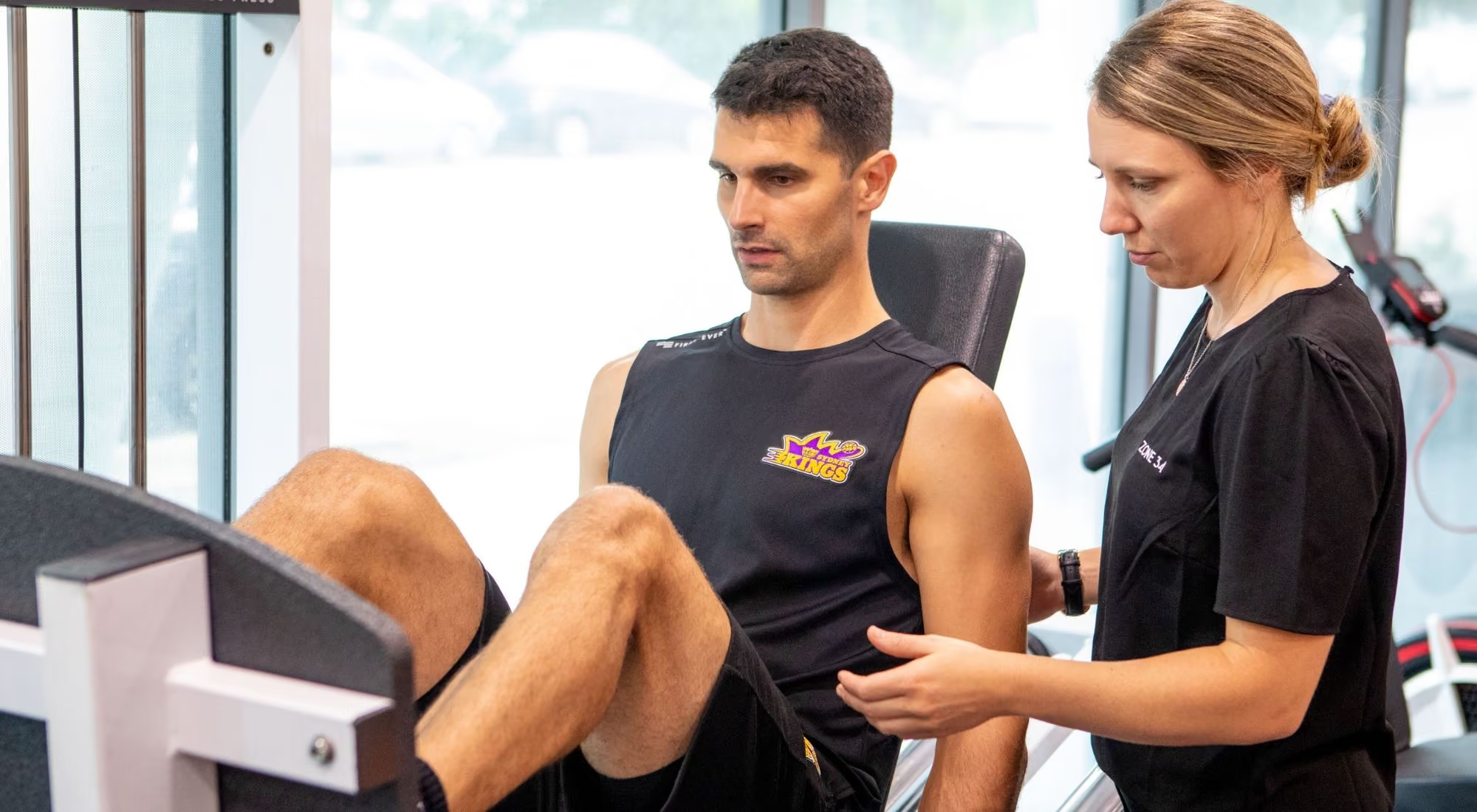
Understanding Patella Tendinopathy (Jumper's Knee)
Patella tendinopathy, sometimes called patella tendinitis, is an overuse injury affecting the tendon that connects your kneecap to your shin bone, causing daily frustration for athletes who rely on jumping, landing, and rapid changes of direction.
Without proper load management, this nagging knee pain can significantly reduce your vertical leap and cause compensatory movement patterns that limit your game.
Symptoms typically include pain and tenderness at the base of the kneecap, stiffness during early exercise, and increased sharp discomfort when jumping or performing heavy squats.
Tendon pain should be addressed as soon as it begins limiting your performance, as early load modification prevents minor irritations from evolving into chronic degeneration. Seek immediate care if you notice worsening pain during warm-ups, an inability to jump, or significant morning stiffness that does not ease with movement.
Early management focuses on load modification and reducing aggravation without resorting to complete rest, ensuring you preserve your baseline quadriceps and calf strength.
For long-standing pain, we implement structured, progressive loading to gradually rebuild the tendon's capacity to handle the explosive demands of your sport over time.
This condition frequently targets competitive juniors navigating growth spurts, representative netballers, and adult players managing high-volume jumping and landing schedules.
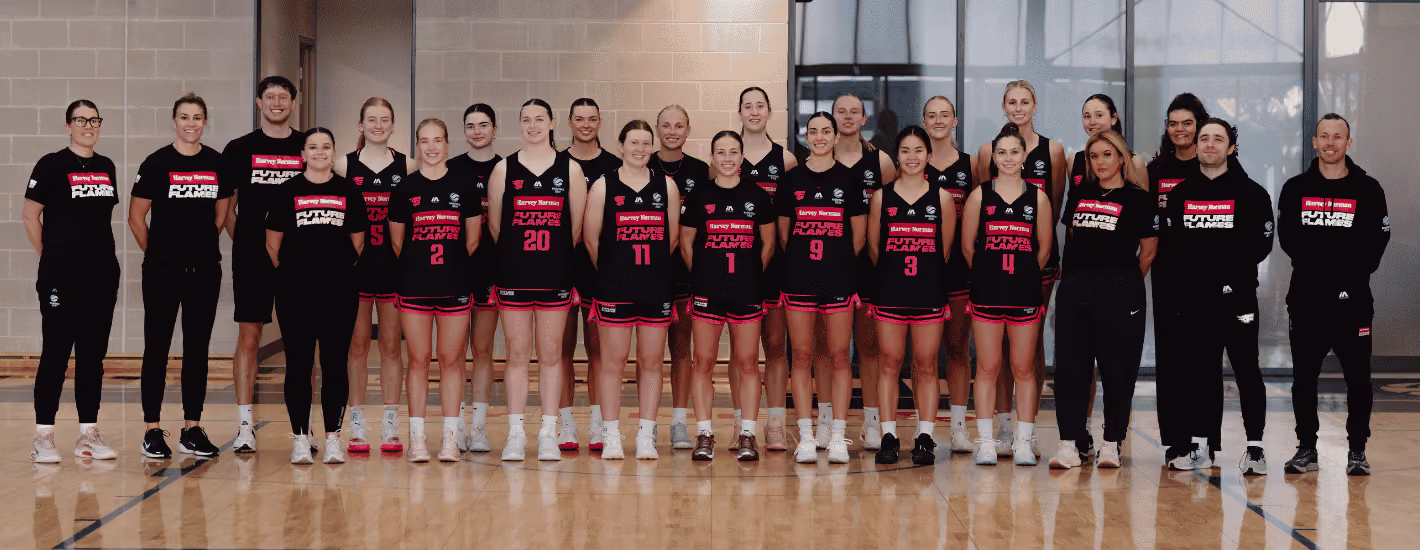
Complete rest does not cure a tendinopathy; tendons require progressive loading to heal and rebuild capacity. Our specialised clinical approach utilises objective data and heavy slow resistance protocols to build a resilient athletic foundation, discarding generic wait-and-see advice.
We utilise VALD technology and biomechanical screenings to establish precise, data-driven baselines for your lower-limb strength symmetry and landing mechanics.
Our premium facility bridges the gap between traditional physiotherapy and athletic conditioning, allowing us to transition you seamlessly from the treatment table to full athletic loading.
Senior clinicians collaborate internally, ensuring your rehabilitation program is supported by leading experts in sports physiotherapy, strength and conditioning, and dietetics for optimal tissue healing.
A successful tendon recovery plan must be progressively overloaded, highly individualised, and carefully mapped to the specific intensity of your court-based sport. We systematically transition you through clinical symptom management all the way to high-level reactive court conditioning.
We begin by identifying mechanical aggravators and modifying your training load, frequently using isometric exercises to settle pain safely without unnecessarily stopping you from being active.
We progressively build your lower limb capacity through targeted Heavy Slow Resistance (HSR) and eccentric strength exercises focused heavily on your quadriceps, glutes, and tendon system.
Before returning to unrestricted play, we rebuild the specific demands of your sport, including plyometric jumping drills, safe landing control, acceleration, and change-of-direction training.
Who treats this?
Our experienced team members are ready to help. See their bios below and book online when ready.


.avif)
.avif)
.avif)
.avif)
.avif)

All major health funds accepted
Private health claiming via Tyro Health EFTPOS terminal











FAQ

Clinical practice guidelines emphasise that complete rest is ineffective; the gold standard treatment involves a progressive Heavy Slow Resistance (HSR) training program and eccentric loading to physically rebuild the tendon's load capacity over time.
While morning stiffness and pain may improve within weeks using isometrics, true structural tendon remodelling takes time, and most athletes require a structured 3 to 6-month progressive loading program to safely return to explosive jumping sports without recurrence.
In many cases, yes. The primary goal is to intelligently modify your training volume and limit painful load spikes rather than stopping completely, finding the optimal balance between maintaining court fitness and strengthening the tendon.
No. Complete rest may temporarily reduce pain, but it inherently causes the tendon and surrounding quadriceps to lose further strength, making the injury even more likely to flare up as soon as you return to normal activity.
Pain directly below the kneecap during high-load activities is a classic indicator that the patella tendon is struggling to tolerate and transfer the forces of deceleration and energy storage required for those movements.