

Quads Strain
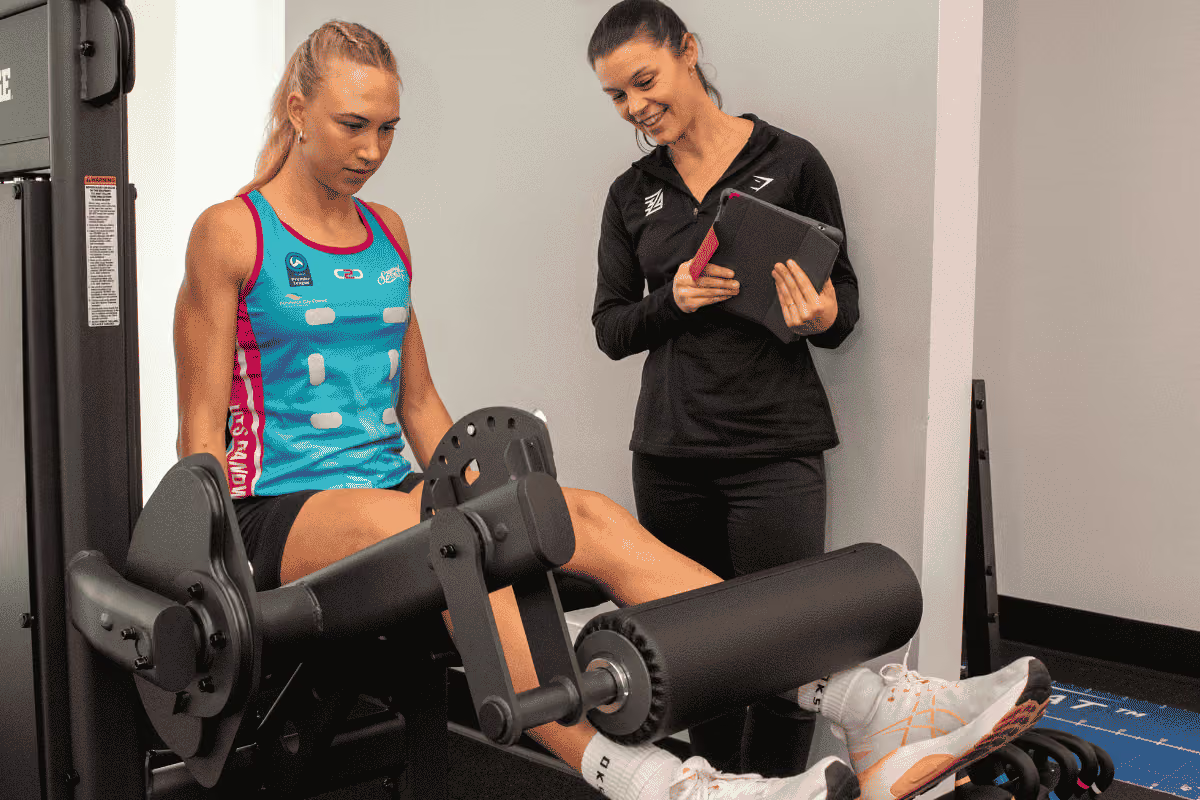
Master the recovery process. We guide you from injury to peak performance, ensuring you return to sprinting, jumping, and kicking with total confidence.
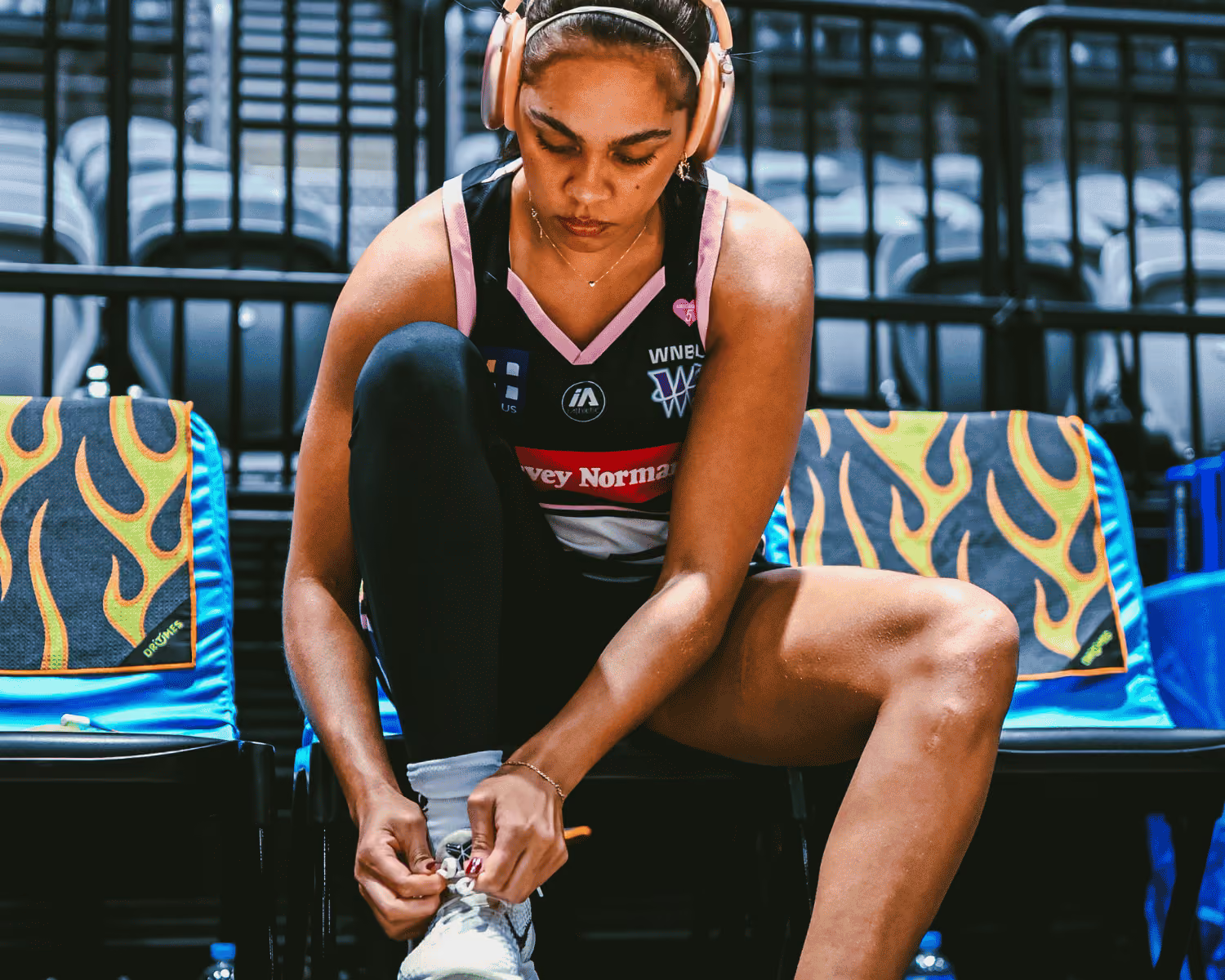
Understanding Quadriceps Strains
A quadriceps strain involves the disruption of the large muscle group at the front of your thigh, typically caused by the rapid, explosive contractions required during sprinting and kicking. For athletes in sports like AFL or soccer, these injuries are deeply frustrating as they immediately compromise your ability to strike the ball and accelerate, forcing you away from the game you love.
At the moment of injury individuals typically feel a sharp or pulling pain followed by localised tenderness. Visible bruising or swelling in the front of the thigh is not common, typically only occuring in high grade injuries. .
Beyond the field, you may experience difficulty with basic movements like stair climbing, lunging, or attempting to bend the knee fully without pain.
Early clinical assessment is vital to establishing a baseline of injury severity and setting a realistic recovery timeline that prevents prolonged rehabilitation or recurrent re-injury. We focus on early intervention to protect muscle integrity before structural deficits set in.
Seeking assessment within the first 72 hours is important to assess the exact location and severity of the injury and effectively structure your return-to-sport framework.
These injuries frequently affect field-sport athletes playing AFL, soccer, and rugby, as well as sprinters and those involved in high-intensity kicking drills.
You need immediate clinical care if you notice a progressive reduction in your athletic performance, worsening pain, or a complete inability to comfortably load the quadriceps.

Recovering from a quad strain requires a move away from passive "rest and wait" strategies toward an active, evidence-based approach. Generic recovery often fails because it does not address the specific demands placed on the quadriceps during high-velocity sprinting and kicking.
Targeted, progressive loading protocols restore muscle fibre integrity significantly faster than complete rest, physically rebuilding the damaged tissue.
By using advanced objective strength testing, we ensure the muscle is not just "pain-free," but structurally resilient enough to withstand the extreme forces of a full-power kick. Tests may include Isometric Knee Extension, or a Run Specific Knee Isometric Push (RSKIP).
Our practitioners deeply understand the nuance of sprinting and kicking mechanics, giving you access to the same high-performance care used in professional sports.
A successful recovery plan must be progressive, individualised, and directly adaptable to the specific mechanical requirements of your sport. We systematically transition you from isolated structural strength to functional, on-field integration.
We start by defining the exact severity of the strain to establish timeframes, then implement injury-specific strengthening exercises to safely rebuild muscle capacity.
As your tissues heal, we transition your rehabilitation to the field, getting you back to running fast with safely progressed deceleration and agility mechanics.
The final stage integrates sport-specific training, including kicking and competitive drills, alongside long-term prevention strategies to avoid future recurrence.
Who treats this?
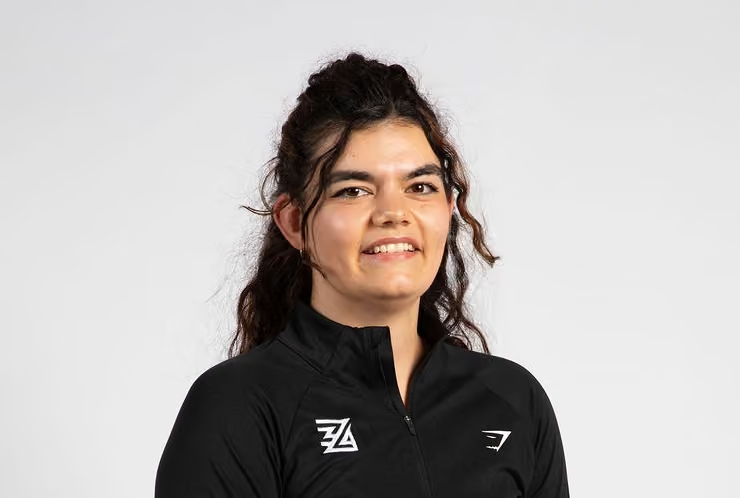
Our experienced team members are ready to help. See their bios below and book online when ready.


.avif)

.avif)

.avif)
All major health funds accepted
Private health claiming via Tyro Health EFTPOS terminal











FAQ

Your return to sport is determined by objective strength testing and your ability to meet phase-based loading criteria without pain, rather than just waiting a specific amount of time to pass.
In most cases, a thorough clinical assessment by an experienced sports physiotherapist can determine the severity of a strain, though scans may be recommended for high-grade injuries or to assess for tendon involvement.
With proper, progressive loading and structured strength rehabilitation, most athletes recover their full kicking power and sprint speed completely.
Recovery depends heavily on severity. Mild (Grade 1) strains may take 1 to 3 weeks, moderate (Grade 2) tears take 4 to 6 weeks, while severe (Grade 3) injuries can require months of structured rehabilitation.
Early rehabilitation starts with submaximal isometric holds (like wall sits), progressing to eccentric exercises such as slant board squats and reverse nordics to actively rebuild the muscle's tolerance to load.