

Sciatica
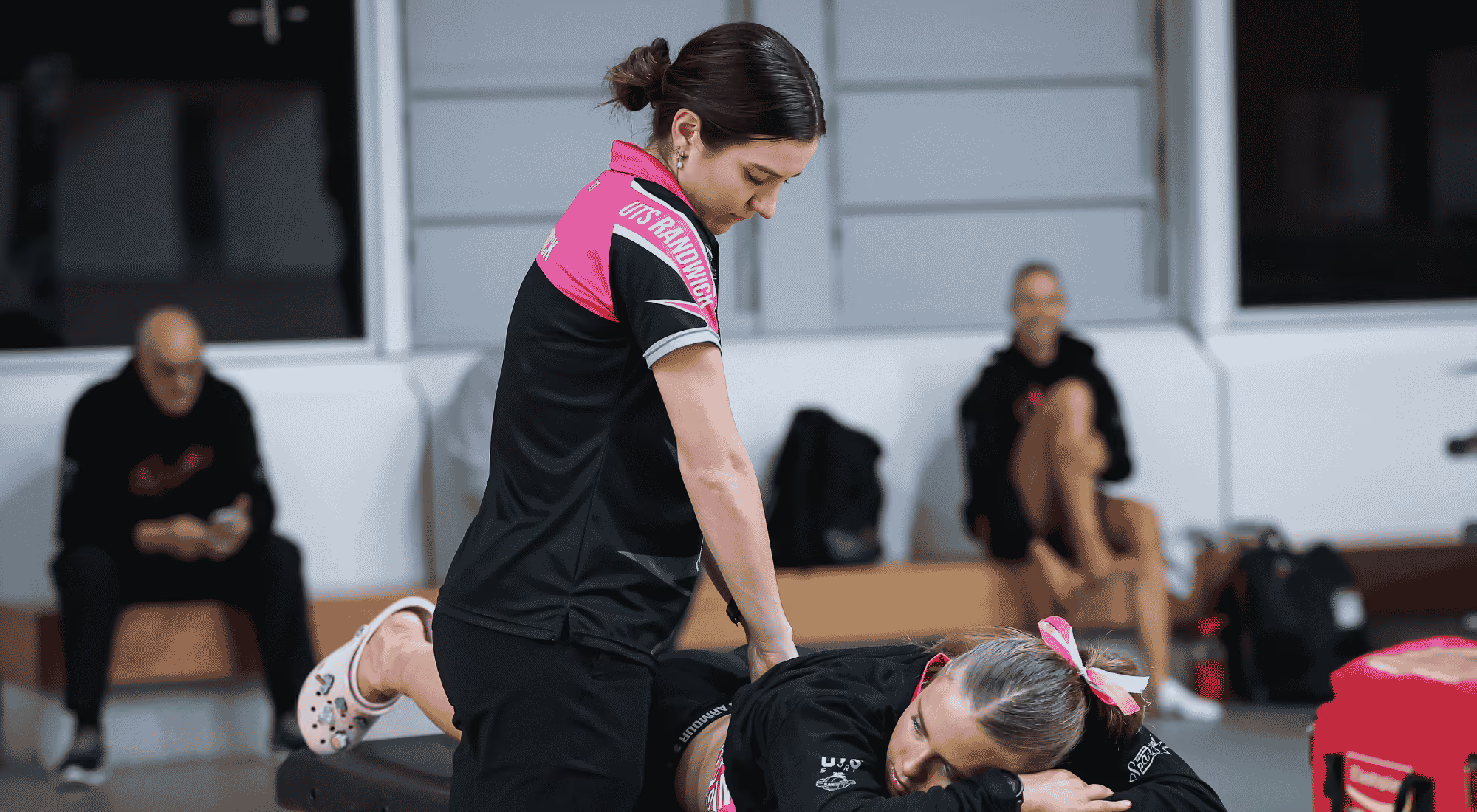
Relieve nerve pain and return to activity with targeted, evidence-based rehabilitation and manual therapy plans.
What is Sciatica and Lumbar Radiculopathy?
Sciatica, clinically known as lumbar radiculopathy or a "pinched nerve" in the lower back, occurs when a nerve root is compressed or irritated as it exits the lumbar spine. It causes frustrating, radiating pain and neurological symptoms that limit your daily activities. Beyond lower back pain, symptoms typically radiate down the leg and may include sharp pain, paraesthesia (pins and needles or numbness), or motor weakness that significantly compromises your walking capacity and leg strength.
Disc herniation
A frequent cause in younger or middle-aged adults is a herniated or extruded intervertebral disc—where the soft inner core pushes through the tougher outer layer—that acutely presses against the exiting nerve root.
Spinal stenosis and bone spurs
In older populations, degenerative changes such as spinal stenosis (narrowing of the nerve pathways) and osteophytes (bone spurs) can narrow the foramina, which may lead to compression of the nerve root exiting the foraminal space.
Navigating severe nerve pain can be overwhelming, but you have multiple options for expert first-line care. Having an understanding of the cause of your "Sciatica" is crucial when determine movement preference exercises, and guidance on what activities to minimise where possible.
You do not need a medical referral to see a physiotherapist. We are highly trained first-contact practitioners equipped to accurately diagnose lumbar radiculopathy, assess your nerve function, and immediately begin managing the musculoskeletal condition driving your pain.
Seeing your GP is an excellent step, especially if your pain is severe and limiting your sleep or daily function. They provide crucial medical advice, rule out red flags, and can prescribe appropriate medications to help you tolerate physical rehabilitation.
The most effective recovery often involves both. We work closely with your GP, combining their expert medical and medication management with our targeted physical therapy to provide comprehensive, evidence-based care for your sciatica.
.png)
A wait-and-see approach is not recommended when spinal nerves are involved. Current Royal Australian College of General Practitioners (RACGP) guidelines support a stepped-care management approach for the majority of patients with sciatica and disc herniation.
Conservative management, primarily led by physiotherapists, is highly effective for offloading the lumbar spine, reducing neural tension, and providing advice on staying active.
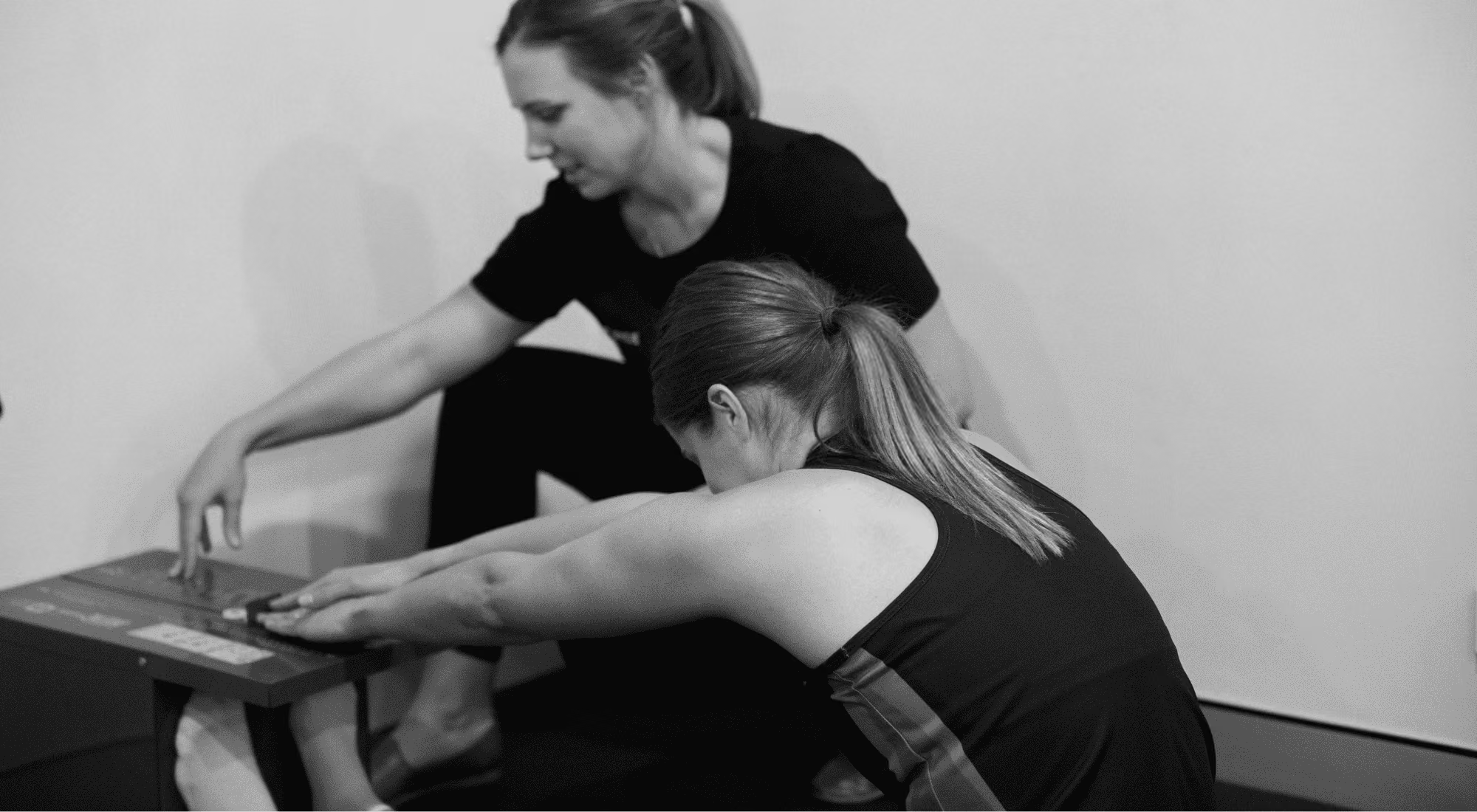
We utilise precise objective testing to map your functional capacity and ensure your rehabilitation is driven by data. This may include using VALD force plates for an Isometric Mid Thigh Pull to safely measure baseline strength, alongside rigorously monitoring your nerve recovery through specific strength testing, mobility tracking, and reflex assessments.
We collaborate closely with GPs to manage medical interventions, understanding when simple analgesia or NSAIDs are sufficient, and when neuropathic agents, cortisone injections, or surgical referrals are clinically indicated.
Successfully rehabilitating a lumbar nerve injury requires a progressive approach that respects tissue healing timelines while ensuring a safe transition from initial symptom relief to high-level athletic resilience.
We initially focus on calming the highly sensitive nerve using pain modulation, gentle nerve gliding techniques, and postural education to reduce inflammation and stabilise the area.
As pain subsides, we focus on progressive spinal stabilisation and strength programming customised to your activity demands to better support the spinal load.
To regain peak functional capacity and prevent recurrence, our Exercise Physiologists design conditioning and higher-level resistance training programs to build long-term muscular armour around your spine.
Who treats this?
Our experienced team members are ready to help. See their bios below and book online when ready.



.avif)

.avif)

.avif)
All major health funds accepted
Private health claiming via Tyro Health EFTPOS terminal











FAQ

Most patients recover completely without surgery through structured, non-operative physiotherapy and targeted load management. Surgery is generally only considered as a last resort if conservative treatments fail or if you develop worsening, progressive motor deficits.
Evidence-based guidelines suggest starting with NSAIDs and simple analgesia. For severe cases, your GP may prescribe low-dose anti-neuropathic agents or recommend a targeted cortisone spinal injection to reduce nerve root inflammation.
A disc herniation is when the soft inner core of a spinal disc bulges out and compresses the nerve, which is a common cause of sciatica in younger adults. Spinal stenosis is a degenerative narrowing of the nerve pathways, often caused by bone spurs in older individuals.
While individual timelines vary, many patients experience obvious improvement within 4 to 6 weeks of structured clinical management. However, nerve tissue heals slowly, and completely restoring motor strength and clearing all paraesthesia can sometimes take months.
While massage cannot physically un-pinch the nerve root, it may provide symptom relief by releasing the severe, secondary muscle spasms that develop around the lower back and hips as a protective response.