

Shoulder Instability Reconstruction
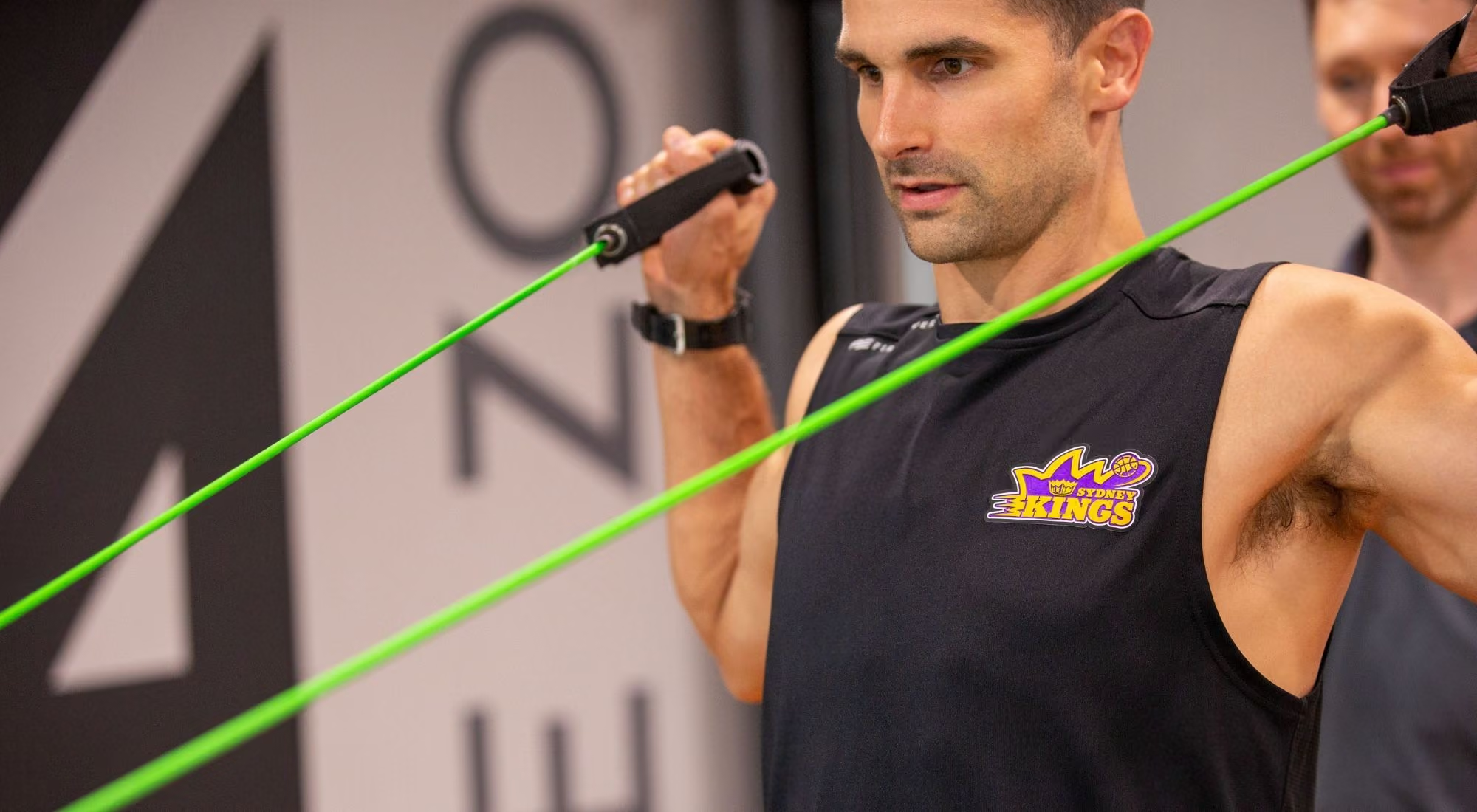
Rebuild joint stability, restore overhead power, and safely return to contact sports with criteria-based physiotherapy.
.avif)
What is a Shoulder Reconstruction?
A shoulder reconstruction is a surgical procedure performed to restore structural stability to the shoulder joint (glenohumeral joint) when ligaments, cartilage, or bone are damaged due to traumatic dislocations, subluxations, or chronic instability.
In young athletes under 20 participating in high-risk collision or contact sports, non-surgical management carries a recurrent dislocation rate as high as 70% to 90%, whereas surgical stabilisation dramatically reduces this recurrence risk down to approximately 10% to 15%.
Depending on your specific joint pathology, your surgeon may perform a soft-tissue labral repair (such as a Bankart repair to reanchor torn cartilage to the socket) or a Latarjet procedure (a bone-block transfer used when significant socket bone loss is present).
Successful post-surgical outcomes rely on initiating physiotherapy within specific biological windows aligned with your surgeon's protocol.
Focuses on protecting the surgical repair, adhering to surgical protocols wearing a sling immobilisation, and maintaining range in the wrist, elbow and next.
Following surgery, simple tasks like getting dressed, washing your hair, or finding a comfortable sleeping position are challenging while your arm is protected in a sling.
Depending on your goals and lifestyle, in this initial phase we may look for exercise ideas to train the opposite arm, and maintain lower limb and trunk strength and general conditioning.
Re-establishes active overhead range of motion and introduces progressive rotator cuff, upper limb and back strengthening via both body weight and external load exercises.
Integrates sport-specific throwing, plyometric absorption drills, and controlled collision mechanics once strict objective strength criteria are passed.
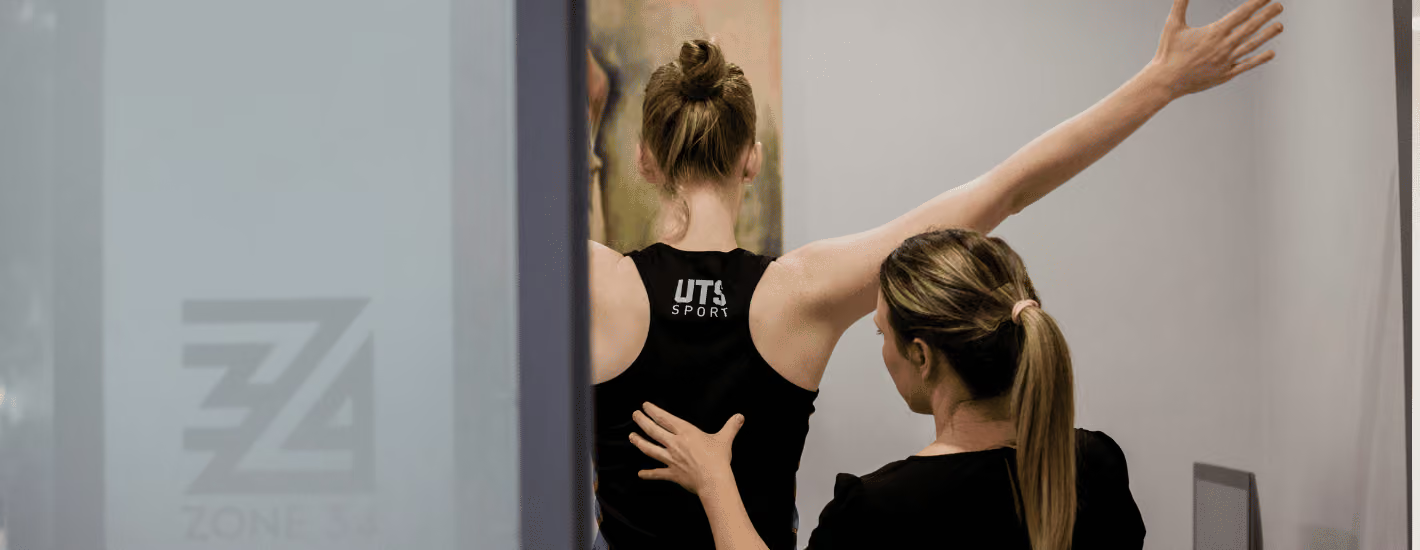
We eliminate guesswork from shoulder instability rehabilitation by using sports science technology to guide every stage of your recovery.
Using Force Frame and dynamometry we measure exact rotational strength, peak force production, and side-to-side symmetry.
Your objective strength data are evaluated against age, gender, and sport-specific normative standards before granting high-load or contact sports clearance.
Standard isometric strength tests include isometric External Rotation (ER), Internal Rotation (IR) and Athletic Shoulder Test (ASH Test).
Test positions can range from with your elbow by your side, at 90 degrees, and what is referred to as a T (90 deg), Y (135 deg) and I (180 deg).
A successful recovery from shoulder reconstruction relies on a synchronised team where each specialist plays a distinct, vital role.
Performs the surgical repair, defines overarching protection guidelines (such as sling duration and rotational limits), and conducts milestone surgical reviews.
Acts as your lead rehabilitation director, managing wound protection, joint mobility, and objective strength testing. The physiotherapist frequently communicates directly with coaches, trainers, or employers to advise on activity modifications, training progressions, and clearance for return to full play.
Partners in late-stage athletic conditioning, delivering gym-based hypertrophy, heavy resistance training, and kinetic chain loading to build long-term joint resilience.
Who treats this?
Our experienced team members are ready to help. See their bios below and book online when ready.
.avif)
All major health funds accepted
Private health claiming via Tyro Health EFTPOS terminal











FAQ

Return to contact sports or heavy lifting is criteria-driven rather than time-bound. While full tissue healing and high-level conditioning typically take 6 to 9+ months, clearance requires passing objective strength symmetry tests (e.g., >90% symmetry on dynamometry), full functional overhead range, and sport-specific plyometric testing.
Sling duration is dictated by your surgeon’s specific operative protocol to protect the newly anchored labrum or bone block. In most cases, the sling is worn continuously for 4 to 6 weeks, with gradual weaning guided by your physiotherapist for specific exercises and personal hygiene.
A Bankart repair reattaches the torn labrum and capsule to the glenoid socket using suture anchors. A Latarjet procedure involves transferring a piece of bone (the coracoid process) with its attached tendon to the front of the shoulder socket to restore lost bone and create a muscular "sling" for added stability.
Subjective feelings of stability do not reflect true muscular force output under fatigue. Objective testing using VALD force sensors and dynamometers measures exact rotational strength, peak force, and limb symmetry, ensuring your shoulder can handle high-velocity collisions without re-injury.
While post-operative soreness is expected, immediate medical attention is required if you experience signs of infection (fever, localised heat, redness, or wound discharge), a sudden severe spike in pain unmanaged by medication, or sudden numbness extending down your arm into your hand.