

Achilles Repair
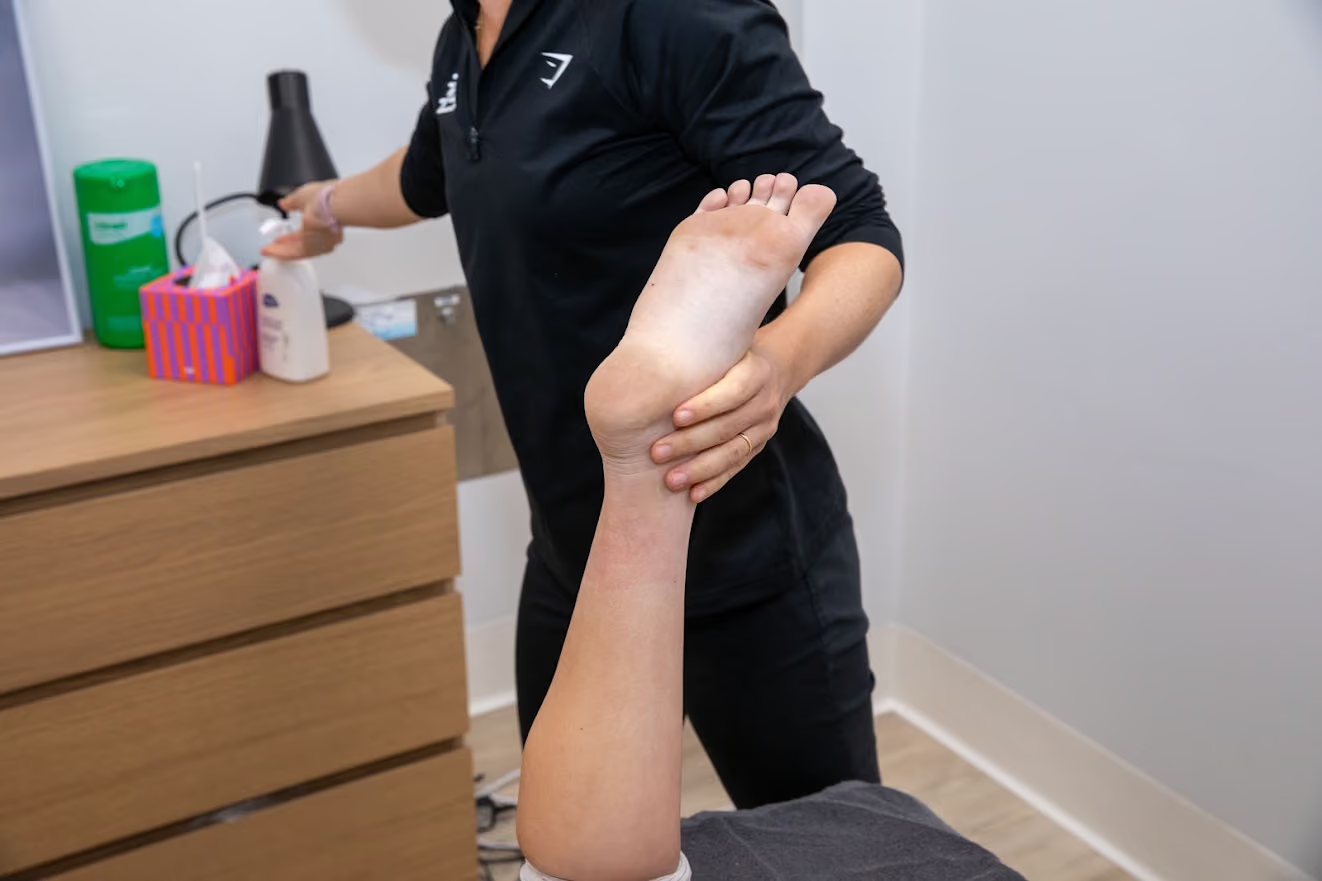
Rebuild calf strength, restore tendon resilience, and safely return to explosive push-offs with criteria-based physiotherapy.
What is an Achilles tendon rupture
An Achilles tendon rupture is a complete tear of the thick band of tissue connecting your calf muscles to your heel bone. Typically caused by sudden, explosive efforts or rapid direction changes. Individuals will often feel like they were kicked in the back of the leg, only to turn around and see no one there.
Surgical repair of an Achilles tendon rupture requires specialist orthopaedic surgery to ensure the reattached tendon heals with optimal length and strength. Early rehabilitation focuses on protecting surgical repair, managing swelling, and ensuring the tendon heals appropriately rather than stretched out.
Initiating your physical therapy once cleared by your specialist allows early muscle activation and lower limb strengthening, and guidance on a return to walking both in and out of the boot.
Focuses on incision protection, swelling control, and achieving neutral ankle dorsiflexion without stretching the repair. Often this stage is guided entirely by your surgeon.
Introduces slow and careful calf loading to rebuild calf volume and tendon stiffness alongside gait retraining and balance work.
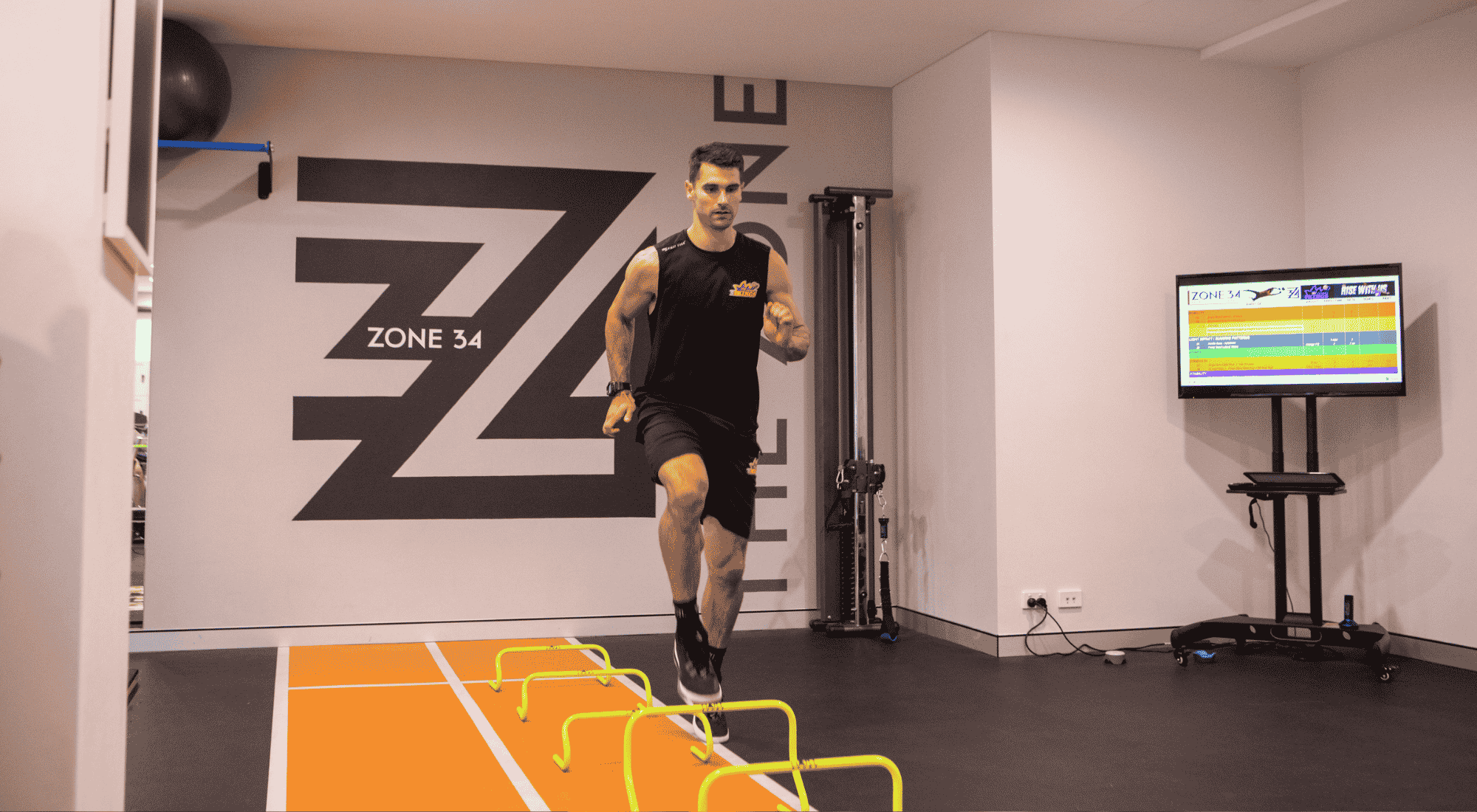
Slow heavy calf strength will target both soleus and gastrocnemius through bent and straight knee calf exercises. Gym equipment is often essential to provide the load required, such as a smith machine, leg press or seated calf raise. We Integrate plyometrics and sport-specific agility once strict strength and power criteria are passed, which typically takes at least 6-9 months.
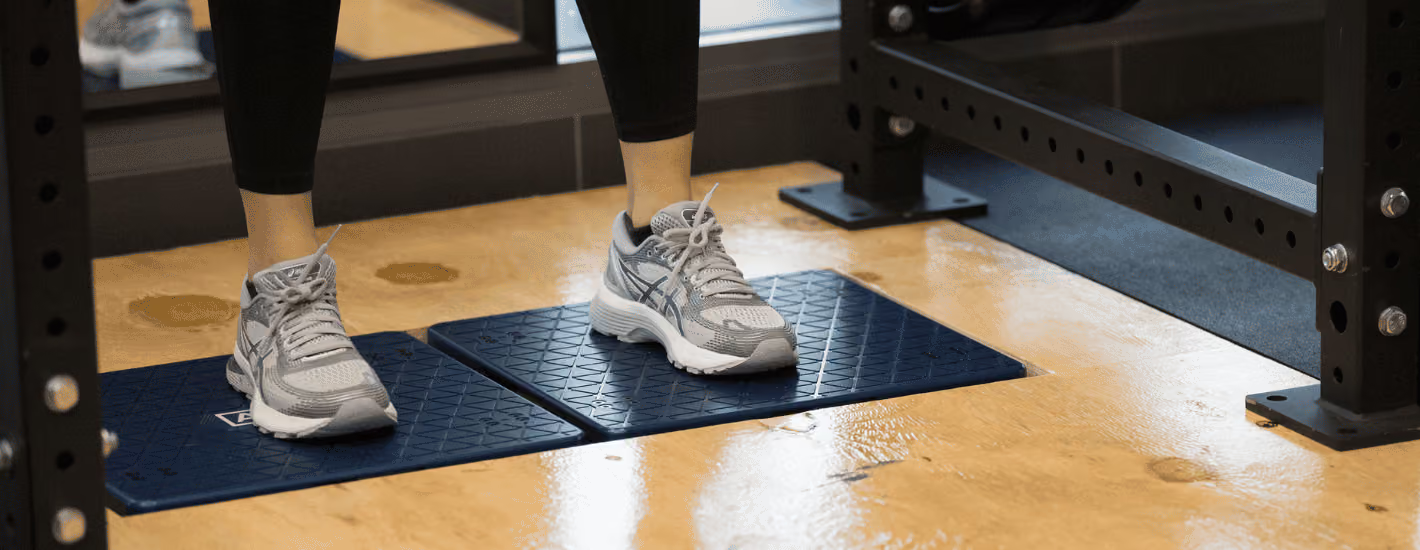
We eliminate guesswork from Achilles rehabilitation by using advanced technology and objective force data to guide every progression milestone.
Using VALD Force Plates and Force Frame force sensors and testing equipment, we measure calf capacity with tests like a Run Specific Ankle Isometric Push (RSAIP), Seated Calf Raise, along with Jump and Hop testing.
Your strength metrics are evaluated against age, gender, and sport-specific normative benchmarks before approving high-load or plyometric training.
Prior to the VALD Force plates being accessible in the clinic, we relief on horizontal hop tests such as single hop for distance, or triple crossover hop. Vertical hop testing can include a Counter Movement Hop, a Drop Vertical Hop, or a 10/5 Hop, which all test different physical capacities.
A successful recovery from an Achilles tendon repair relies on a highly synchronised, team-based approach where each specialist plays a distinct, vital role.
Performs the surgical repair, sets the overarching post-operative protection protocols (such as boot angles and weight-bearing timelines), and conducts milestone surgical reviews.
Acts as your lead rehabilitation coordinator, managing early wound protection, boot weaning, joint mobility, and objective strength testing. The physiotherapist will often communicate directly with your coaches, personal trainers, or employers to advise on appropriate activity modifications, modified training integration, or final clearance for return to full training.
Partners in late-stage athletic power development, delivering high-velocity plyometrics, heavy resistance training, and return-to-running conditioning to build long-term tendon resilience.
Who treats this?
Our experienced team members are ready to help. See their bios below and book online when ready.
.avif)
.avif)


.avif)
.avif)
.avif)
All major health funds accepted
Private health claiming via Tyro Health EFTPOS terminal











FAQ

Yes, wearing the boot to sleep during initial recovery phases is essential because it prevents you from accidentally moving your ankle in your sleep, and takes away the temptation to get out of bed without the boot on!
Calf muscle wasting (atrophy) happens exceptionally fast when the ankle is immobilised to allow the tendon to heal. Rebuilding this muscle volume requires months of dedicated, heavy slow resistance training, making targeted rehabilitation vital.
If surgery was on your left leg and you drive an automatic, you may drive once off heavy pain medications and feeling stable. If surgery was on your right leg, you generally cannot drive until completely out of the boot, walking normally without a limp, and demonstrating objective braking force and reaction time.
Immobilisation in a boot after lower-limb surgery carries a risk of blood clots. Key warning signs of a DVT include a sudden increase in swelling, localised heat or redness, and severe throbbing pain deep within the calf muscle that is not relieved by elevation or medication. If you notice these symptoms, or experience shortness of breath or chest pain, seek immediate emergency medical evaluation.
Seated isometric calf testing targets the deeper soleus muscle, which absorbs immense force during running and jumping. In a general population, achieving 1.5 times body weight (150% BW) of peak force on a single-leg test is considered a solid baseline for functional health. For athletes—particularly sprinters, runners, and court-sport athletes—a high-performance target is 1.8 to 2 times body weight (180%–200% BW), alongside demonstrating at least 90% to 95% limb symmetry before returning to full athletic impact.