

Achilles Tendinopathy
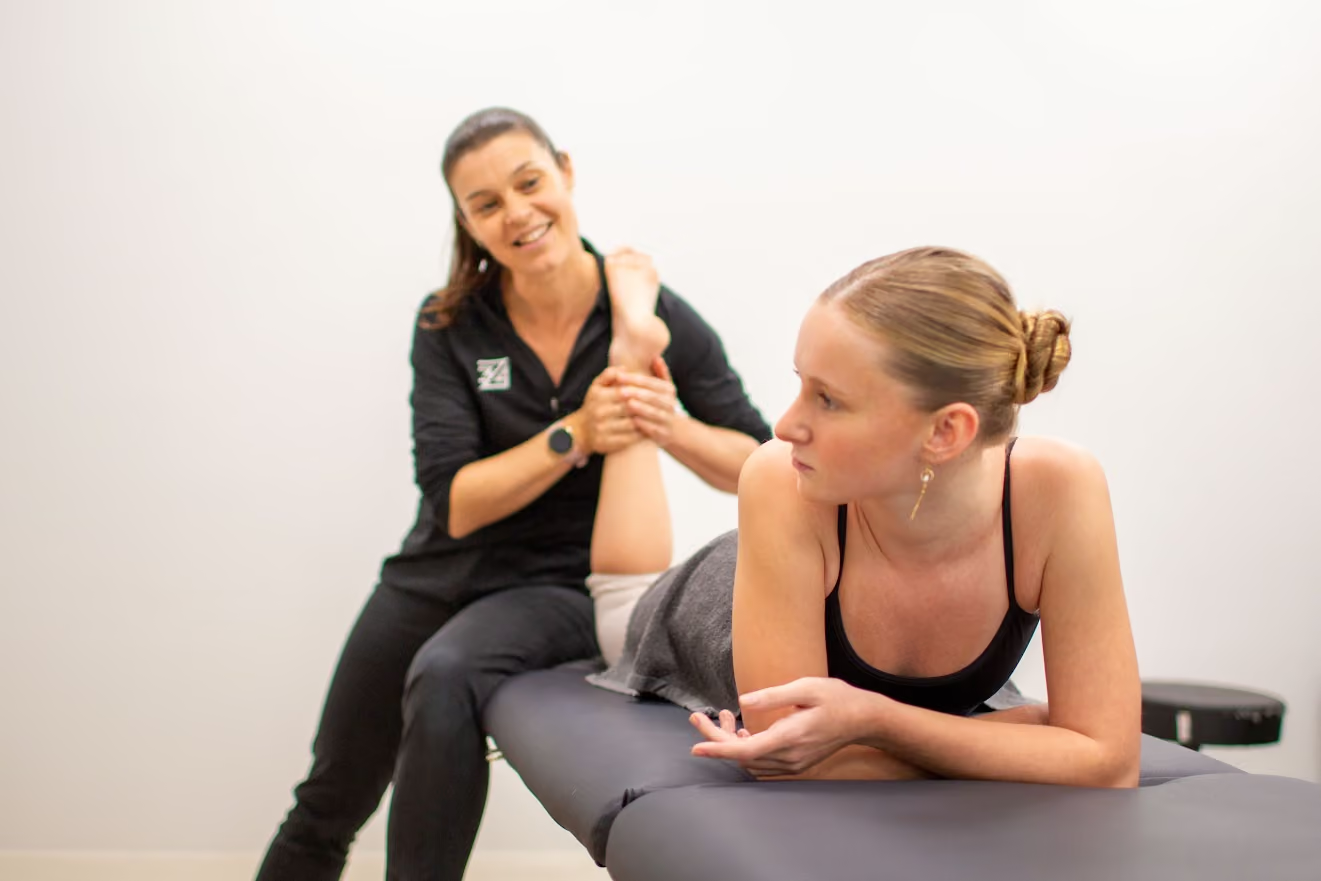
Reclaim your stride and build a resilient tendon. We guide you from injury to pain-free running and jumping using progressive, evidence-based loading protocols.
.avif)
Understanding Achilles Tendinitis
Achilles tendinopathy (often referred to as Achilles Tendinitis) is an overuse injury characterised by a painful, irritated Achilles tendon that has lost its ability to efficiently store and release energy. Symptoms typically include persistent pain at the back of the heel, noticeable stiffness in the morning or after periods of rest, and localised tenderness.
Why early assessment matters
Identifying the exact stage of your tendinopathy—whether it is acutely reactive or in a chronic degenerative state—is essential to map the correct loading rehabilitation program. Other potential diagnoses for pain near the achilles include posterior ankle impingement, FHL tenosynovitis, or achilles tenosynovitis.
Early intervention is critical for long-term tendon health, as waiting for the pain to simply "go away" often results in a stubborn condition that flares up the moment you try to run again. We safely guide your load management to prevent minor irritations from becoming chronic.
In the first two weeks, we prioritise activity modification to settle the tissue, ensuring you do not run through pain that could severely prolong your symptoms.
If you have been managing discomfort for over a month, we shift away from rest and toward evidence-based loading protocols designed to stimulate structural tendon remodelling.
This condition frequently targets runners of all levels and athletes involved in high-volume jumping sports, including basketball, netball, AFL, and distance runners. Pre-season or when training for an event are classic times for the onset of Achilles pain.
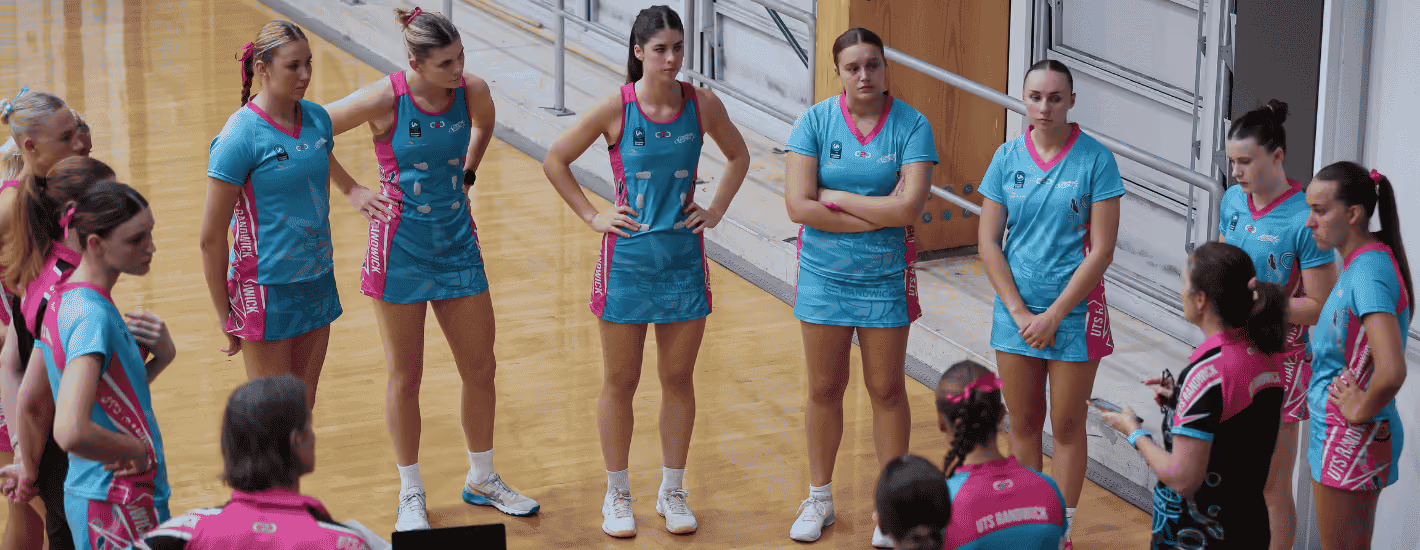
Rest alone does not cure tendon pain. Expert clinical care moves beyond short-term symptomatic relief to actively build a tendon that is structurally stronger and more resilient under heavy athletic load.
We use professional testing equipment, such as VALD force plates, to assess your strength and power capacity, providing data to guide your safe return. Example tests include a repeated 10/5 Jump test, or a seated isometric calf raise.
Our fully equipped performance gyms bridge the gap between initial treatment and the high-force demands of your discipline, ensuring you are genuinely game-ready.
Our senior clinicians collaborate internally to solve complex, stubborn cases, occasionally working alongside sports doctors to facilitate the management of chronic presentations.
A successful recovery plan must be progressive, individualised, and directly adaptable to your sport. We utilise a systematic approach to progressive overload, ensuring your Achilles regains full tolerance.
We focus on load management, implementing isometric exercises and structured Heavy Slow Resistance (HSR), with clear criteria to safely progress your activity.
We introduce plyometrics and running drills tailored specifically to your sport's demands, physically strengthening the muscle-tendon unit.
The final stage builds both running intensity and volume while keeping the tendon healthy with ongoing loading.
Who treats this?
Our experienced team members are ready to help. See their bios below and book online when ready.


.avif)
.avif)
.avif)
.avif)
.avif)
All major health funds accepted
Private health claiming via Tyro Health EFTPOS terminal











FAQ

Acute cases caught early can settle in roughly 6 weeks with proper load management. However, chronic tendinopathy that has been present for months generally requires 3 to 6 months of a structured, progressive loading program to safely remodel the tendon tissue.
Managing a irritable tendon in season is challenging, with best outcomes achieved with an off season rehab program.
No, complete rest is detrimental to tendon health. While rest temporarily reduces pain, it actually decreases the tendon's capacity and strength over time, meaning the pain will likely return immediately once you start running again.
Clinical practice guidelines identify progressive loading—specifically Heavy Slow Resistance (HSR) training and eccentric strengthening—as the most effective, evidence-based treatment to improve tendon structure and reduce pain.
Morning stiffness is a hallmark sign of tendinopathy, though it typically warms up and eases after a few minutes of walking. The duration of morning stiffness is often used as a clinical measure to assess how you respond to exercise the day prior.
Often, yes. If your pain during running is mild and your symptoms are not worse the following morning, you can typically continue. A physiotherapist will help you find the exact "safe" running volume while you simultaneously build tendon strength.