

Gluteal Tendinopathy
Rebuild lateral hip strength, eliminate compression, and return to pain-free living with evidence-based physical therapy.
Understanding Gluteal Tendinopathy
Gluteal tendinopathy (often referred to under the umbrella of Greater Trochanteric Pain Syndrome) is a painful condition affecting the tendons of the gluteus medius and gluteus minimus muscles where they attach to the outside of your hip bone. Historically, pain on the outside of the hip was almost universally blamed on "hip bursitis" (trochanteric bursitis). However, modern sports medicine research—pioneered by leading experts like Dr. Alison Grimaldi—demonstrates that gluteal tendinopathy is the primary driver of lateral hip pain. While the adjacent bursa can become inflamed, this is typically secondary to compressive load and tensile stress placed on the underlying gluteal tendons.
Gluteal tendinopathy is driven primarily by tendon compression against the greater trochanter. Positions of hip adduction—where your leg crosses the midline of your body—increase this compressive force and trigger pain. Key positions to strictly avoid during early recovery include:
- Side-lying in bed: Lying on either side allows the top hip to fall into adduction. Lying on the painful side places direct compressive pressure on the inflamed tendon.
- Sitting cross-legged or with knees together: Crossing your legs or letting your knees drop together compresses the tendon against the bone.
- Hanging on one hip while standing: Shifting all your weight onto one side increases the adduction angle and tendon strain.
Gluteal tendinopathy is significantly more prevalent in post-menopausal women. Estrogen plays a vital role in maintaining tendon collagen health and structural integrity; as estrogen levels drop during perimenopause and menopause, tendons lose tensile capacity and become far more susceptible to compressive load and tendinopathy.
Rebuilding a compromised gluteal tendon requires a progressive, active loading strategy rather than passive rest.
It is important to clarify that conservative management is far from passive or soft. It is an active, demanding, and highly structured to rebuild true tendon capacity, restore force output, and change your underlying movement mechanics without the need for surgery or repeated injections.
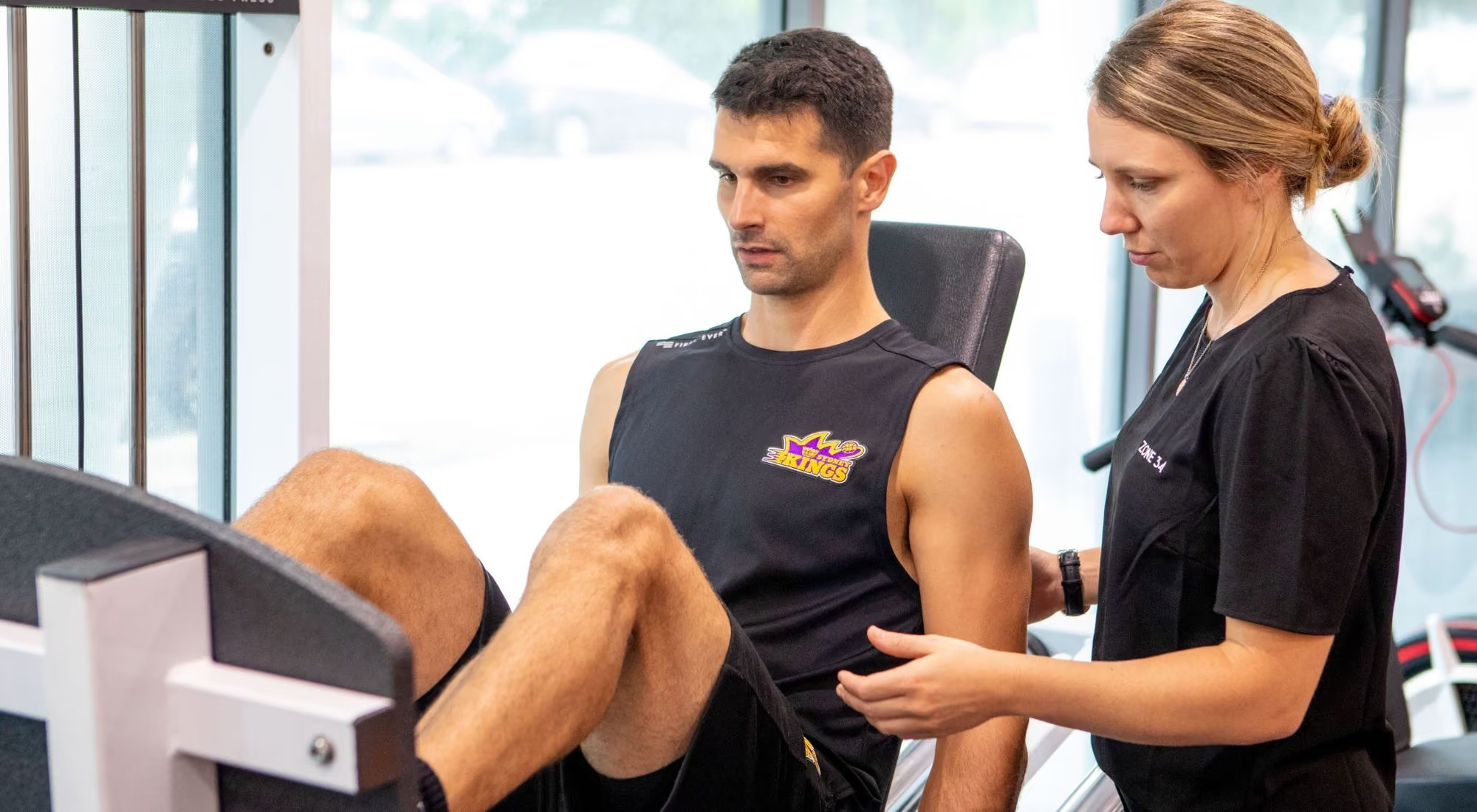
While your Physiotherapist leads initial symptom settling, mechanical offloading, and pain-free isometric loading, our Exercise Physiologists can play a crucial role in your long-term recovery. Exercise Physiology provides high-level strength programming, progressive dynamic loading, and movement retraining, ensuring you transition safely from basic clinical exercises to heavy functional resistance work.
.avif)
At Zone 34, we move beyond the outdated "rest and see" approach to actively rebuild a hip capable of withstanding daily and athletic loads. Our clinical philosophy is built on four core pillars:
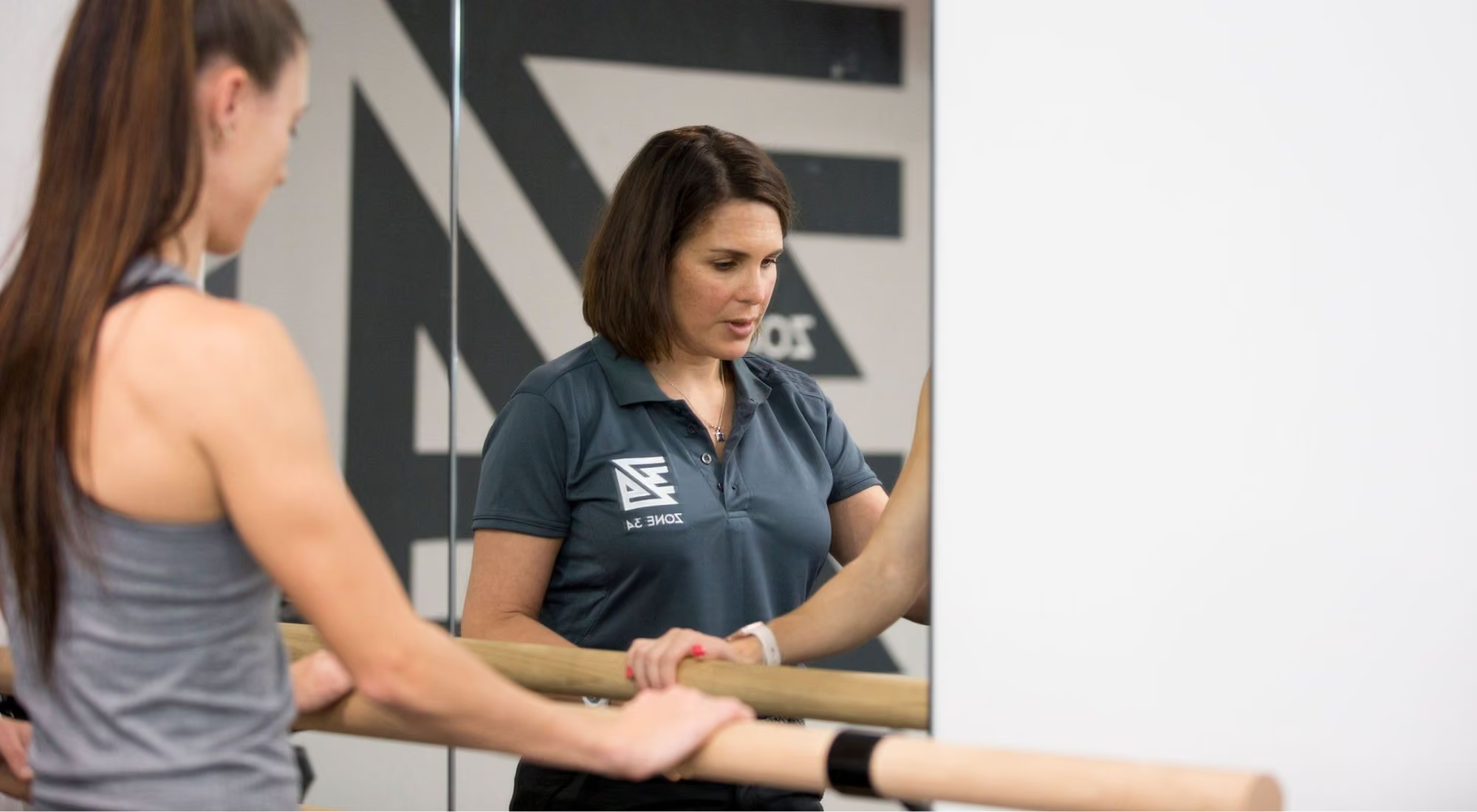
We establish an exact functional baseline using objective force testing and biomechanical screening to measure lateral hip strength, single-leg stability, and movement quality. We track these metrics throughout your recovery so every progression is guided by data, not guesswork.
We tailor your rehabilitation targets around what matters most to you—whether that means sleeping comfortably through the night without hip pain, returning to long-distance walking, or getting back to high-impact running and sport.
Tendons require load to heal and adapt. In our elite-level performance facility, we deliver highly supervised, progressive loading programs—moving you systematically from low-compression isometric exercises up to heavy slow resistance training and dynamic movement.
Our systematic pathway focuses on eliminating compressive load and progressively building tendon capacity for lasting resilience.
The primary goal is removing compressive strain on the tendon. Practical strategies include sleeping on your back with a pillow under your knees, or side-lying on the uninjured side with a thick pillow between your knees and ankles to keep the hip in a neutral position. We eliminate cross-legged sitting and educate you on avoiding single-leg stance postures while teaching gentle, low-compression isometric gluteal exercises to manage acute pain.
Guided by your Physiotherapist and Exercise Physiologist, we gradually introduce targeted strength exercises in low-adduction positions. We progress from isometric holds to heavy, slow resistance training (such as controlled hip abductions, bridges, and modified leg presses) to stimulate collagen remodelling and build tendon load tolerance.
In the final phase, we transition you back to functional movement, dynamic sports drills, and higher-level resistance. To bridge the gap to long-term health, patients who wish for semi-supervised exercise programs transition into our Strong Bodies classes—small-group, expert-supervised sessions with individually tailored programs that build strength and keep you confident in your movement.
Who treats this?
Our experienced team members are ready to help. See their bios below and book online when ready.



.avif)

.avif)

.avif)
.avif)

All major health funds accepted
Private health claiming via Tyro Health EFTPOS terminal











FAQ

Avoid sleeping directly on the painful hip. If sleeping on your back, place a pillow under your knees. If sleeping on your uninjured side, place one or two thick pillows between your knees and ankles to prevent your top leg from dropping into adduction and compressing the painful tendon against the bone.
Estrogen helps maintain tendon health, flexibility, and collagen synthesis. During perimenopause and menopause, dropping estrogen levels reduce the tendon's ability to handle load, making the gluteal tendons significantly more vulnerable to irritation and tendinopathy from everyday activities.
While both cause pain on the outside of the hip, research shows that gluteal tendinopathy (damage or overload to the tendon) is almost always the true primary source of pain. The bursa is simply a fluid-filled sac sitting over the tendon that can become secondary inflamed due to compression against the underlying tendon.
Cortisone can give strong short-term relief, but high-level evidence shows it does not fix the underlying tendon problem and leads to high rates of pain recurrence within 3 to 12 months. Progressive exercise therapy heavily outperforms cortisone for long-term recovery and tendon health.
Yes, but specific movements must be modified. You should temporarily avoid deep side-lunge stretches, crossover steps, or high-adduction hip exercises. Our Strong Bodies classes provide a safe, supervised environment where your program is tailored specifically to keep you active without irritating your tendon.