

Proximal Hamstring Tendinopathy
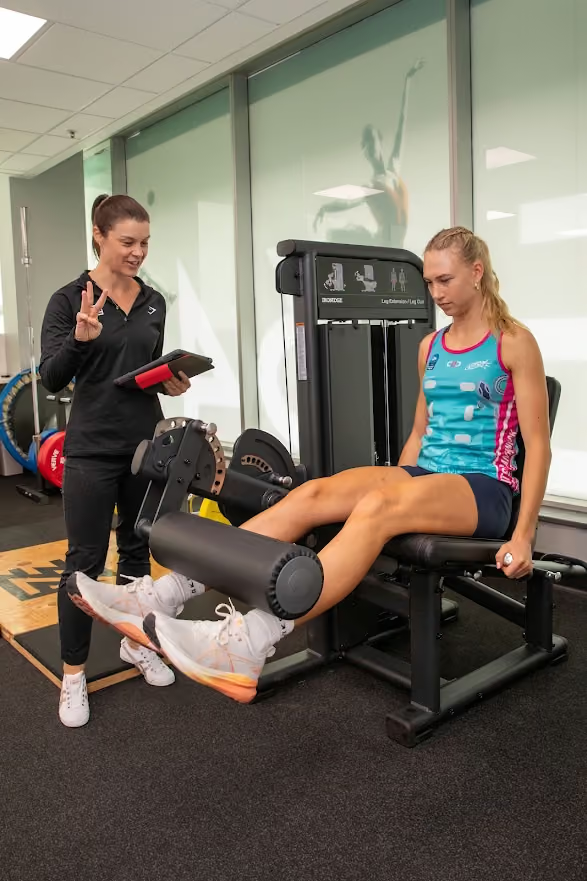
Rebuild hamstring tendon capacity, eliminate compressive irritation, and return to pain-free running and sitting with evidence-based physical therapy.
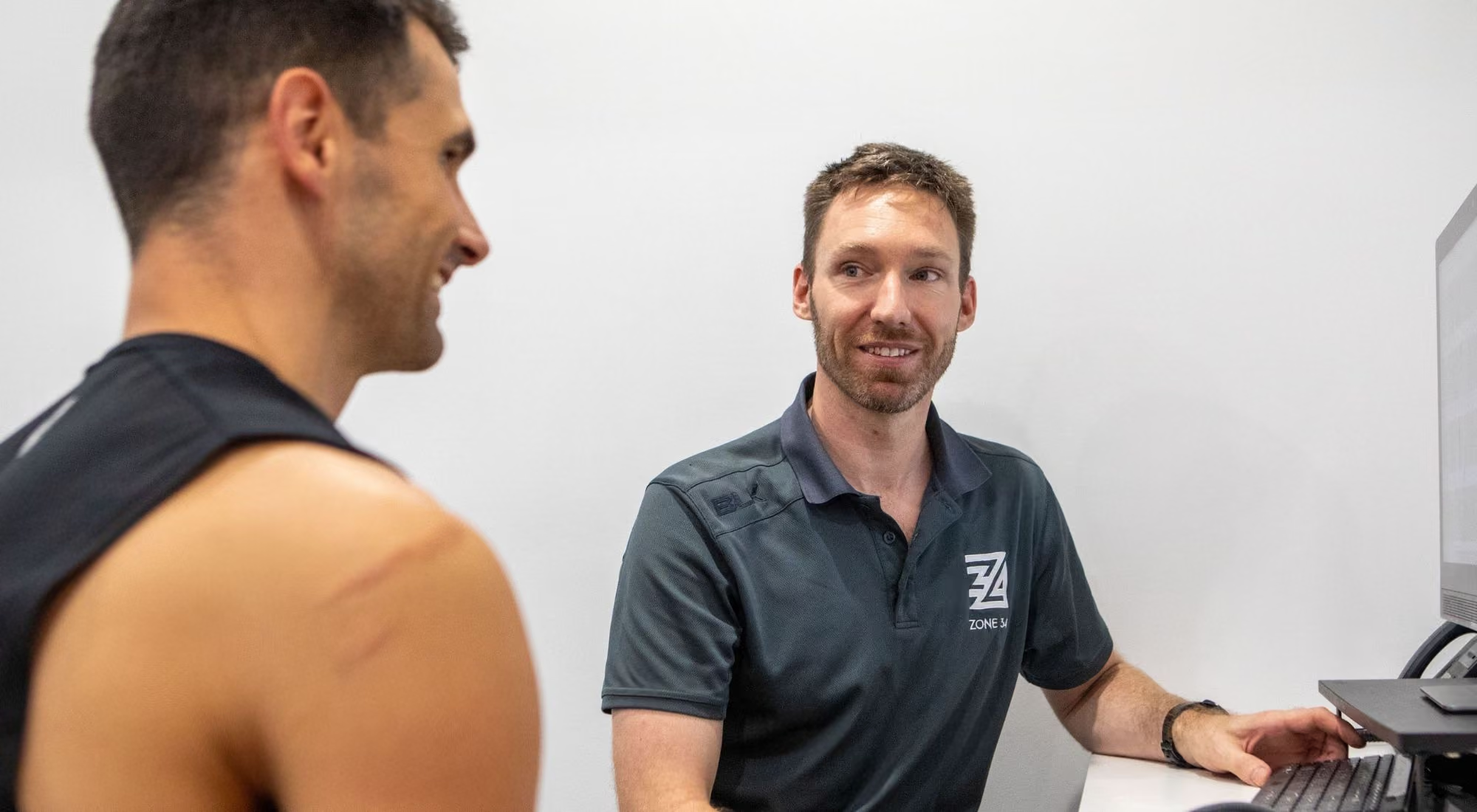
Understanding Proximal Hamstring Tendinopathy (PHT)
Proximal Hamstring Tendinopathy (PHT) is a painful, often chronic condition affecting the high hamstring tendons where they attach to the ischial tuberosity (the "sit bone") at the base of the pelvis. Deep buttock pain is frequently misdiagnosed as a high gluteal muscle tear or sciatic nerve issue. However, modern sports medicine research confirms that PHT is a localised load-intolerance issue at the enthesis (tendon-to-bone junction). While acute hamstring strains occur mid-muscle during sprinting, PHT is driven by a combination of tensile load and tendon compression against the ischial tuberosity.
When the hip flexes deeply, the proximal hamstring tendon wraps around the sit bone, leading to compressive forces. Key activities to minimise during early recovery include:
- Deep hip flexion sitting: Sitting on hard surfaces, low couches, or bucket seats
- Prolonged stretch : Deep hamstrings stretches (like touching your toes or yoga flexions), deadlifts, and deep squats squeeze the sensitive tendon attachment site.
- Over-striding during running or hill climbing: Over-striding increases hip flexion at foot-strike, placing the tendon under high simultaneous tension and compression.
PHT is common among distance runners, triathletes, sprinters, and field sports athletes who perform high volumes of running, kicking, or acceleration. It also affects active individuals who perform repetitive heavy lifting or spend long hours sitting at a desk.
Rebuilding a compromised hamstring tendon requires a progressive, active loading strategy rather than passive rest.
Conservative management is far from passive or soft. Simply resting the leg might temporarily calm symptoms, but the tendon is likely to re-flare as soon as high-speed running or deep sitting is resumed. High quality rehabilitation aims to rebuild true tendon capacity, restore high-force output, and optimise running gait mechanics without reliance on surgery or repeated injections.
While your Physiotherapist leads initial symptom settling, running gait assessment, and early to mid stage loading, our Exercise Physiologists play a critical role in long-term rehabilitation. Exercise Physiology delivers targeted strength programming, progressive dynamic loading, and speed/sprinting progressions, ensuring you transition safely from clinical exercises to high-force athletic demands.
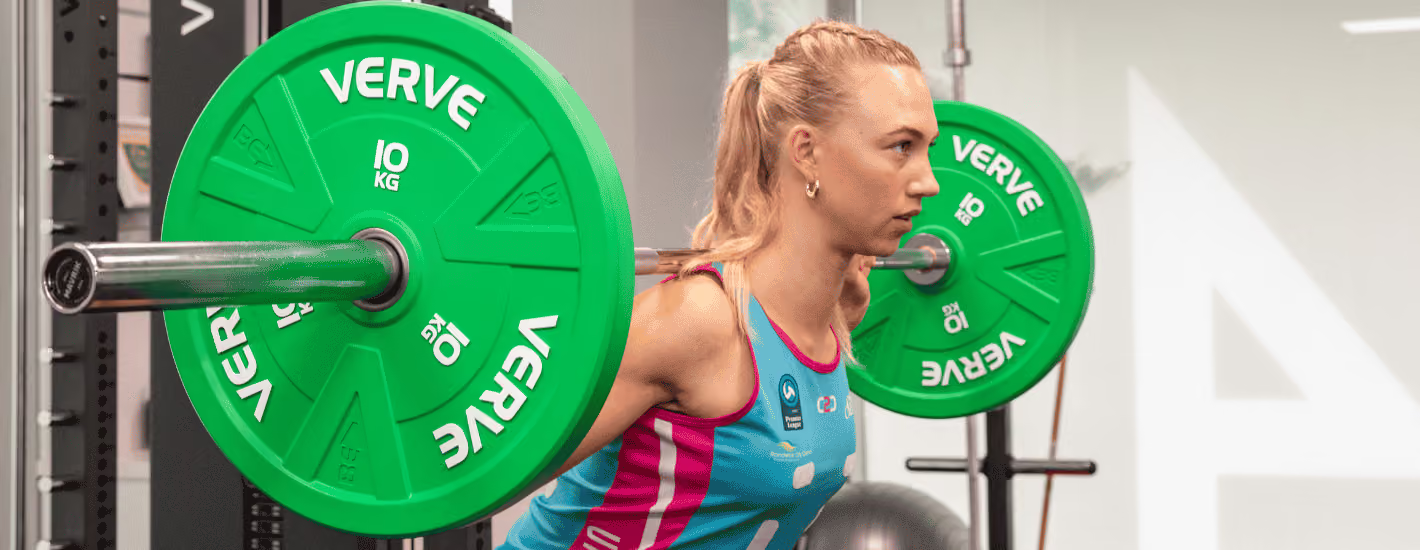
At Zone 34, we move beyond short-term symptomatic relief to build a hamstring tendon capable of withstanding the high-force demands of your discipline.
We establish an exact functional baseline using objective force-plate testing and dynamometry to measure hamstring force and limb symmetry. Combined with video running gait analysis, we identify biomechanical drivers to guide every progression with data.
We tailor your rehabilitation targets around what matters most to you—whether that means sitting comfortably through a work meeting, going for a leisurely jog, or sprinting on the field at maximum speed.
Tendons require mechanical load to adapt and structurally repair. In our performance gym, we deliver highly supervised loading programs—moving you systematically from isometric holds to heavy slow resistance training, energy-storage exercises, and sport-specific sprinting.
Our systematic pathway focuses on eliminating compressive load and progressively building tendon capacity for lasting resilience.
The primary goal is removing compressive strain on the sit bone. Practical strategies include using a wedge cushion or folded towel under the thighs while sitting to open the hip angle, avoiding hard seats, limiting deep hip flexion stretches, and utilising pain-relieving isometric holds (such as mid-range hip extensions or bridge holds).
Guided by your Physiotherapist and Exercise Physiologist, we introduce heavy, slow resistance training in low-hip-flexion ranges (e.g., prone leg curls, flat hip extensions, low-range bridges). As the tendon adapts, we progress into higher hip flexion angles (such as Romanian deadlifts and step-ups) to stimulate collagen remodelling.
In the final phase, we reintroduce high-speed energy storage, plyometrics, acceleration, and top-end sprinting drills. High level posterior chain strength exercises are a crucial component protecting the tendon long term.
Who treats this?
Our experienced team members are ready to help. See their bios below and book online when ready.



.avif)

.avif)

.avif)
.avif)
.avif)

All major health funds accepted
Private health claiming via Tyro Health EFTPOS terminal











FAQ

Avoid sitting on hard chairs or low couches that force your hips into deep flexion. Use a seat wedge cushion or place a rolled towel under your upper thighs (just behind the knees) to elevate your hips above your knees, which reduces direct mechanical compression of the tendon against the sit bone.
No. Traditional static hamstring stretches (like reaching for your toes) force the hip into deep flexion, wrapping the inflamed tendon tightly around the sit bone and increasing compressive irritation. Instead of stretching, focus on gentle load management and low-flexion isometric exercises to relieve pain.
An acute hamstring strain is a sudden muscle belly tear that occurs during high-speed running or kicking, causing immediate sharp pain. Proximal hamstring tendinopathy is an overuse, load-intolerance condition at the tendon attachment on the sit bone that develops gradually, causing deep buttock stiffness during or after running and prolonged sitting.
Please wear or bring comfortable athletic clothing that allows us to easily assess your movement—such as running shoes and shorts (so we can properly examine your lower limb biomechanics and sit-bone area). If you have any existing scans (like X-rays or MRIs and their corresponding reports) or a copy of your current exercise program, please bring those along as well.
In many cases, yes, provided your running load is properly modified. We typically adjust your volume and temporarily avoid high-risk triggers like hill sprints, speedwork, or long strides while building tendon strength in the gym.