

Osteoarthritis
Protect your joint health, reduce pain, and reclaim your daily movement with our evidence-based clinical rehabilitation plans.
Understanding Osteoarthritis
Osteoarthritis is a chronic condition affecting the entire joint structure, not just the cartilage. Contrary to the outdated "wear and tear" myth, joints actually require moderate, structured activity to remain healthy, lubricated, and pain-free over the long term. Symptoms typically include persistent pain, noticeable stiffness (especially in the morning or after periods of inactivity), and a grating or cracking sensation during movement known as crepitus.
According to guidelines from the Royal Australian College of General Practitioners (RACGP) and the Australian Commission on Safety and Quality in Health Care, a diagnosis of OA can be made through a clinical assessment alone.
Our management meets you exactly where you are, whether you are dealing with a sudden inflammatory flare-up or looking to manage long-standing joint stiffness. We focus on rebuilding your muscular capacity so you can confidently return to the activities you enjoy.
Physiotherapists and Exercise Physiologists are ideal first contact practitioners in OA management.
During painful flare-ups, we focus on temporarily offloading the joint, controlling swelling, and implementing gentle, pain-free activation to keep surrounding muscles engaged.
For long-standing osteoarthritis, we implement structured, progressive loading to rebuild the strength of the muscles supporting the affected joint, effectively offloading the joint surface itself.
While highly common in mature adults and post-menopausal individuals, osteoarthritis also significantly impacts younger, active people, especially those with a history of joint trauma like previous ACL or meniscus injuries.

Clinical guidelines strongly recommend education, exercise, and weight management as mandatory first-line treatments for all individuals with hip and knee osteoarthritis. We reject the outdated notion that you must "stop moving" and instead actively engineer resilient joints capable of handling daily life.
We utilise objective force testing and biomechanical screening via VALD force plates to accurately measure strength balance and joint loading symmetry, ensuring precision in your programming.
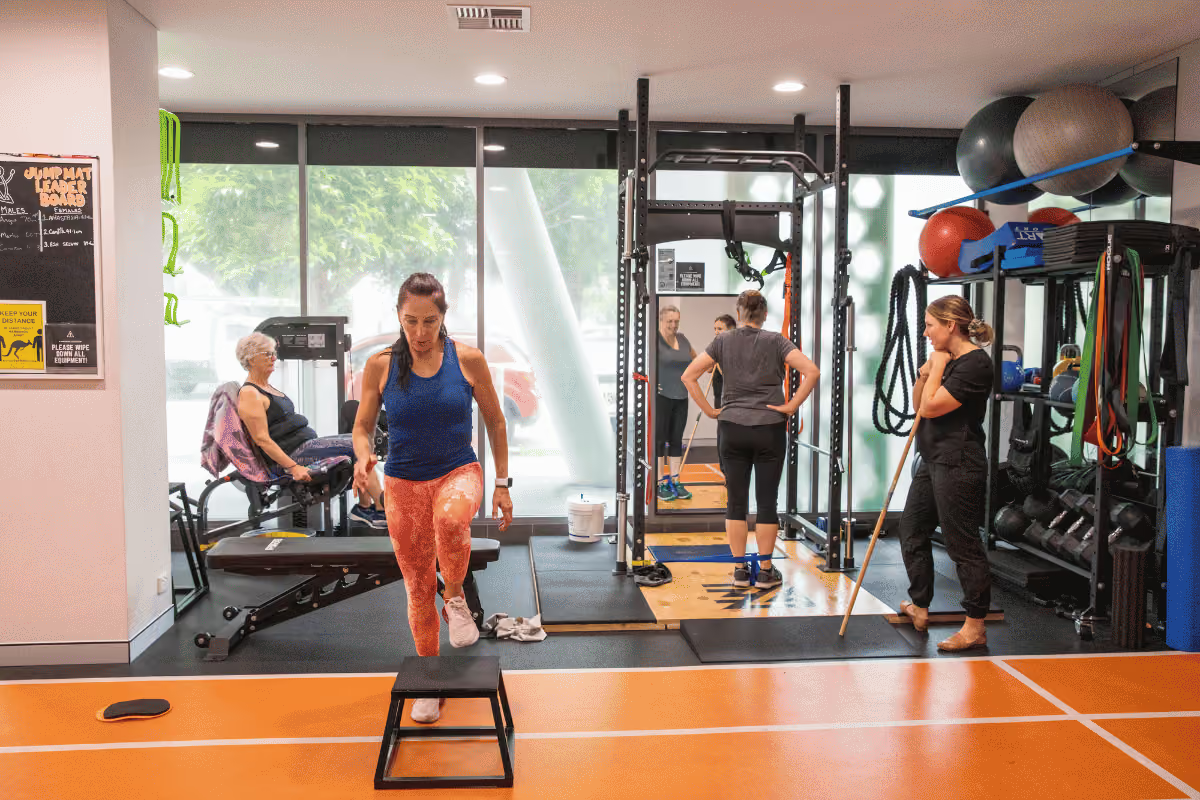
We offer our highly effective Strong Bodies program, and several of our physiotherapists are specifically trained in the world-renowned GLA:D program, delivering supervised, evidence-based exercise classes to bulletproof your joints.
While joint replacement surgery remains a viable option for the small percentage of patients with severe symptoms, it should only be considered a last resort after targeted conservative treatments have been fully exhausted.
A successful approach to managing osteoarthritis aligns with the evidence-based pyramid of care. The foundation of long-term joint management focuses on three mandatory, first-line interventions to physically and nutritionally support your body.
Understanding your condition is the first step to recovery. We help you map your symptoms, pace your activities, and build confidence in your joint's capacity without unnecessary fear of movement.
Following world-renowned GLA:D principles, we use targeted exercise to improve joint control, build muscle strength, and restore confident biomechanics, actively unloading the irritated joint surfaces.
Even modest, sustainable body composition changes significantly reduce the mechanical forces on weight-bearing joints like the hips and knees. Our dietitians also utilise nutrition to actively reduce systemic inflammation.
Who treats this?
Our experienced team members are ready to help. See their bios below and book online when ready.
.avif)
.avif)




.avif)

.avif)

All major health funds accepted
Private health claiming via Tyro Health EFTPOS terminal











FAQ

Complete rest is generally not recommended for osteoarthritis. While temporary load modification is useful during an acute flare-up, prolonged inactivity leads to muscle weakness and increased joint stiffness, worsening your symptoms long-term.
Yes, nutrition plays a crucial role in supporting joint health. A balanced eating pattern reduces systemic inflammation, maintains strong bones, and supports gradual changes in body composition that significantly reduce the load on weight-bearing joints.
Not necessarily. Osteoarthritis is primarily diagnosed through a detailed clinical evaluation of your symptoms, joint mobility, and history, meaning we can safely begin your tailored rehabilitation program without waiting for imaging.
Absolutely. The "wear and tear" concept is a myth; joints require mechanical loading and movement to stay lubricated and healthy. Supervised exercise actively strengthens the surrounding muscles to protect the joint.
GLA:D is an internationally recognised, evidence-based education and exercise program specifically designed for individuals with hip or knee osteoarthritis. Combined with our Strong Bodies small-group classes, these supervised programs safely guide you to improve physical function and reduce pain.