

Plantar Fasciitis
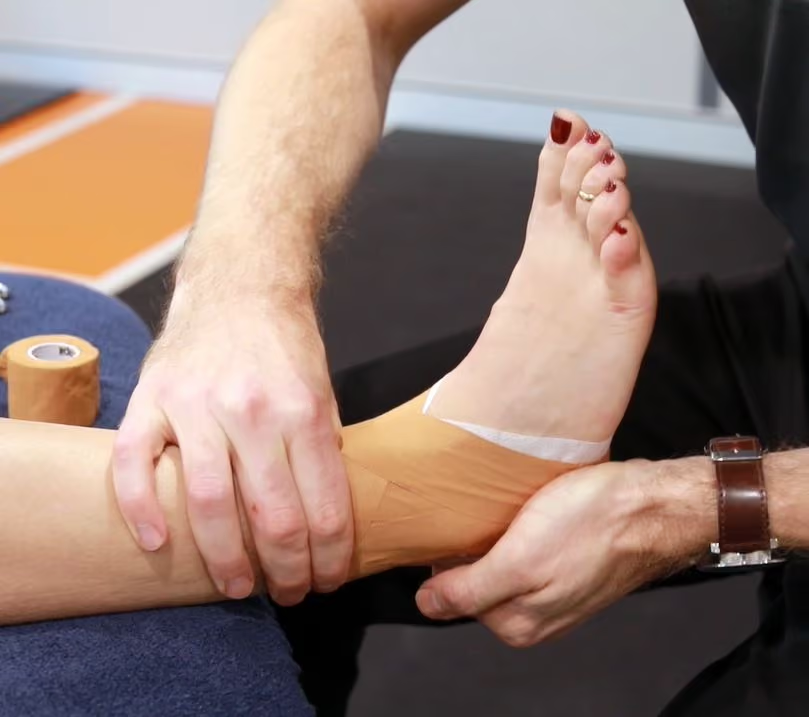
Rebuild foot and arch capacity, eliminate sharp heel pain, and return to pain-free walking and running with evidence-based physical therapy.
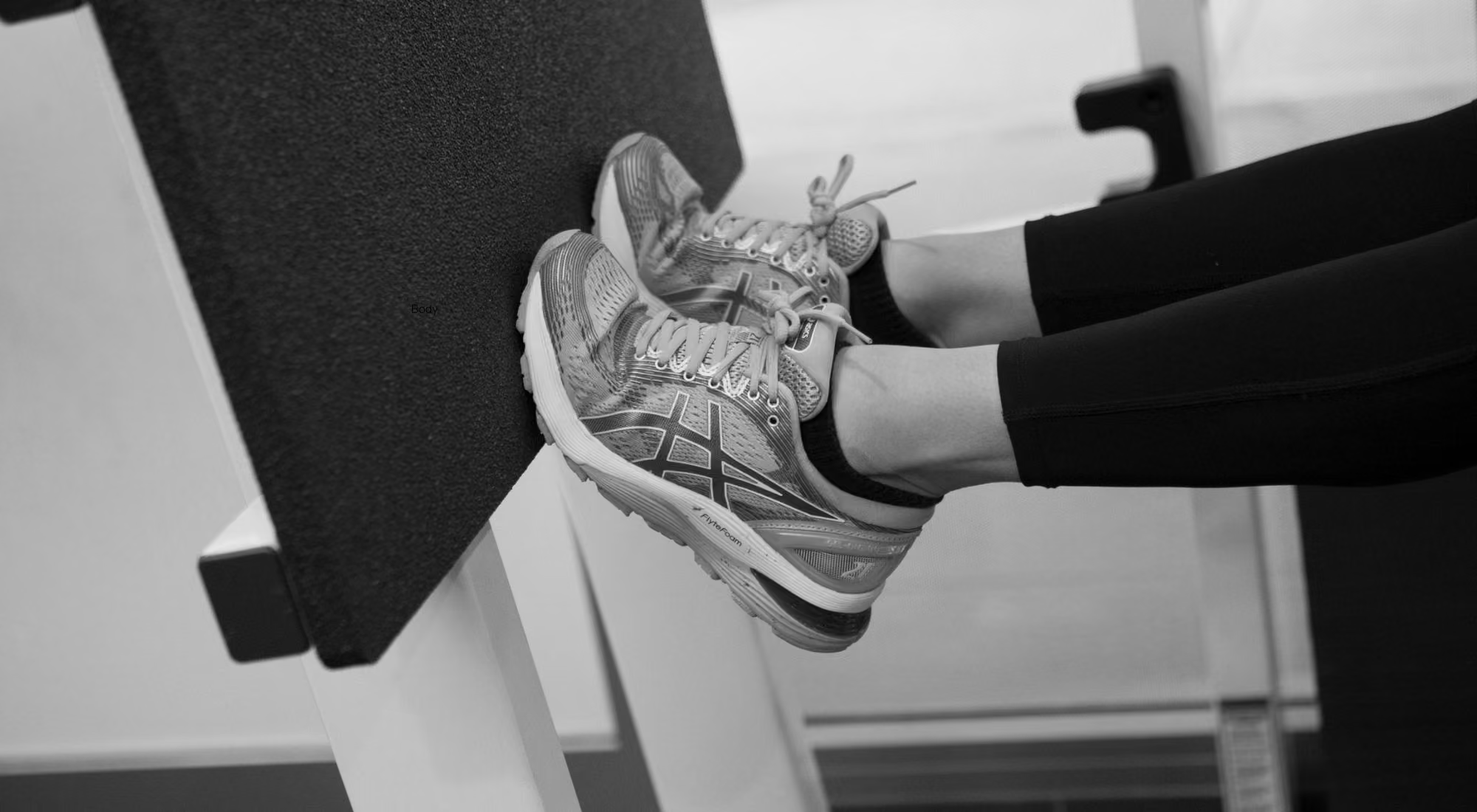
Understanding Plantar Fasciopathy (Plantar Fasciitis)
Plantar fasciitis—more accurately termed plantar fasciopathy in modern sports medicine—is an overload-related condition affecting the thick band of connective tissue (the plantar fascia) that runs along the bottom of your foot from your heel bone to your toes. The hallmark sign of plantar fasciopathy is a sharp pain localised to the underside of the heel. This is notoriously worst during your very first steps out of bed in the morning or when standing up after sitting for a long period
Aggravating activities include prolonged standing on hard floors, long-distance walking, running, barefoot walking, or wearing flat, unsupportive footwear. Risk factors for the condition include an abrupt increase in walking or running volume. Additionally, reduced ankle flexibility, and carrying higher body weight place continuous mechanical strain on the heel arch during weight-bearing activities.
Heel pain is not always plantar fasciopathy. Accurate assessment is critical, as managing other causes of heel pain requires vastly different loading and offloading protocols:
Fat pad pain is felt centrally directly under the bottom of the heel. It is caused by mechanical bruising or thinning of the protective adipose cushion under the calcaneus and typically worsens with prolonged impact on hard surfaces without cushioned footwear.
Bone stress or a stress fracture of the calcaneus (heel bone) presents as a deep, constant ache that worsens progressively with all weight-bearing activity. It is clinically distinguished by a positive "calcaneal squeeze test" and requires an immediate shift toward offloading and bone-healing protocols
While often confused with heel pain, Achilles ensethopathy affects a completely different anatomical region. Pain from the Achilles tendon is located at the back of the heel bone (where the tendon inserts), rather than on the bottom or underside of the foot.
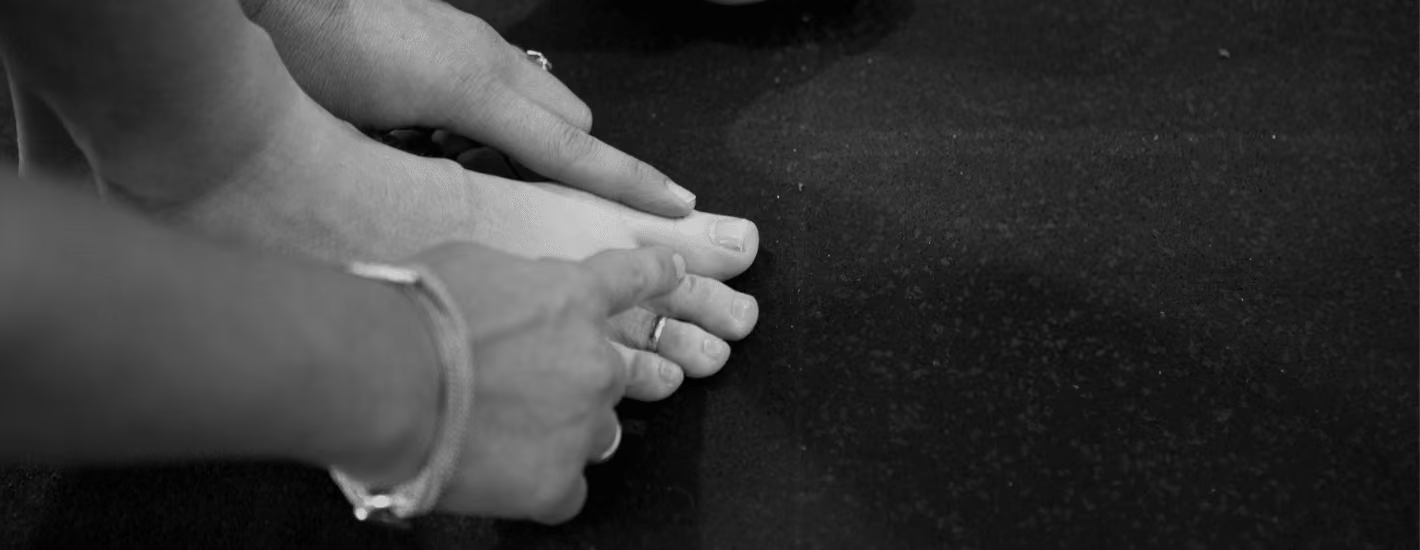
At Zone 34, we move beyond passive fixes like rest, basic stretching, or relying solely on orthotics to actively engineer a foot and ankle capable of withstanding real athletic and daily loads.
We establish an exact functional baseline using objective force testing and video gait analysis. We evaluate foot posture, ankle dorsiflexion mobility, calf strength (via VALD RSAIP and Seated Calf testing) to identify key areas to work on.
We tailor your rehabilitation targets around what matters most to you—whether that means stepping out of bed pain-free in the morning, completing long work shifts on your feet, or returning to long-distance running and field sports.
Connective tissue requires mechanical load to adapt and structurally repair. Grounded in landmark clinical research (such as Rathleff's high-load strength training protocol), we move you systematically from gentle offloading to heavy, slow resistance loading of the plantar fascia and calf complex.
Our systematic pathway focuses on calming acute tissue sensitivity and progressively building the structural capacity of the plantar fascia.
In the early phase, we focus on settling acute inflammation and sensitivity. Practical strategies include using arch-supportive footwear or taping techniques, avoiding barefoot walking on hard surfaces, and performing gentle, low-load isometric calf holds to relieve acute morning pain.
Guided by your Physiotherapist and Exercise Physiologist, we introduce heavy, slow resistance training. Utilising targeted exercises like calf raises with a rolled towel under the toes (to wind up and load the plantar fascia under tension), we stimulate collagen remodelling and rebuild the tissue's capacity to absorb load.
In the final phase, we reintroduce dynamic impact, energy storage, plyometrics, and running-specific drills with a gradual increase in weekly mileage.
Who treats this?
Our experienced team members are ready to help. See their bios below and book online when ready.
.avif)


.avif)

.avif)
.avif)
.avif)

All major health funds accepted
Private health claiming via Tyro Health EFTPOS terminal











FAQ

Overnight while you sleep, your foot sits in a relaxed position and the plantar fascia tissue tightens and shortens. When you step out of bed, your body weight places the stiffened tissue under higher tension, causing pain until the tissue warms up and adapts.
High-level clinical trials and systematic reviews (including the Journal of Orthopaedic & Sports Physical Therapy guidelines) demonstrate that pre-fabricated orthotics are just as effective as expensive custom-made orthotics for managing plantar fasciopathy pain in both the short (up to 12 weeks) and long term (up to 1 year). Unless you have a severe, complex structural foot deformity, an off-the-shelf supportive orthotic or taping provides identical mechanical offloading at a fraction of the cost. Orthotics must be paired with progressive loading exercises to build true long-term strength.
In many cases, yes, provided your pain levels are manageable (generally under a 3/10 during and after running) and do not worsen the following morning. We typically adjust your running volume, surface, and footwear while actively building foot and calf strength in the gym.
While a cortisone injection can offer short-term relief for severe inflammation, evidence shows it does not improve long-term outcomes and carries a small risk of plantar fascia rupture or fat pad atrophy. Progressive exercise therapy heavily outperforms cortisone for long-term resolution and re-injury prevention.
Please wear or bring comfortable athletic clothing—such as shorts and the running shoes or work footwear you wear most frequently. If you have any existing foot scans (X-rays or MRIs), orthotics, or a copy of your current exercise program, please bring those along as well.