

Shoulder Impingement
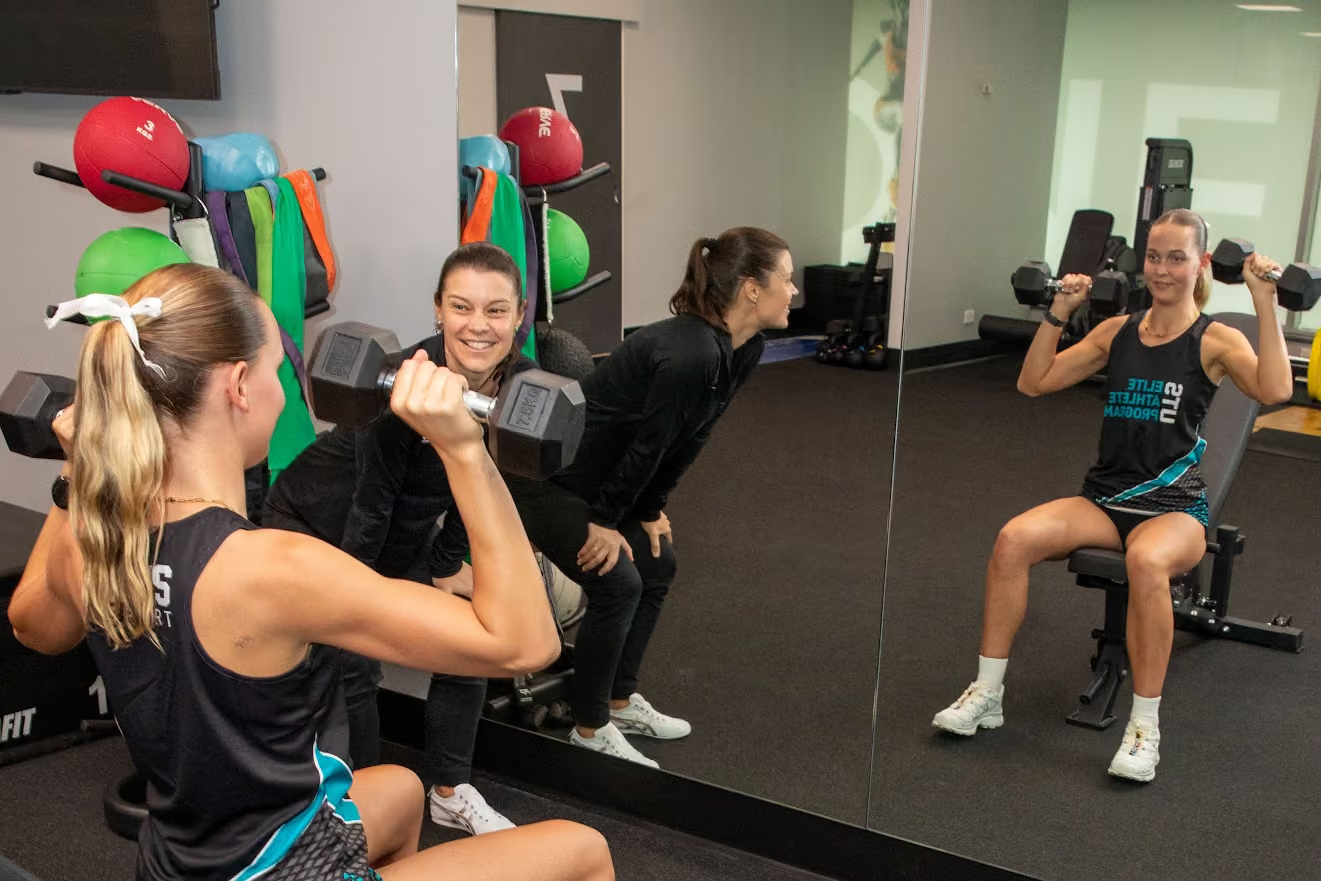
Resolve overhead shoulder pain at the source. Get back to lifting, throwing, and living pain-free with our structured clinical pathways.
.avif)
Understanding Shoulder Impingement (Rotator Cuff Related Shoulder Pain)
While traditionally referred to as "shoulder impingement," we now categorise this condition as Rotator Cuff Related Shoulder Pain (RCRSP) or Subacromial Pain Syndrome. The pain is rarely just a simple mechanical "pinching" of the tendons or bursa against the bone. Rather, it is an overload issue where the rotator cuff tissues become irritated, sensitive, and temporarily lose their capacity to handle overhead movements.
Symptoms typically present as a painful "catching" arc during overhead reaching, localised tenderness around the outside of the shoulder, and noticeable weakness in the rotator cuff when lifting. Sidelying in bed can reproduce pain for more irritated cases. Aggravating activities include overhead pressing, serving in tennis, throwing, or reaching repeatedly above shoulder height.
This condition is highly common among athletes who lift or throw overhead—like swimmers, crossfitters, and tennis players—as well as those who experience upper back stiffness from spending long hours sitting at a desk. Addressing this early is essential; waiting can cause you to develop poor movement habits that often lead to a cycle of ongoing pain and secondary tissue irritation.
We utilise precise objective data to establish a functional baseline, ensuring your rehabilitation is grounded in modern evidence rather than outdated mechanical models. Our clinical philosophy is built on three core pillars:
We believe in the importance of a thorough assessment of your condition. We conduct precise biomechanical screenings and force testing to measure exactly how your shoulder handles load. Even allowing for your hand dominance. Normative data shows that our left and right arms should have a Limb Symmetry Index (LSI) of at least 90% on all strength tests.
Your rehabilitation will be structured and progressed to allow you to return to your daily activities and chosen sport. We address the shoulder as part of the entire kinetic chain, adapting every stage of the loading protocol to safely build long-term tissue resilience.
Sessions are one-to-one, involving targeted treatments to manage acute symptoms. Our fully equipped performance gym enables a safe, highly supervised, and seamless transition from early clinical treatment directly into high-level athletic loading.
Our clinic features experts in upper limb rehabilitation who are ready to collaborate on your recovery and help you achieve overhead mastery.
Your early to mid stage recovery is led by our Physiotherapists. They focus on immediate load management education, mobility tracking, settling the irritated tendon, and introducing cuff and scapular strength exercises.
As your shoulder settles, our Exercise Physiologists and Strength & Conditioning Coaches design active rehabilitation programs. They build the dynamic load capacity of the rotator cuff, eventually transitioning you to high-level biomechanical conditioning and sport-specific movement patterns.
To bridge the gap between clinical rehabilitation and full fitness, we offer our Strong Bodies classes. These small group sessions allow you to build confidence and strength in a supportive, highly supervised environment, all while following a progressive program individually tailored to your shoulder's specific load capacity and recovery goals.
If your pain has persisted for more than 4–6 weeks, a structured, step-by-step exercise plan is essential to help you regain your strength. Our systematic approach ensures your recovery is both progressive and safe.
In the acute 48–72 hour window, our focus is on settling the pain and adjusting your daily activities to allow healing to begin. We educate you on how to reduce unnecessary strain on the rotator cuff so the sensitive tissues can calm down.
Rebuilding a highly sensitised shoulder takes time, so we focus heavily on finding safe exercise alternatives. We specialise in modifying your training load and movement patterns so you can stay active, maintain your cardiovascular fitness, and continue lifting without unnecessarily aggravating the shoulder.
We will introduce a gradual exercise program tailored to safely build your load capacity back up. Exercises may be performed in the Zone 34 gym , at home, or in gym environment. Equipment required could include power bands, dumbbells, pin loaded machines or even body weight exercises.
Who treats this?
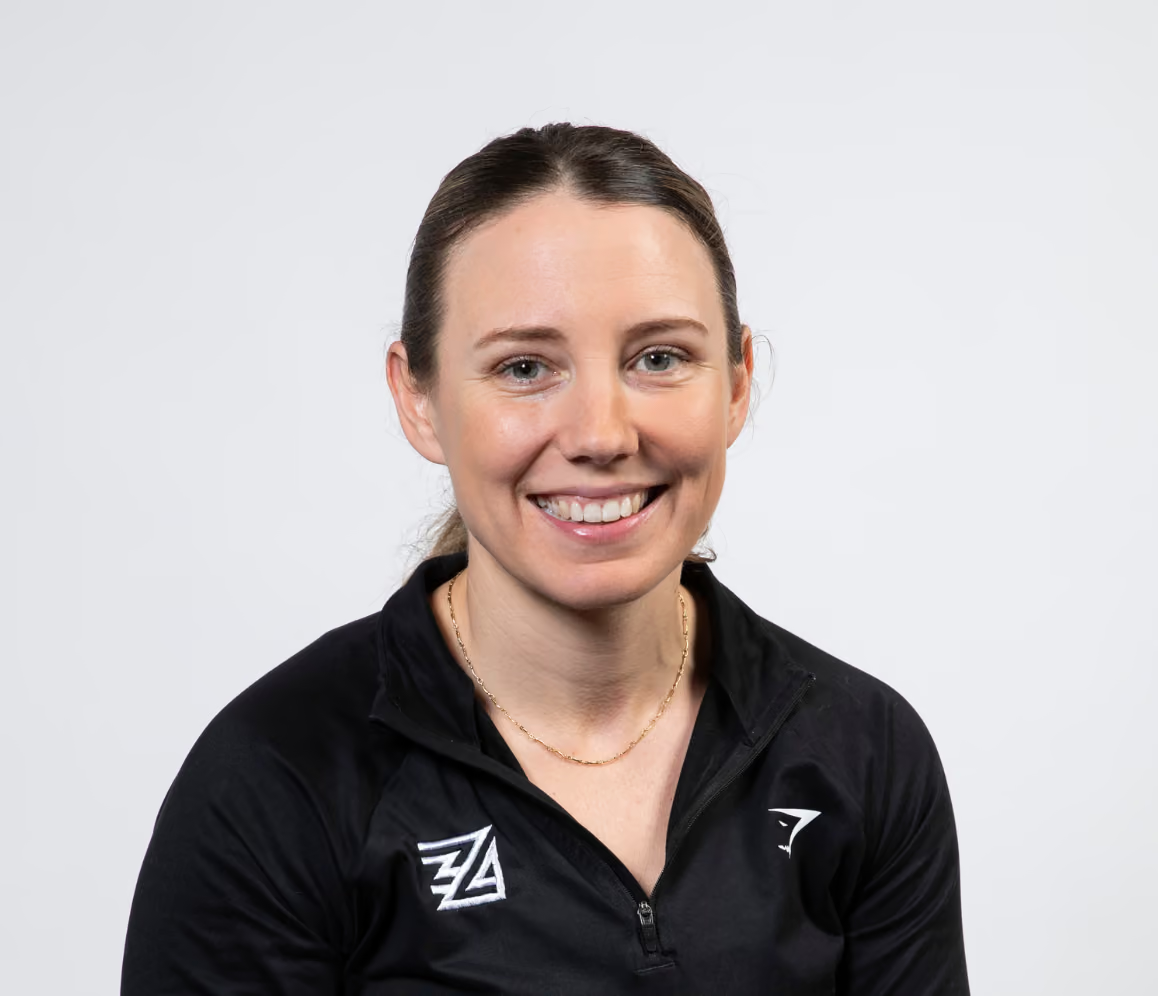
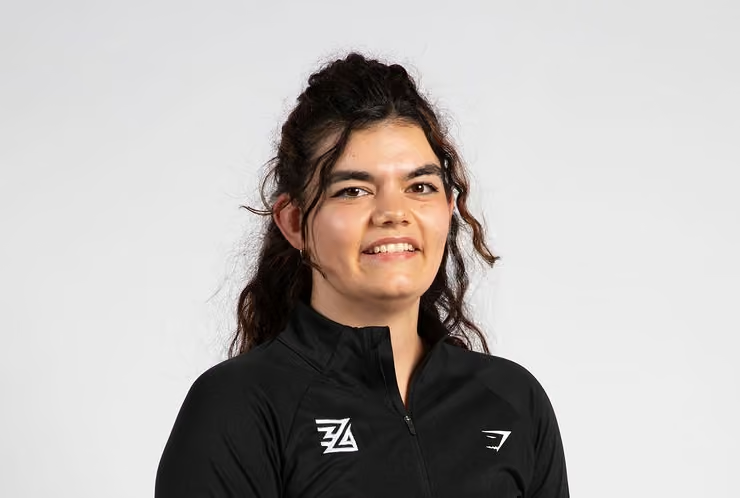
Our experienced team members are ready to help. See their bios below and book online when ready.

.avif)
.avif)

.avif)
.avif)
.avif)
All major health funds accepted
Private health claiming via Tyro Health EFTPOS terminal











FAQ

Primary indicators include a catching pain specifically during overhead reaching, weakness in the rotator cuff, and localised tenderness that makes it difficult to throw, lift, or reach comfortably.
It’s best to tackle shoulder pain as soon as it starts. Early intervention helps reduce initial tendon sensitivity and prevents you from developing unnatural, compensatory movement habits to cope with the pain.
Yes. While it is very common in overhead athletes like swimmers and tennis players, this load-related shoulder pain frequently affects individuals who experience upper back stiffness and poor posture from spending long hours working at a desk.
While a cortisone injection can provide short-term pain relief by rapidly reducing inflammation in the bursa, it does not fix the underlying issue of tendon overload or poor biomechanics. Current evidence suggests that while an injection may create a "window of opportunity" for rehabilitation in highly painful cases, repeated injections can actually weaken the tendon tissue over time. Our primary goal is to naturally build your shoulder's load capacity through progressive strength training.
Not necessarily. Imaging is not the gold standard for diagnosing Rotator Cuff Related Shoulder Pain. Medical research clearly shows that many structural changes, such as bursal thickening or mild tendon wear, are incredibly common in people without any shoulder pain at all. Conversely, you can experience severe shoulder pain with a completely normal scan. We rely on a comprehensive physical assessment and functional testing to guide your rehabilitation, typically reserving scans for when you are not progressing as expected.