

VALD Performance Testing
Take the guesswork out of your recovery with real-time VALD Performance testing. Get clear data, rebuild balance, and safely return to the activities you love.
.avif)
What is VALD Performance Testing?
VALD Performance testing is an advanced, technology-driven assessment that precisely measures your strength, balance, and movement power down to the exact percentage. Trying to recover from an injury without knowing your actual strength levels can be frustrating and often leads to unexpected setbacks or prolonged pain.
Both our Lewisham and Ultimo clinics are equipped with the following tech:
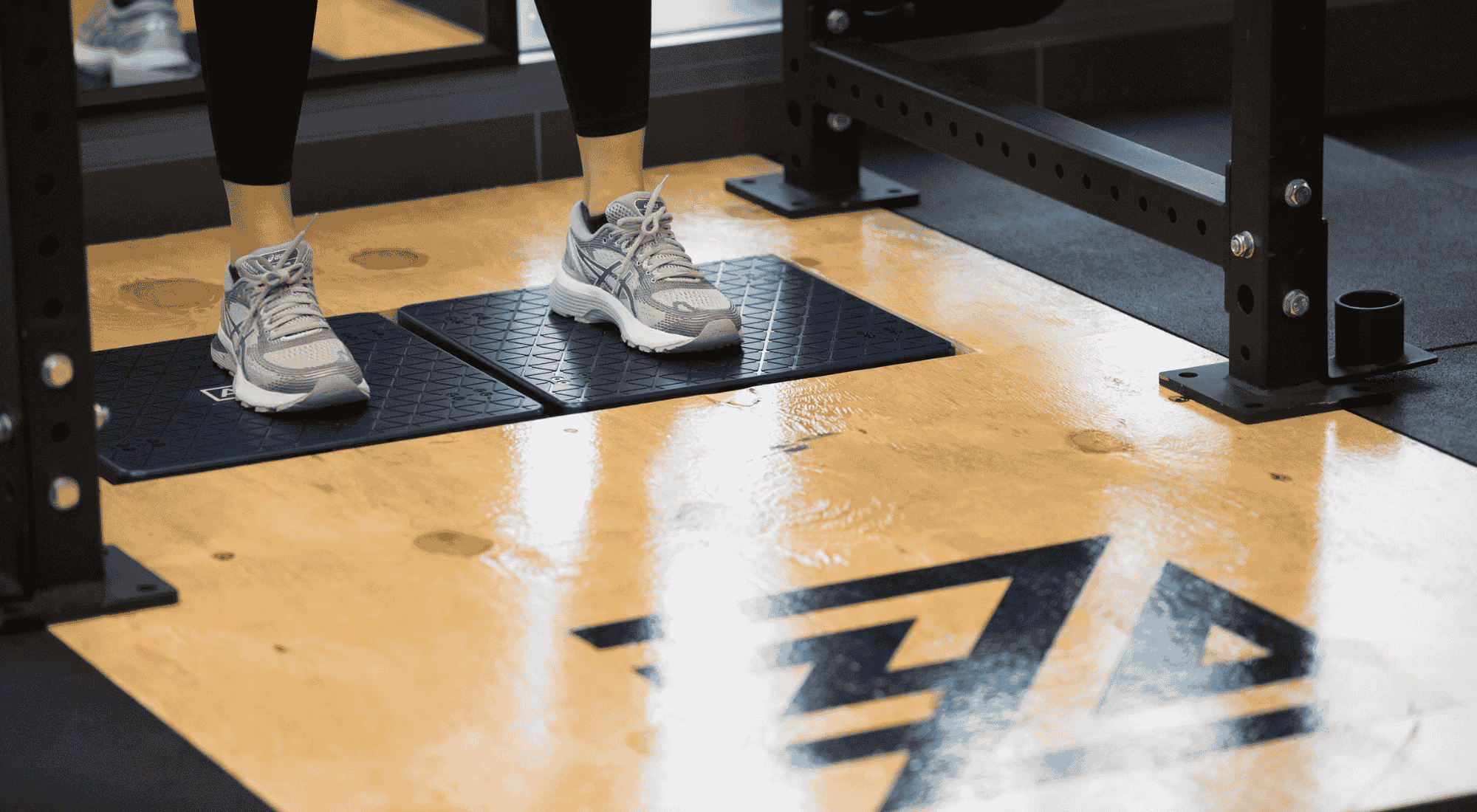
These specialised plates analyse how your body pushes against the ground during jumps, hops, or squats. They instantly highlight hidden left-to-right force imbalances and show how well you absorb impact.
This fixed frame precisely measures maximum muscle force across your hips, knees, shoulders, and core in safe, fixed positions. It helps your clinician pinpoint exact strength deficits that standard physical exams might miss.
This compact handheld device measures muscle pull and push strength across smaller joint movements with precision. It sends instant live feedback to a tablet, giving you immediate clarity on your current physical capacity.
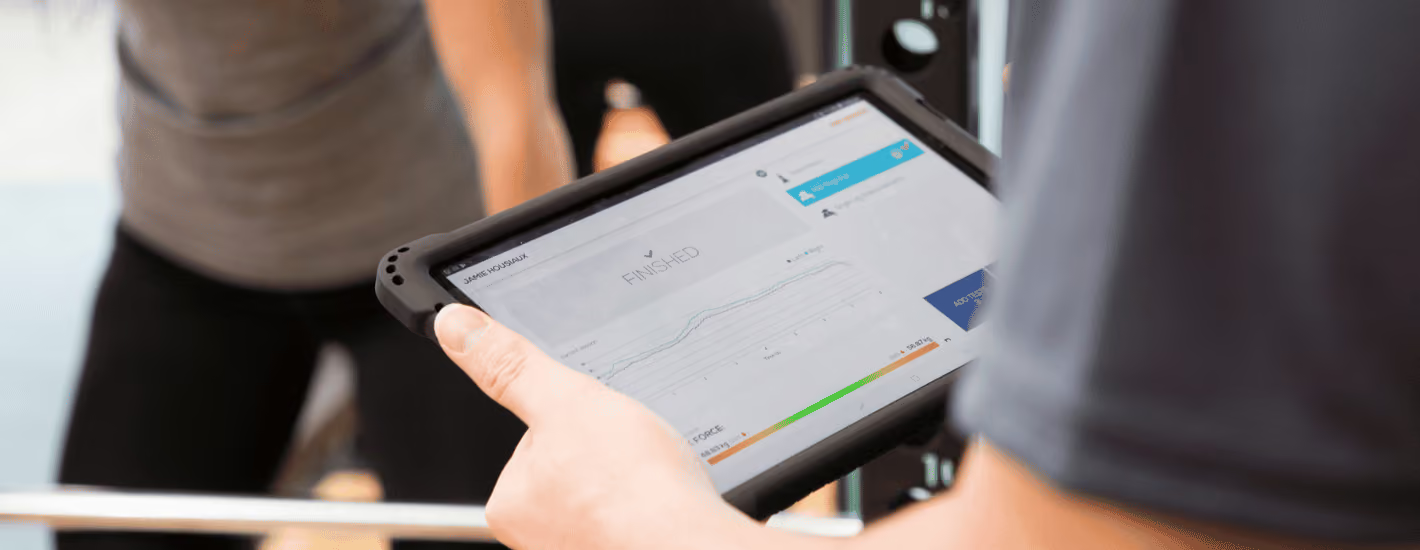
During a VALD testing session, our experienced sports physiotherapists guide you through a series of simple, painless strength and movement tests. You will receive immediate visual feedback on a tablet screen, helping you and your therapist understand your baseline capacity and design a clear recovery path.
Your clinician will set up specific movements—like calf raises, squats, or quick hops—connected via Bluetooth to our clinical tablet. You get to watch your force output and side-to-side balance appear live on screen as you complete each exercise.
We calculate the exact force difference between your injured and uninjured sides in real time. This reveals whether your body is compensating or shielding a recovering muscle or joint.
At the end of your session, you receive a straightforward summary of your results with clear strength targets. These objective benchmarks serve as your roadmap to safely track improvement from week to week.
Tailored rehab works best when guided by clear data, not guesses. By analyzing key metrics—such as Max Force, Rate of Force Development, Ground Contact Time, and Reactive Strength Index (RSI) during jump tests—we pinpoint your exact baseline. This allows us to customise your recovery to match your unique sports goals.
This test evaluates deep lower-leg force capacity, which is essential for runners, field athletes in AFL and football, and dancers—in fact, dancers at the Australian Ballet aim to achieve 2x their body weight on this test!
Particularly useful for jumping sports such as basketball or netball, these tests evaluate landing control while measuring vertical jump height and force plate contact time.
These targeted tests measure force production at the ankle (RSAIP) and knee (RSKIP) in a running-like stance, ensuring your lower limbs can safely absorb and propel impact before you get back to high-speed training.
Who treats this?
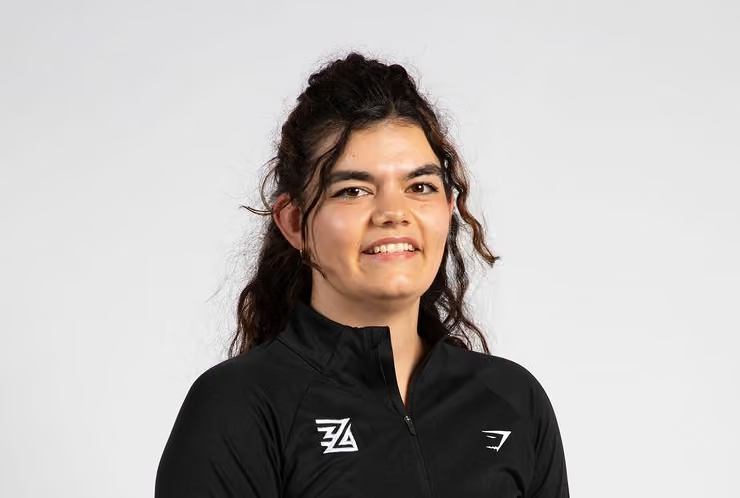
Our experienced team members are ready to help. See their bios below and book online when ready.

.avif)

.avif)
.avif)



.avif)
.avif)
All major health funds accepted
Private health claiming via Tyro Health EFTPOS terminal











FAQ

Most patients re-test every 4 to 6 weeks to measure progress, verify that their exercise program is working, and adjust force targets as their capacity improves.
Yes, VALD tests are easily modified to suit early-stage rehabilitation and can safely measure isometric muscle output without putting undue stress on healing tissues.
Wear comfortable activewear or gym clothing that allows you to move freely, along with supportive athletic shoes or runners.
Not at all; VALD technology is equally beneficial for everyday individuals, weekend warriors, and post-surgery patients wanting objective proof of their physical recover
With consistent targeted rehabilitation, most patients see noticeable neuromuscular and strength improvements on re-testing within 4 to 8 weeks.
References
- Drake, D., Kennedy, R. A., & Wallace, E. S. (2019). The validity and reliability of force plate technology in assessing neuromuscular status. Journal of Science and Medicine in Sport, 22(6), 710-715.
- Clinical Practice Guidelines for Ankle and Knee Rehabilitation. (2020). Journal of Orthopaedic & Sports Physical Therapy, 50(5), CPG1-CPG60.